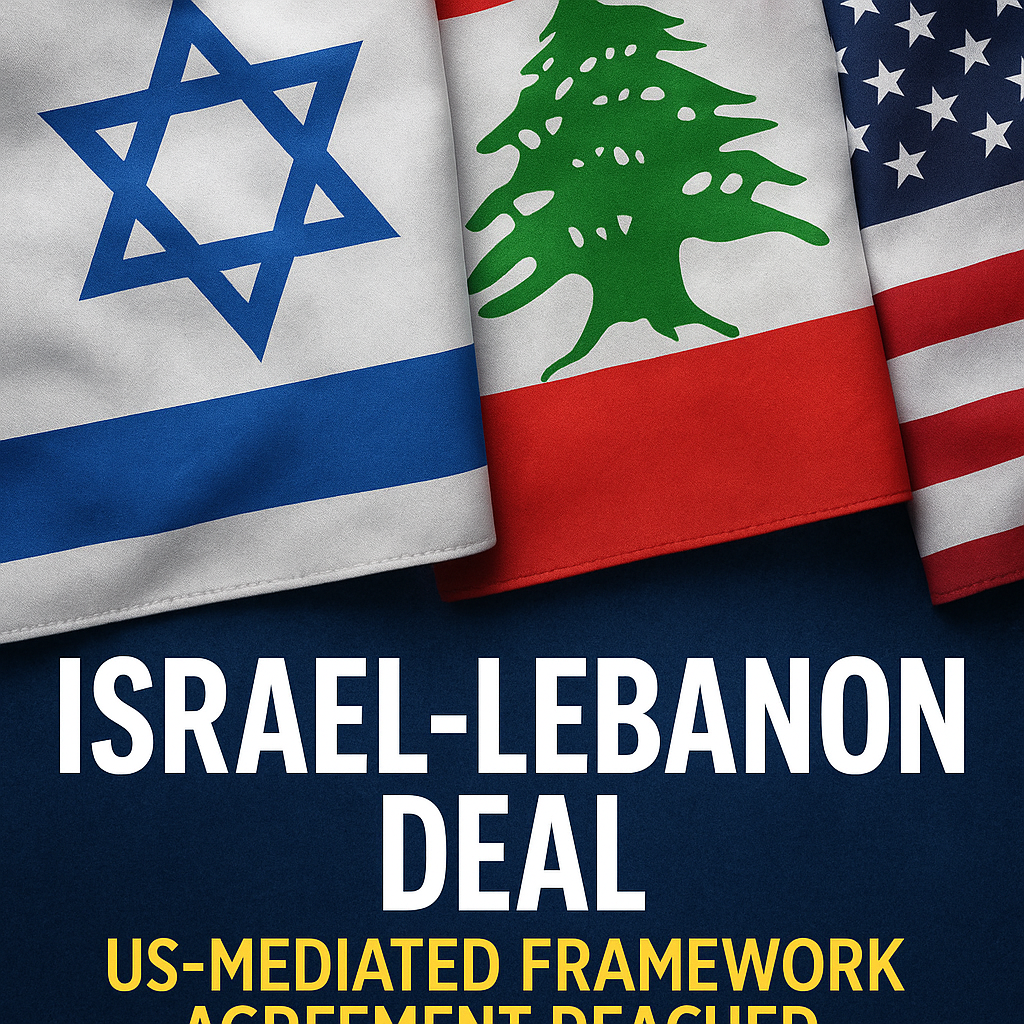
Israel Lebanon Deal: US-Mediated Framework Agreement Reached

Progress in the Israel-Lebanon Deal: A US-Mediated Framework Agreement
Recent developments in the long-standing tensions between Israel and Lebanon have yielded a significant milestone with the announcement of a US-mediated framework agreement. This agreement is designed to address key issues, primarily focusing on maritime boundaries and resource management in the Eastern Mediterranean. As both nations cautiously step forward, it is imperative to delve into the complexities and varied perspectives surrounding this pivotal agreement.

Key Elements of the Framework Agreement
The core of the US-mediated framework revolves around the maritime disputes over natural gas fields in the Eastern Mediterranean, a region rich in resources that both Israel and Lebanon claim. The agreement outlines a structured approach for both parties to delineate maritime borders and foster cooperative agreements concerning resource exploration. Notably, this framework has been met with mixed reactions from various stakeholders, reflecting the complexities embedded in the historical and political context of the region.


Economic Implications and Energy Security
The potential economic benefits from this agreement are substantial. Natural gas plays a crucial role in energy security, particularly for Lebanon, which has faced significant economic hardships and energy shortages. As Lebanon’s infrastructure remains fragile, access to these resources could help stabilize its economy, ultimately benefiting the Lebanese population.


Conversely, Israel has positioned itself as a burgeoning energy hub, seeking to expand its export capabilities in the face of global energy demands. Experts argue that the stability achieved through this agreement could enhance Israel’s standing in international energy markets, allowing for more lucrative trade deals while also ensuring its security interests are safeguarded.
Diverse Reactions and Future Outlook
While many stakeholders express optimism, skepticism remains prevalent regarding the implementation and longevity of the agreement. Critics point to the historical animosity between Israel and Lebanon, suggesting that deep-seated distrust can undermine cooperative efforts. The potential for renewed hostilities cannot be discounted, particularly if either side feels their interests are being compromised.
Domestic Responses: A Mixed Bag
Within Lebanon, public sentiment reflects a spectrum of opinions. Some view the framework as a groundbreaking opportunity for economic recovery and regional stability. However, others remain skeptical, fearing that the deal might prioritize political agendas over the well-being of the Lebanese populace. Given Lebanon’s complex political landscape, where multiple factions vie for power, the ability to form a unified front in support of this agreement could prove challenging.
In Israel, the agreement has garnered support among various political factions, who see it as an opportunity to solidify Israel’s geopolitical influence in the region. Nevertheless, concerns persist regarding the implications of sharing resources with Lebanon, which has historically been a source of conflict. The Israeli government faces the challenge of balancing national security concerns with the economic incentives posed by the agreement.
Conclusion: A Hopeful Yet Cautious Path Forward
The Israel-Lebanon framework agreement, as mediated by the United States, has opened doors for dialogue and cooperation in a historically volatile region. While the potential for economic growth and regional stability presents hopeful prospects, the path forward remains uncertain. The deeply entrenched animosities and political complexities on both sides will require sustained diplomatic efforts and mutual trust for the agreement to bear fruit.
In the end, the success of this deal hinges not only on the terms agreed upon but also on the willingness of both nations to engage in continued negotiations, open dialogue, and collaboration. As observers await the next steps, the hope remains that this framework can pave a way for peace, prosperity, and a more stable Eastern Mediterranean.