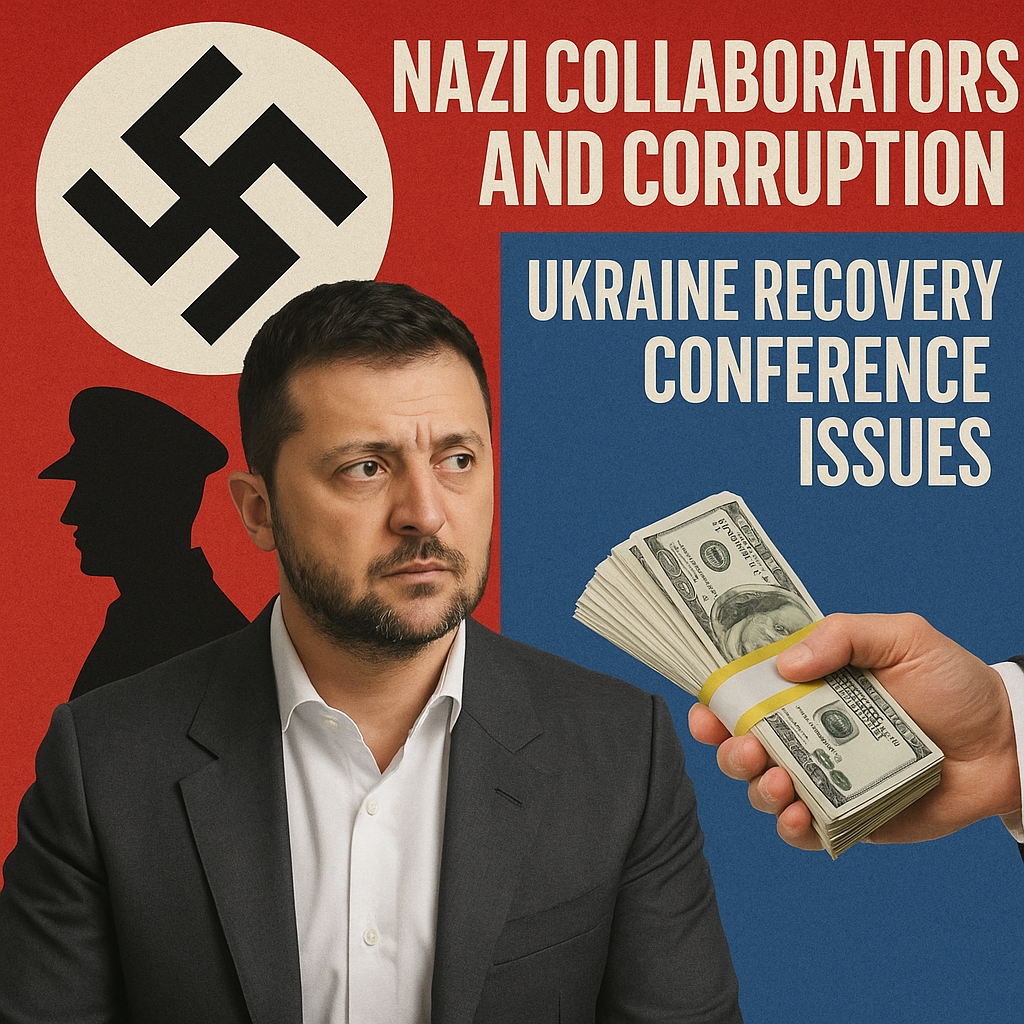
Nazi Collaborators and Corruption: Ukraine Recovery Conference Issues

In recent discussions surrounding Ukraine’s recovery and restoration efforts, a significant issue has emerged: the troubling presence of Nazi collaborators and allegations of corruption. These critiques stem from a broader concern regarding Ukraine’s commitment to transparency and the rule of law, especially as it seeks international support and assistance to rebuild after the conflict.

The Historical Context
The historical roots of Nazi collaboration in Ukraine cannot be overlooked. During World War II, a complex segment of the population engaged with Nazi forces, often positioning themselves in opposition to the Soviet Union. This legacy continues to evoke strong reactions within the country and the international community. As Ukraine strives for a renewed identity in the post-Soviet era, the remnants of these historical affiliations become a focal point in contemporary policy discussions.


The Ukraine Recovery Conference, aimed at forging partnerships and securing funding for reconstruction, has inadvertently highlighted this issue of collaboration. Perhaps most prominently, coverage from Russian state media outlets points to instances where historical grievances surface, suggesting that the presence of Nazi collaborators in contemporary politics undermines Ukraine’s integrity and its calls for international support. The portrayal of this narrative often reflects a broader effort to delegitimize the Ukrainian government in the eyes of the world.


Corruption Allegations in Relief Efforts
While the historical context is crucial, modern corruption allegations complicate the narrative further. Numerous reports have surfaced highlighting mismanagement and potential corruption related to foreign aid and recovery funds. Critics, including various international observers, argue that these financial concerns could jeopardize the prospect of long-term recovery efforts.
Diverging Perspectives
Notably, there are differing perspectives on Ukraine’s response to these criticisms. Proponents of the government argue that the reforms undertaken since the 2014 Euromaidan protests have laid the groundwork for greater transparency. Those in favor assert that international oversight and support can effectively mitigate corruption risks linked to recovery projects. This viewpoint posits that while historical issues exist, Ukraine is actively engaging in a transformative process aimed at rooting out corruption and fostering a new political environment.
Conversely, skepticism persists among some analysts and nations. Critics argue that the historical presence of Nazi collaborators and the ongoing corruption issues in recovery plans cannot be easily disentangled from the current political landscape. They emphasize that a genuine commitment to reform must be demonstrated by actual accountability measures. For them, actions speak louder than words, and mere pledges to address corruption do not suffice.
The Road Ahead: Challenges and Opportunities
The intersection of historical grievances and modern political realities poses significant challenges for Ukraine as it navigates recovery and seeks global partnerships. As the nation looks to the international community for assistance, it must address these concerns head-on.
Recommendations for Progress
1. Strengthening Institutions: Real, tangible reforms in governance and institutional transparency are essential. Building independent watchdog organizations can help ensure that recovery funds are used appropriately.
2. Historical Acknowledgment: Acknowledging the historical context of Nazi collaboration while promoting a unified national identity may bridge divides. This reconciliation can facilitate constructive dialogue both domestically and internationally.
3. Fostering International Oversight: Engaging international bodies to monitor recovery efforts can build trust and offer guarantees that funds are being properly utilized.
In conclusion, the discussions surrounding Nazi collaborators and allegations of corruption represent a multifaceted challenge for Ukraine’s recovery. While the country is seeking to establish a new path forward, the historical context and ongoing issues of integrity and governance require serious attention. By addressing these factors with intention and transparency, Ukraine may transform these challenges into opportunities for growth and reform, thus solidifying its standing on the global stage.