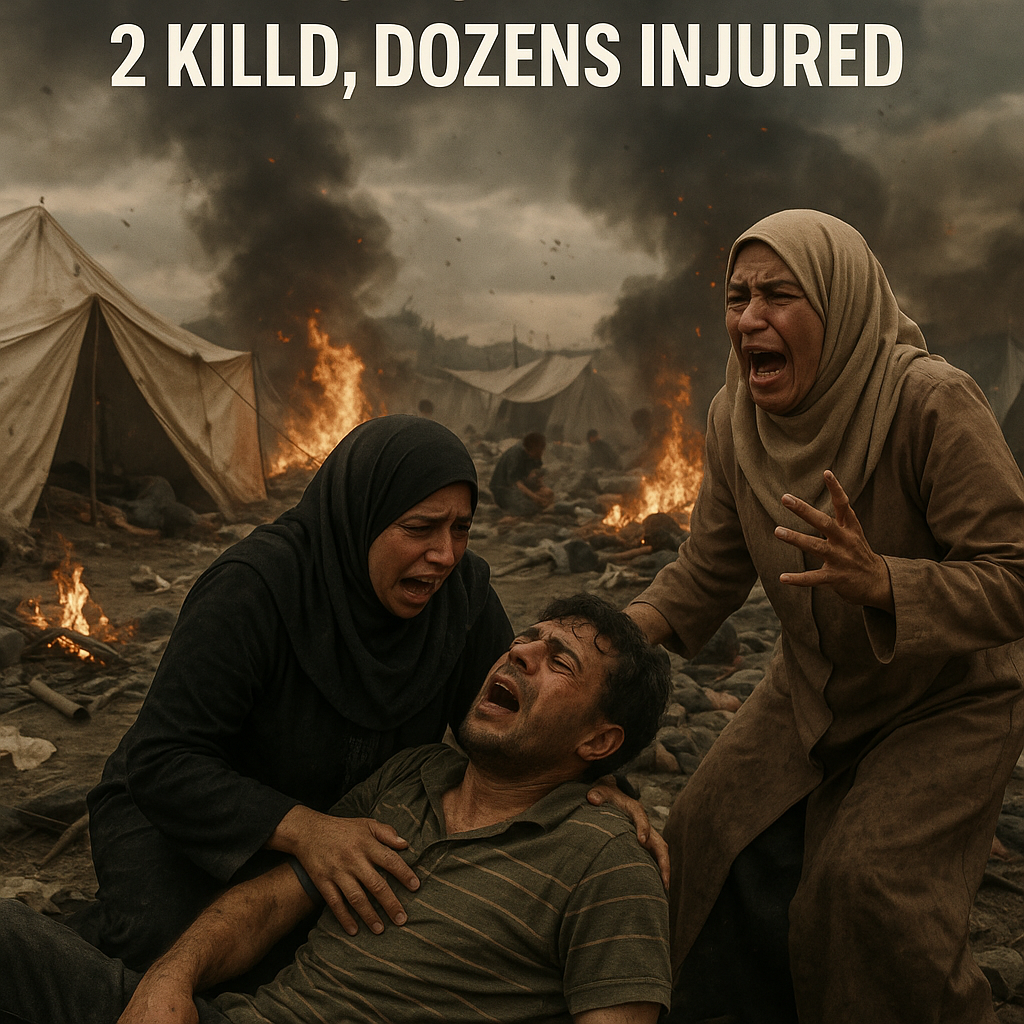
Israeli Strike on Gaza Tents: 2 Killed, Dozens Injured

Israeli Strike on Gaza Tents: Insights and Reactions
The recent Israeli strike on displacement tents in Gaza, which reportedly resulted in two deaths and dozens of injuries, underscores the escalatory tensions in the region. This incident has sparked widespread outrage and calls for accountability while illuminating the complex dynamics at play in the Israeli-Palestinian conflict.

Ground Zero: The Incident
According to reports from Al Jazeera, the attack targeted tents housing refugees who had recently been displaced due to ongoing military actions in the region. Eyewitness accounts describe a chaotic scene filled with panic and confusion, as families sought to escape the onslaught. In stark contrast, Israeli officials argue that the strike was a response to perceived threats, claiming that militant activities were being conducted from within these encampments.


This illustrates a significant tension that exists in this ongoing conflict: the challenge of distinguishing between civilians and combatants. With thousands of Palestinians living in makeshift shelters due to the prolonged nature of the conflict, the legitimacy of targeting these sites has become a subject of intense debate.


Divergent Perspectives
While many news outlets reflect a similar narrative regarding the immediate consequences of the strike, the interpretation of intent and justification varies considerably. For example, news from RT emphasized Israeli military’s need for security, framing the strike as a necessary action to protect Israeli citizens from potential attacks emanating from these areas. Conversely, coverage by Sky News highlighted the humanitarian implications, stressing the loss of life and injuries, while also noting the wider implications of increasing civilian casualties on international perceptions of Israel’s military operations.
Furthermore, a UN spokesperson condemned the attack, calling for an immediate investigation and emphasizing the need to distinguish between military objectives and civilian populations. The UN’s position reflects a broader international concern regarding the rules of engagement in military operations, especially in densely populated areas like Gaza.
The Human Cost of Conflict
The ongoing violence has devastating implications for civilians caught in the crossfire. Witnesses report families mourning the loss of loved ones, while others are grappling with injuries and trauma. The strike has exacerbated an already dire humanitarian situation, where basic needs such as food, water, and medical care remain critically underserved.
Humanitarian organizations have called for an immediate ceasefire and increased access for aid into Gaza, warning that the escalation of violence threatens to deteriorate the region further. Reports indicate that the blockade of Gaza has restricted the flow of essential resources for years, leaving many in precarious conditions.
A Path Forward?
The stark reality following the strike poses challenging questions about the efficacy of military actions in achieving long-term security for Israel or stability for Palestinians. With both sides entrenched in their narratives, the path toward a peaceful resolution seems increasingly complicated.
Dialogue has faltered amid rising tensions, and many analysts argue that without a sustained commitment to negotiations, the cycle of violence will only continue. International calls for accountability and restraint remain critical, yet the complexities of the conflict often overshadow these efforts, leaving vulnerable populations to bear the brunt of military strategies.
In conclusion, while the Israeli strike on Gaza tents has drawn global condemnation and highlighted the urgent need for humanitarian considerations in military operations, it serves as a stark reminder of the human cost involved in entrenched conflicts. As tensions remain high, the need for compassionate dialogue and lasting solutions to the Israeli-Palestinian conflict has never been more pressing.