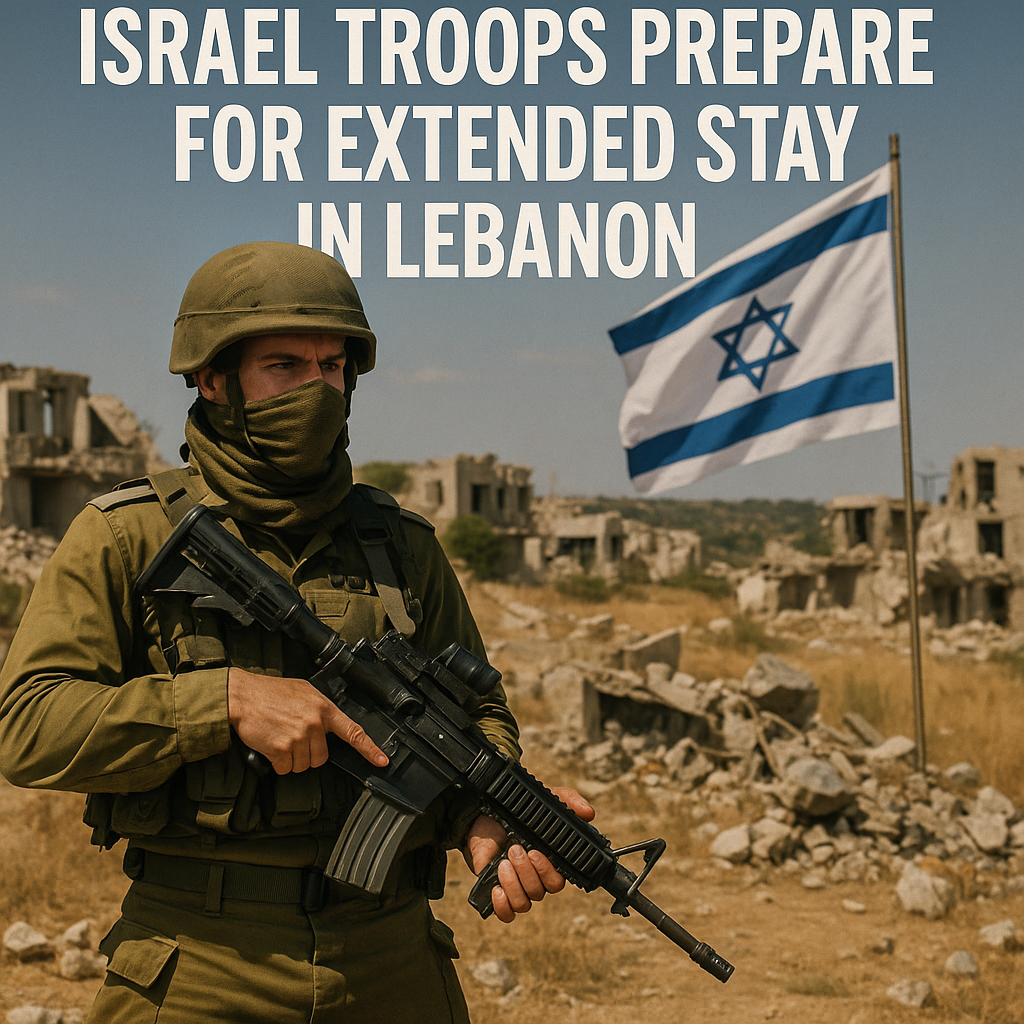
Israel Troops Prepare for Extended Stay in Lebanon

Israel Troops Prepare for Extended Stay in Lebanon: An In-Depth Analysis
In recent days, Israel has signaled its intention to maintain a significant military presence in Lebanon amid rising tensions and ongoing security concerns. This decision not only impacts the geopolitical landscape of the region but also stirs a complex mix of responses and interpretations from various stakeholders.

Background on Israel’s Military Presence
Israel’s military engagement in Lebanon is not new; the history stretches back several decades, marked by conflicts, ceasefires, and shifting alliances. More recently, tensions have escalated due to a combination of factors including border disputes, Hezbollah’s influence, and national security threats perceived by Israel. The current orders to prepare for an extended troop presence can be seen as a response to what Israeli officials describe as persistent threats from militant groups operating in southern Lebanon.


The Israeli government argues that maintaining a robust military framework is essential for safeguarding its northern borders. New reports suggest that Israeli Defense Forces (IDF) are making logistical preparations for a potentially prolonged deployment, focusing on improved infrastructure and enhanced personnel readiness. Prime Minister Benjamin Netanyahu has emphasized the need for vigilance, pointing to the increased military capabilities of Hezbollah as a central concern.


Perspectives on the Ground
While Israeli officials frame their military posture as a defensive measure, the reaction from within Lebanon and the broader international community is far more varied. Lebanese leaders and citizens express deep concerns about the implications of an extended Israeli military presence. Many argue that this strategy could exacerbate existing tensions and lead to unanticipated escalations. The landscape is further complicated by Hezbollah’s ongoing resistance, which mirrors broader regional alliances and geopolitical rivalries, including Iran’s influence in Lebanon.
Hezbollah’s leadership has condemned Israel’s military maneuvers, portraying them as acts of aggression that threaten Lebanon’s sovereignty. They argue that the deterrent capabilities of their own military response will be enhanced in light of Israel’s intentions. Thus, while Israel aims to bolster its security, it is also likely sowing seeds for a more entrenched cycle of retaliation.
From an international perspective, responses are also polarized. Regional actors are closely monitoring developments, with some countries expressing solidarity with Lebanon while others align with Israel’s security motivations. This dichotomy reflects broader geopolitical currents in the Middle East, revealing how localized military strategies can have far-reaching implications.
The Impact on Civilian Life and Regional Stability
The ramifications of Israel’s decision to extend troops into Lebanon are significant for civilian populations in both countries. The presence of military forces raises immediate concerns about potential clashes, which could lead to civilian displacement and humanitarian crises. In regions near the border, the atmosphere is charged with anxiety, as residents are caught in the crossfire of intensified military activities.
Moreover, the potential for a broader conflict remains a critical consideration. Analysts suggest that while Israel’s military strategy focuses on deterrence, it could inadvertently escalate tensions, prompting increased retaliatory actions from Hezbollah or other militant factions. The ongoing humanitarian situation in Lebanon, characterized by economic hardship and political instability, heightens the stakes, as any conflict could exacerbate an already fragile social fabric.
Conclusion: Uncertainties Ahead
The decision for Israeli troops to prepare for an extended stay in Lebanon encapsulates a myriad of complex factors and sentiments. While the Israeli government prioritizes its national security in the face of perceived threats, the reactions from Lebanon illustrate deep-seated fears of aggression and instability. The international community watches closely, recognizing that the outcome of this military posture could have long-delayed implications for the region.
As diplomatic efforts continue to be challenged by escalating tensions, it remains uncertain how this situation will unfold. Key questions linger about the efficacy of military solutions, the role of regional powers, and the future of civilian life amid ongoing hostilities. As tensions rise, understanding these dynamics will be vital for any potential pathways to peace.