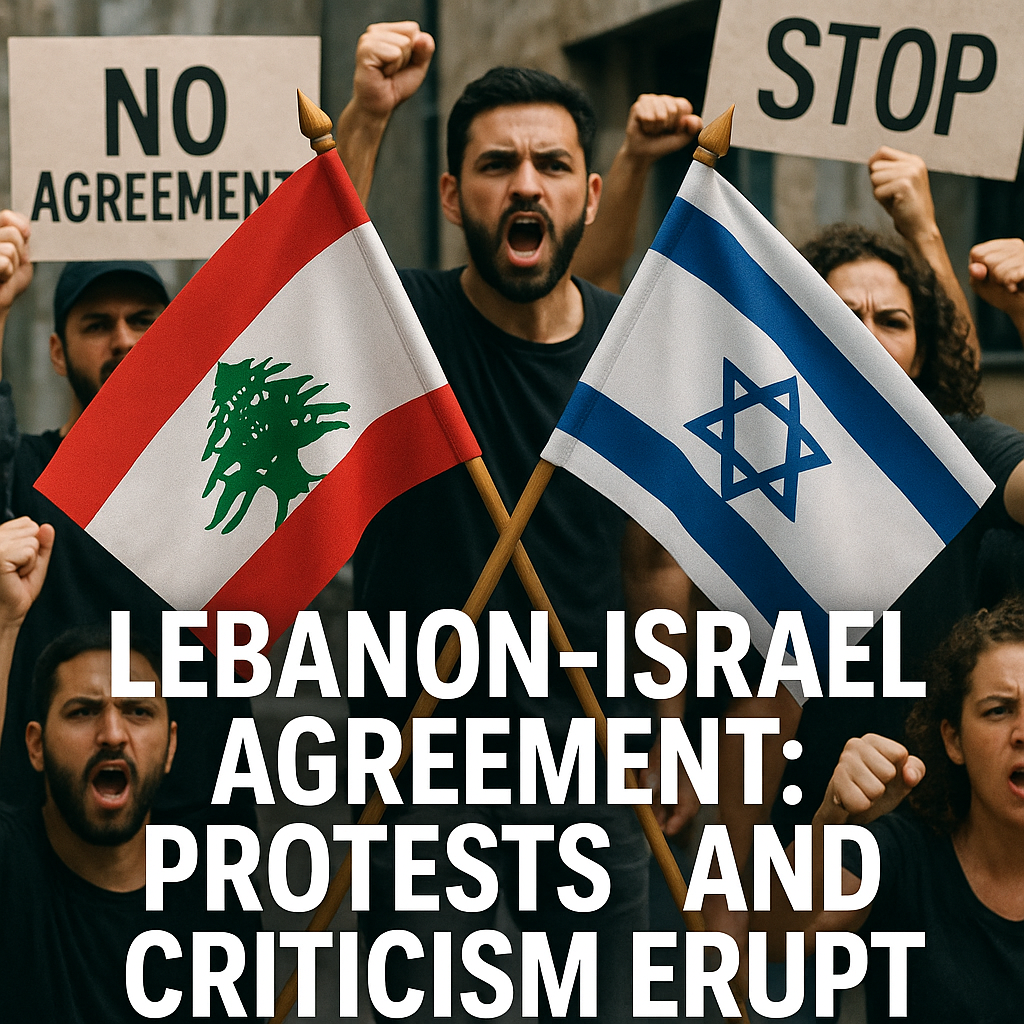
Lebanon-Israel Agreement: Protests and Criticism Erupt

Lebanon-Israel Agreement: Protests and Criticism Erupt
The recent framework agreement between Lebanon and Israel has sparked both protests and criticism, highlighting the complex political landscape in the region. This agreement, aimed at resolving long-standing maritime border disputes, has ignited a wave of dissent among Lebanon’s citizens, who question the implications of normalizing relations with Israel.

Underlying Tensions of the Agreement
The maritime border agreement is primarily designed to facilitate oil and gas exploration in a resource-rich area of the Mediterranean Sea. However, the historical backdrop of Lebanon-Israel relations complicates the narrative. For decades, Israel has been viewed with deep mistrust in Lebanon, due in large part to the Israeli invasion in 1982 and the ongoing asymmetrical conflict that has perpetuated animosities. Critics of the recent agreement argue that it fails to address larger issues of sovereignty and national pride.


For many, this deal feels like a capitulation to an adversary rather than a genuine effort to resolve conflicts. Al Jazeera reports that protests erupted in Beirut as citizens voiced their strong opposition, fearing that the agreement might set a precedent that undermines Lebanon’s resistance narrative against Israel. Protesters carried banners indicating that “there is no place for negotiation” with a nation they perceive as occupying their land.


Divergent Perspectives on National Security
Despite the protests, some Lebanese officials and analysts have advocated for the agreement as a step towards economic stability and growth. They argue that unlocking the potential of offshore energy reserves could provide much-needed financial relief to a country mired in economic crisis. The Lebanese economy has been critically affected by a multitude of factors, including political ineptitude and a financial meltdown. Proponents believe that the agreement could mark a vital turning point in addressing these crises.
On the Israeli side, the government has welcomed the agreement as a means to secure energy needs while minimizing regional tensions. They assert that peaceful economic cooperation is crucial for long-term stability in the area. Reports from RT suggest that both nations stand to gain economically, potentially leading to increased collaboration beyond just energy matters.
The Broader Regional Implications
The protests and criticisms are not just confined to Lebanon. The agreement has sparked discussions across the Israeli and Arab media about its potential to shift geopolitics in the region. Sharp contrasts emerge in the interpretation of long-term implications, particularly considering that several Lebanese factions, such as Hezbollah, have publicly condemned the deal. The concern grows that a faction-driven approach might further exacerbate instability within Lebanon itself.
The complexities of the agreement involve negotiating power dynamics, and responses from the broader Arab world are varied. Some see this as an opportunity for rapprochement, while others view it through the historical lens of betrayal. This dichotomy highlights the fragmented nature of political alliances in Lebanon and the surrounding regions.
Navigating Uncertainties
As Lebanon grapples with the implications of its new agreement with Israel, the future remains unclear. While economic incentives are enticing, the backdrop of deep-seated mistrust and political instability complicates acceptance among citizens. The potential economic benefits must be weighed against the national sentiment and historical grievances. Given the polarized landscape, achieving consensus on the path forward is fraught with challenges.
In summary, the Lebanon-Israel agreement encapsulates a mix of hope and skepticism. While it offers a possible economic lifeline, the storm of protests indicates that many are not ready to embrace negotiations with a long-standing adversary. As both nations move forward, the ultimate outcomes will likely depend on their ability to navigate these complexities thoughtfully and inclusively.