Netanyahu: Israel Won’t Yield Occupied Land in Lebanon

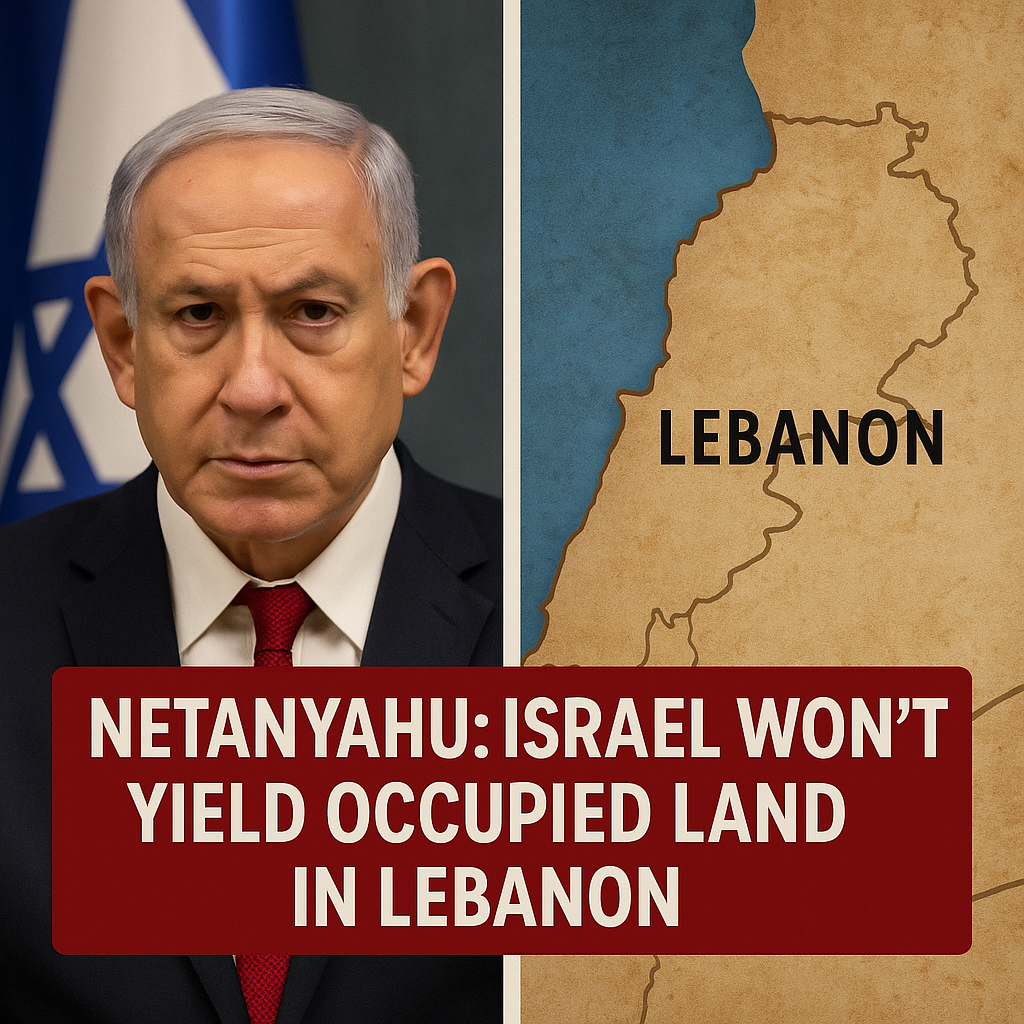
Netanyahu: Israel Won’t Yield Occupied Land in Lebanon
Israeli Prime Minister Benjamin Netanyahu recently asserted that Israel will not relinquish its claim over the occupied territories in Lebanon, highlighting the enduring complexities of Middle Eastern geopolitics. This declaration comes amid heightened tensions and shifting allegiances within the region, raising questions about the future of peace negotiations and the broader implications for Israel’s security posture.

Historical Context and Current Dynamics
Israel has maintained control over parts of southern Lebanon, notably the Shebaa Farms area, since the 1967 Six-Day War. This territory has remained a contentious point between Israel and Lebanon, with various international actors viewing it through different lenses. Al Jazeera reports that Netanyahu’s statement aims to reinforce Israel’s sovereignty over these lands, indicating a strong resistance to external pressures advocating for territorial concessions.


Lebanon has historically claimed the Shebaa Farms as part of its territory, bolstered by the support of Hezbollah, the Shiite militant group that has positioned itself as a primary adversary of Israel. Hezbollah’s influence complicates any potential negotiations, as the group seeks to leverage its military capabilities to assert Lebanon’s claims while Israel views its military presence as a deterrent against potential aggression.


Conversely, RT provides a perspective that underscores the regional ramifications of such firm stances. The Russian news outlet highlights that Netanyahu’s assertion may provoke stronger responses from Hezbollah, further escalating military tensions along the Israel-Lebanon border. This precarious situation makes any dialogue over land rights more volatile, as military confrontations could easily derail diplomatic efforts.
Regional and Global Implications
Netanyahu’s firm stance also speaks to a broader trend of nationalist sentiments in Israel, which have been gaining traction in recent years. According to analysts, this shift reflects an ideological position that prioritizes territorial integrity and national security over diplomatic compromise. Observers argue that such posturing can reinforce hardline views within Israel, alienating more moderate voices that favor negotiation over military presence.
Internationally, the response to Israel’s position appears divided. Some allies, primarily from the West, express support for Israel’s claims based on historical and legal precedents set by previous conflicts. However, other nations and organizations, including the United Nations, have called for respect for Lebanese sovereignty and have urged Israel to engage in negotiations regarding the status of these lands. This divergence in international opinion adds further complexity, as it poses challenges to Israel’s diplomatic relationships.
In light of these dynamics, the question of who ultimately has rights over the Shebaa Farms remains contested. Experts emphasize that the absence of a clear consensus adds layers of uncertainty regarding future peace efforts in the region. Moreover, with Hezbollah’s military capabilities and unwillingness to relinquish claims over Lebanon, the chances for a peaceful resolution seem increasingly dim.
Conclusion: The Way Forward
Netanyahu’s declaration that Israel will not yield occupied land in Lebanon is emblematic of the larger challenges facing both nations. The historical grievances, ongoing military tensions, and differing narratives contribute to a complex and often gridlocked situation, with little indication of forthcoming resolutions.
While peace initiatives may intermittently surface, the lack of genuine dialogue and mutual concessions raises critical questions about the conditions necessary for peace in the region. As both Israeli and Lebanese societies navigate their respective national identities and historical narratives, the path forward may require not just strategic calculations, but a significant shift in perspectives to foster lasting stability.
Ultimately, until both parties are willing to confront their historical grievances and engage in substantive negotiations, the status quo—characterized by military tensions and divisive rhetoric—will likely continue to define relations between Israel and Lebanon.