Israeli Leaders React to US-Iran Peace Deal اذel

Israeli Leaders React to US-Iran Peace Deal
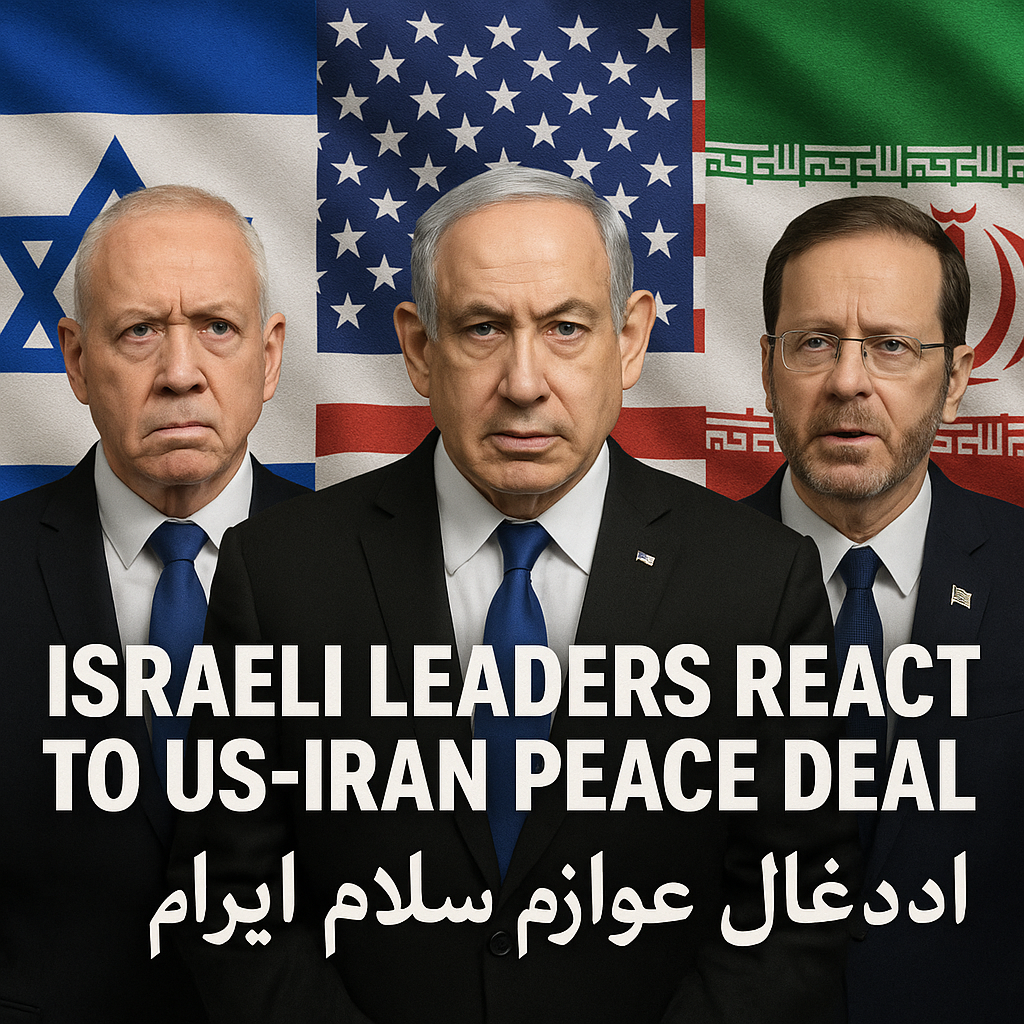
The recent announcement of a peace deal involving the United States and Iran has drawn a spectrum of reactions from Israeli leaders, reflecting ongoing security concerns and diplomatic rivalries in the region. As the geopolitical landscape shifts, the sentiment in Israel showcases a mixture of skepticism, cautious optimism, and outright criticism.

A Cautious Approach
Israeli Prime Minister Benjamin Netanyahu has voiced a predominantly critical stance toward the US-Iran peace deal. In statements following the announcement, Netanyahu articulated his fears regarding Iran’s nuclear ambitions and regional influence. He expressed concerns that the deal might embolden Iran, allowing it to pursue its agenda more aggressively in the Middle East. “The Iranian regime has not changed its goal of destroying Israel,” he stated, aligning with a long-standing Israeli narrative that emphasizes the existential threat posed by Tehran.


In a similar sentiment, Israel’s Foreign Minister Eli Cohen emphasized the potential dangers of a thaw in relations between the United States and Iran, noting that a perceived normalization might lead Iran to further destabilize neighboring countries like Lebanon and Syria. He remarked, “Israel shall not tolerate any agreement that compromises our security.”


This approach marks a continuation of Israel’s traditional policy of prioritizing its security above all else, fostering relationships with allies that reflect its interests, particularly in light of Iran’s military engagements and influence across the region.
Voices of Optimism
Contrasting with the dominant critical perspective, some Israeli leaders have acknowledged potential benefits arising from the deal. Members of the Knesset from more centrist and left-leaning factions suggest that diplomatic engagement could lead to a reduction in regional tensions. Former Defense Minister Moshe Ya’alon stated, “Engagement can sometimes lead to a more stable environment, though we must remain vigilant.”
These leaders argue that a peaceful resolution could open channels for cooperation on mutual concerns, such as combating terrorism and addressing humanitarian crises in war-torn regions like Syria. They advocate for Israel to engage proactively in dialogue, rather than solely relying on military posturing or isolationist tactics.
This perspective indicates a growing recognition within segments of the Israeli political spectrum that diplomacy might offer a pathway to a more constructive regional dynamic. However, it is essential to note that this viewpoint remains overshadowed by prevailing apprehensions about Iran’s intentions.
Diverging Opinions Among Analysts
The debate extends beyond political rhetoric, with analysts also divided on the implications of the US-Iran peace deal. Some experts foresee a possible shift in the balance of power in the Middle East, suggesting that Iran could leverage improved relations with the US to expand its influence in the region. For instance, regional security analyst Dr. Kfir Cohen argues, “If Iran gains access to economic benefits, it could destabilize the delicate alliances Israel has built with Sunni Arab nations.”
Conversely, other analysts believe that the US-Iran peace deal might lead to a reduction in conflict escalation in the region. They argue that, if managed wisely, the deal could reset diplomatic relations in a way that forces both nations to address their grievances more constructively. Expert insights from think tanks such as the Institute for National Security Studies suggest that while skepticism is valid, there’s potential for negotiation avenues that could ultimately be beneficial for Israel.
The Path Forward
Looking ahead, the complexity of reactions illustrates the precarious balance Israel must navigate. While security concerns are paramount, the potential for diplomatic solutions cannot be completely dismissed. The challenge lies in overcoming deeply entrenched mistrust, not only toward Iran but also regarding the intentions of global powers like the United States.
As Israeli leaders respond to the evolving narrative surrounding the US-Iran peace deal, they must weigh the benefits of dialogue against the backdrop of a history marked by conflict and tension. The ensuing discourse will likely shape Israel’s immediate policy decisions and its long-term strategy in relation to both the US and Iran.
Conclusion
In conclusion, Israeli leaders reflect a spectrum of views on the newly announced US-Iran peace deal, marked by skepticism and cautious optimism. As the situation unfolds, the necessity for Israel to balance its security interests with potential diplomatic opportunities will continue to dominate discussions within its political landscape. The complexity of regional dynamics ensures that any resolution will require nuanced understanding and strategic foresight.