
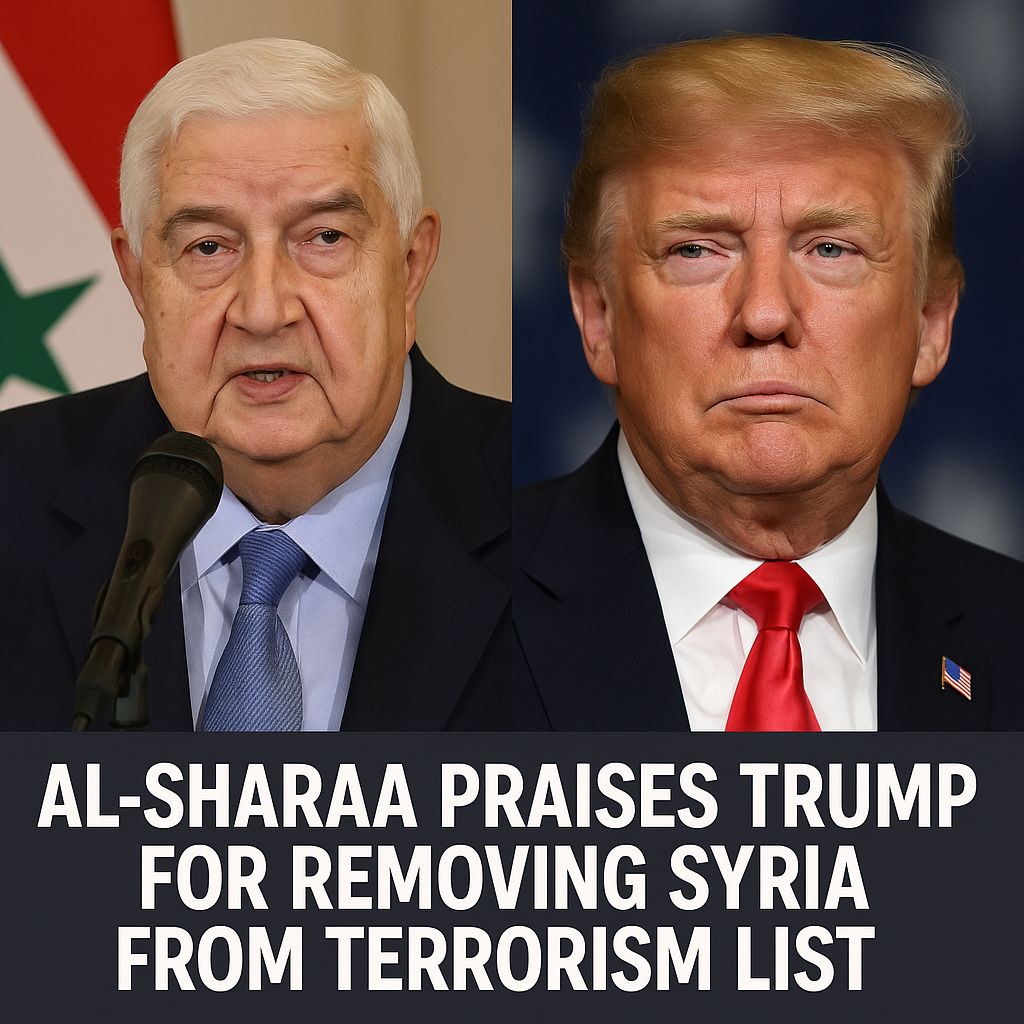
Al-Sharaa Praises Trump for Removing Syria from Terrorism List
Al-Sharaa Praises Trump for Removing Syria from Terrorism List
In a significant turn of events, former Syrian Deputy Foreign Minister Faisal al-Sharaa expressed his approval of former President Donald Trump’s decision to remove Syria from the list of state sponsors of terrorism. This development has sparked varied reactions across the geopolitical landscape, with implications that resonate far beyond the Syrian borders.

The Context of Removal
The United States designated Syria a state sponsor of terrorism in 1979, primarily due to its support for groups like Hezbollah and Palestinian militant organizations. This label has heavily influenced international relations and economic policies concerning Syria. The removal from the list, as praised by al-Sharaa, represents a shift that some argue could pave the way for Syria’s reintegration into the international community.

Al-Sharaa highlighted that this decision could facilitate dialogue and rebuild economic ties that have been severed due to prolonged conflict. He stated, “This is a step toward acknowledging the realities on the ground.” His statement reflects an optimism that removing the designation may foster a more collaborative environment for addressing regional stability.

Mixed Responses from Global Perspectives
While al-Sharaa’s sentiments encapsulate a clear approval from the Syrian regime, reactions from various global players differ significantly. Some analysts warn that this move may unintentionally empower the Assad regime, which has been accused of numerous human rights violations during the ongoing civil war. Critics argue that the designation served as a necessary counterbalance to Syria’s longstanding alliances with militant groups that threaten regional security.
On platforms like RT and Al Jazeera, commentators suggest that while the removal could provide economic relief, the moral implications remain complex. Analyst Maya Mikdashi pointed out in a recent discussion, “Engaging with a regime that has systematically suppressed its own people raises serious ethical concerns.” The divided opinions underscore a broader uncertainty about whether the removal signals a genuine shift in U.S. policy or merely a strategic maneuver with broader implications for Middle Eastern diplomacy.
A Nuanced Landscape for Future Relations
The decision to remove Syria from the list of state sponsors of terrorism may symbolize a potential thaw in U.S.-Syria relations, but it also brings forth complexities that could alter regional dynamics. Proponents argue that this could lead to better humanitarian access and economic aid, fostering a more stable Syria post-conflict. However, skeptics caution that bolstering Syria’s standing could embolden the Assad regime’s aggressive tactics against dissenters.
Moreover, this shift invites questions about the influence of Russian and Iranian support for Syria. Moscow and Tehran have been critical allies for Assad during the conflict, and their perspective remains crucial in understanding the region’s shifting tides. Analysts suggest that Washington’s relationship with these nations will also be pivotal in determining how effectively the new designation can be utilized for creating an environment of cooperation.
Conclusion: A Path Forward or a Compounding Crisis?
Al-Sharaa’s praise for Trump’s removal of Syria from the terrorism list highlights a deep-seated desire within the Syrian government for international legitimacy and economic recovery. Yet, this optimism is fraught with challenges. Balancing the need for humanitarian intervention against navigating a moral landscape complicated by past atrocities necessitates a careful approach.
The future of Syrian relations, especially with the U.S. and its allies, will likely continue to oscillate between hope and skepticism. As the global community observes these developments, the emphasis will undoubtedly lie in extracting meaningful change from a history laden with conflict and distrust. Uncertainties abound, but they serve as a critical reminder of the intricacies involved in reshaping international ties while assessing the human cost of political decisions.















