
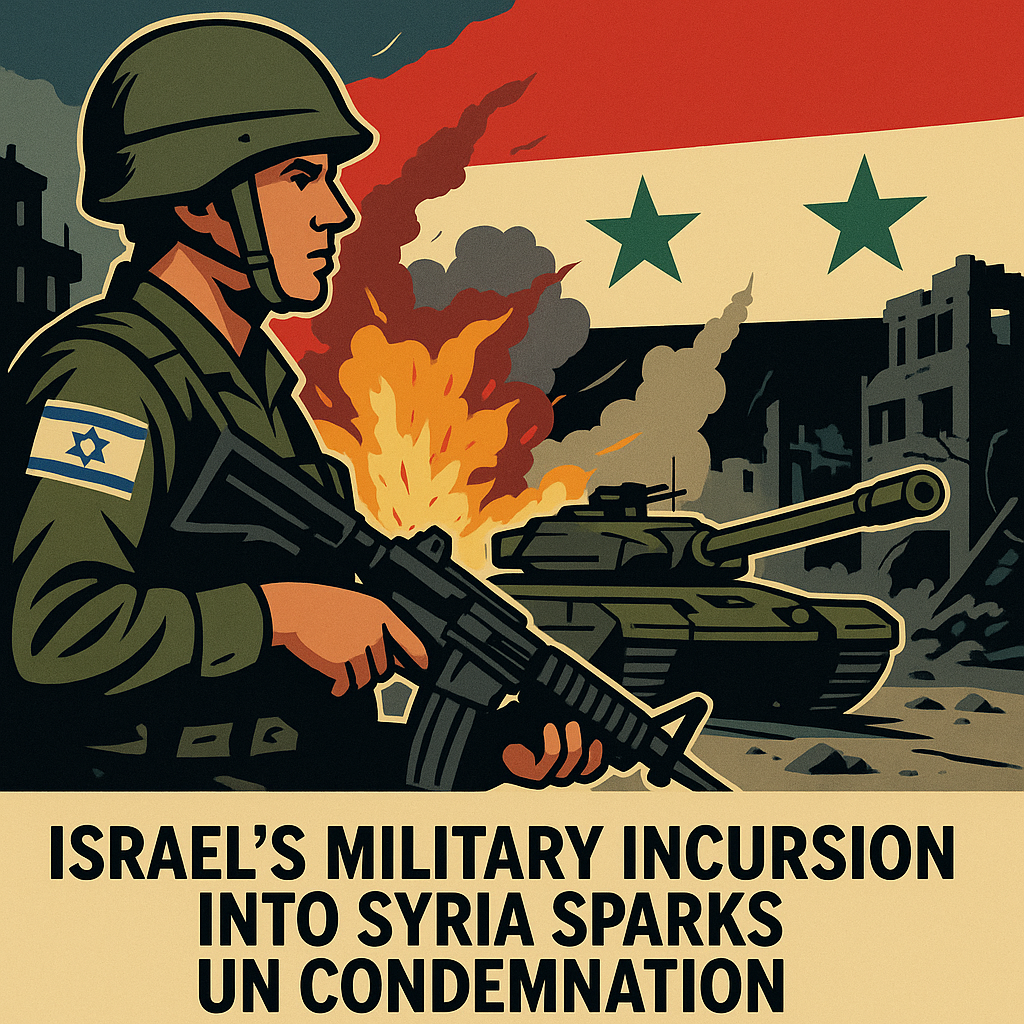
Israel’s Military Incursion into Syria Sparks UN Condemnation
Israel’s military incursion into Syria has ignited a significant geopolitical discourse, drawing sharp condemnation from the United Nations and various international actors. As tensions escalate, it becomes imperative to analyze the implications of this operation and its broader impact on Middle Eastern stability.

An Unfolding Crisis: The Nature of the Incursion
Israel’s latest military campaign reportedly aims to dismantle perceived threats from Iranian-backed forces stationed in Syria. According to Al Jazeera, this operation comes on the heels of a series of drone strikes attributed to Israel targeting both military hardware and personnel in the region. Israel’s Defense Minister has articulated a sense of urgency, stating that the objective is to prevent Tehran’s consolidation of military footholds in Syria, which Israel views as a direct threat to its national security.

Critics of the incursion, including supporters of the Syrian government, have characterized it as a violation of sovereignty that further destabilizes an already tumultuous region. Russia, a significant ally of the Syrian government, has echoed this sentiment, emphasizing the need for a cohesive approach to Syrian territorial integrity. As tensions mount, the UN has called for restraint, urging all parties to engage in diplomatic avenues rather than escalating military action.

International Responses and Diplomatic Consequences
The international response to Israel’s actions has been decidedly mixed, reflecting the complex interplay of regional interests. The UN Security Council convened to discuss the incursion, with multiple member states expressing disapproval. A statement from a Security Council spokesperson highlighted the necessity for respecting Syria’s sovereignty and territorial integrity, reaffirming the positions of several nations that have historically away from direct involvement in the Syrian conflict.
While the condemnation from the UN was nearly unanimous, some countries, particularly those aligned with Israel, have framed the military action as a preemptive strike necessary to safeguard regional stability. In contrast, nations like Iran have responded with vehement criticism, warning of potential retaliation for Israeli incursions, which only augments the cycle of violence that has plagued the region for years.
The Broader Implications of Military Aggressions
This incursion does not exist in isolation; rather, it is a part of a larger narrative of military engagements that have characterized Israeli strategy in the Middle East. Over the past few years, Israel has conducted numerous operations across borders to counter threats that it perceives as imminent, especially from groups like Hezbollah and various militant factions in Syria. This pattern reflects a strategic decision not only to secure its borders but also to project power in a region marked by instability.
However, the repercussions of such aggressions are multifaceted. On one hand, military actions may achieve short-term tactical victories; on the other, they risk engendering long-term animosities and fueling the very extremism that Israel seeks to combat. Some analysts argue that ongoing incursions may further alienate potential allies within Syria and bolster support for extremist groups looking to galvanize anti-Israel sentiment among the population.
Conclusion: The Complexity of Regional Stability
The situation surrounding Israel’s military incursion into Syria highlights a complex labyrinth of geopolitical interests, national security concerns, and the quest for regional influence. With the UN’s condemnation ringing in the air, the challenge for all involved parties lies in balancing immediate security concerns with the long-term implications of military operations. As regional players recalibrate their strategies in response to Israel’s actions, the potential for escalation remains a haunting specter over an already fragile landscape.
Moving forward, it is crucial for the international community to facilitate dialogues that encourage peaceful resolutions rather than escalating tensions, ensuring that the specter of conflict does not overshadow hope for enduring stability in the Middle East. This incident underscores not only the volatility of the region but also the urgent need for comprehensive strategies that prioritize peaceful coexistence and mutual respect among nations.















