
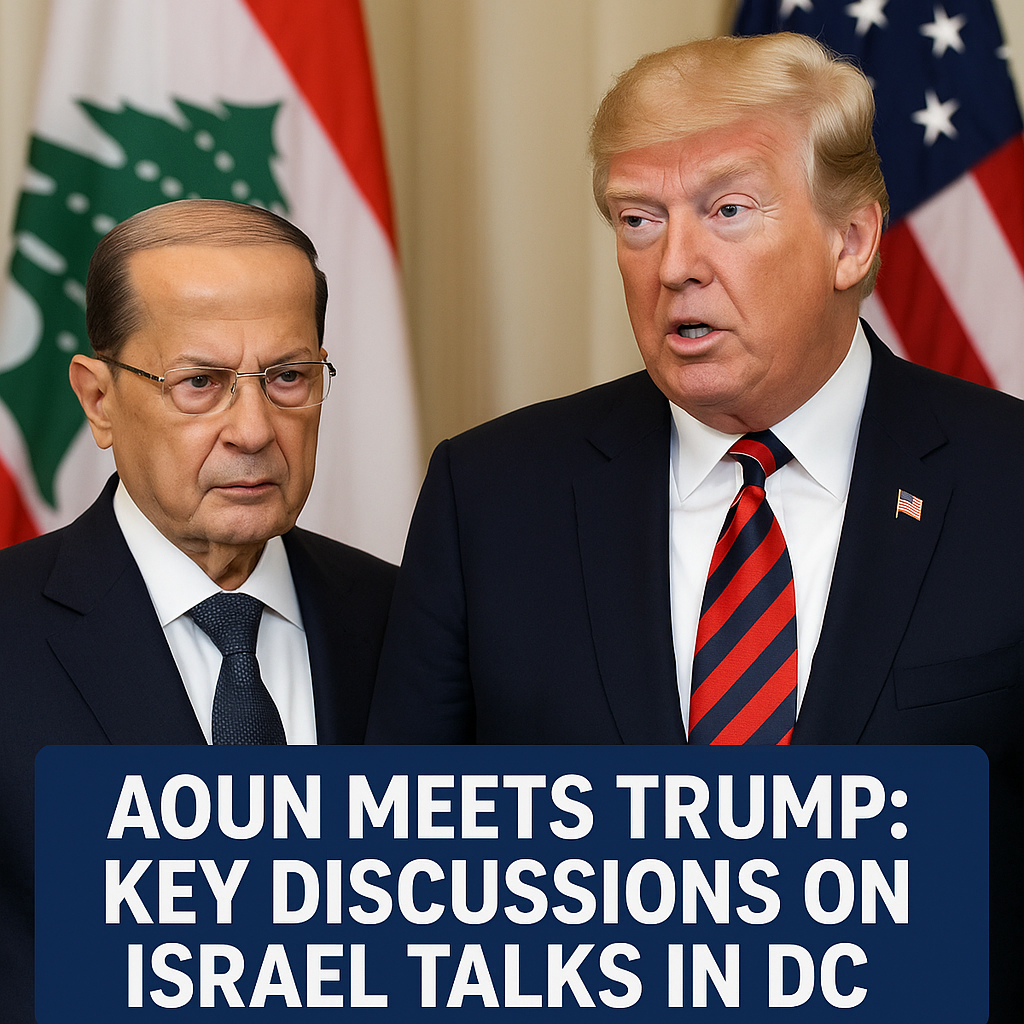
Aoun Meets Trump: Key Discussions on Israel Talks in DC
Aoun Meets Trump: Key Discussions on Israel Talks in DC
The meeting between Lebanese President Michel Aoun and former U.S. President Donald Trump in Washington has sparked interest and speculation, particularly regarding ongoing discussions about Israel and the broader geopolitical dynamics in the Middle East. This encounter raises critical questions about Lebanon’s future, its relationship with Israel, and the U.S. role in facilitating dialogue in the region.

The Context of the Meeting: A Complex Landscape
The backdrop of Aoun’s visit is crucial for understanding the nuances of the discussions. Lebanon, historically impacted by various conflicts, remains in a fragile state, grappling with economic challenges and political instability. Aoun’s administration has maintained a delicate balancing act, trying to navigate relationships between regional powers while addressing domestic crises.

At the heart of Aoun’s discussions with Trump was the issue of Israel, particularly concerning border disputes in the context of maritime rights. According to reports from Al Jazeera, one of the primary focal points of the talks was the ongoing negotiations surrounding Lebanon’s maritime boundaries with Israel. These negotiations, which have seen intermittent progress, are critical for Lebanon as they potentially open avenues for oil and gas exploration, which the country desperately needs for economic recovery.

Trump’s administration was known for adopting a firmer stance towards traditional adversaries of the U.S., including Hezbollah, which has a significant presence in Lebanon. Sources from RT highlight that Trump’s past policies included attempts to isolate Hezbollah both diplomatically and economically; Aoun’s approach during the meeting likely sought to underscore Lebanon’s complexities and the need for a balanced strategy moving forward.
Divergent Perspectives: Support and Criticism
Responses to the meeting have varied widely, showcasing the complexity of international relations in the region. On one side, some commentators argue that Aoun’s engagement with Trump may symbolize a new era for Lebanese diplomacy, emphasizing constructive dialogue. They posit that including the U.S. in discussions about Israel could be a stepping stone towards alleviating regional tensions.
However, others view this meeting with skepticism. Critics have raised concerns that closer ties with the U.S. could exacerbate Lebanon’s internal divisions, particularly given the historical support of the U.S. for Israeli policies that many in Lebanon view as aggressive. Reports emphasize that while Aoun seeks peace, the everyday realities on the ground—marked by deep-seated distrust towards Israel—are not easily altered by diplomatic gestures.
Furthermore, the growing sentiment within some factions in Lebanon expresses apprehension about U.S. influence. As articulated by sources from Sky News, some fear that the outcome of such high-profile meetings may lead to pressures that do not reflect the nation’s interests. This reflects a broader narrative where local concerns often clash with international expectations, complicating the path to resolution.
The Path Forward: Challenges and Opportunities
As President Aoun returns from his discussions, the question remains: what are the tangible outcomes of this meeting? While it is evident that both leaders recognize the necessity for dialogue, the implications of their discussions hinge on external factors and regional dynamics.
Firstly, the effectiveness of any potential agreements regarding maritime negotiations will be paramount for Lebanon. Establishing a clear and mutually beneficial understanding with Israel could mitigate some of the economic struggles faced by the country. However, achieving consensus is often mired in bureaucracy and political maneuvering, especially in a region marked by historical grievances and mistrust.
Moreover, the shifting geopolitical landscape—exemplified by changing alliances and conflicts—could impact Lebanon’s ability to navigate this tumultuous terrain. Aoun’s discussions with Trump can be perceived as a pivotal moment, but without a commitment to genuine dialogue and reconciliation from all parties involved, true progress may remain elusive.
In conclusion, Aoun’s meeting with Trump serves as a reminder that international diplomacy is fraught with complexities. Each conversation holds the potential for breakthroughs, but they are equally subject to the intricate dance of domestic and foreign interests. While both leaders seem to favor constructive engagement, the path forward will undoubtedly be challenging, requiring patience and a commitment to upholding Lebanon’s national interests amid a swiftly changing world.















