
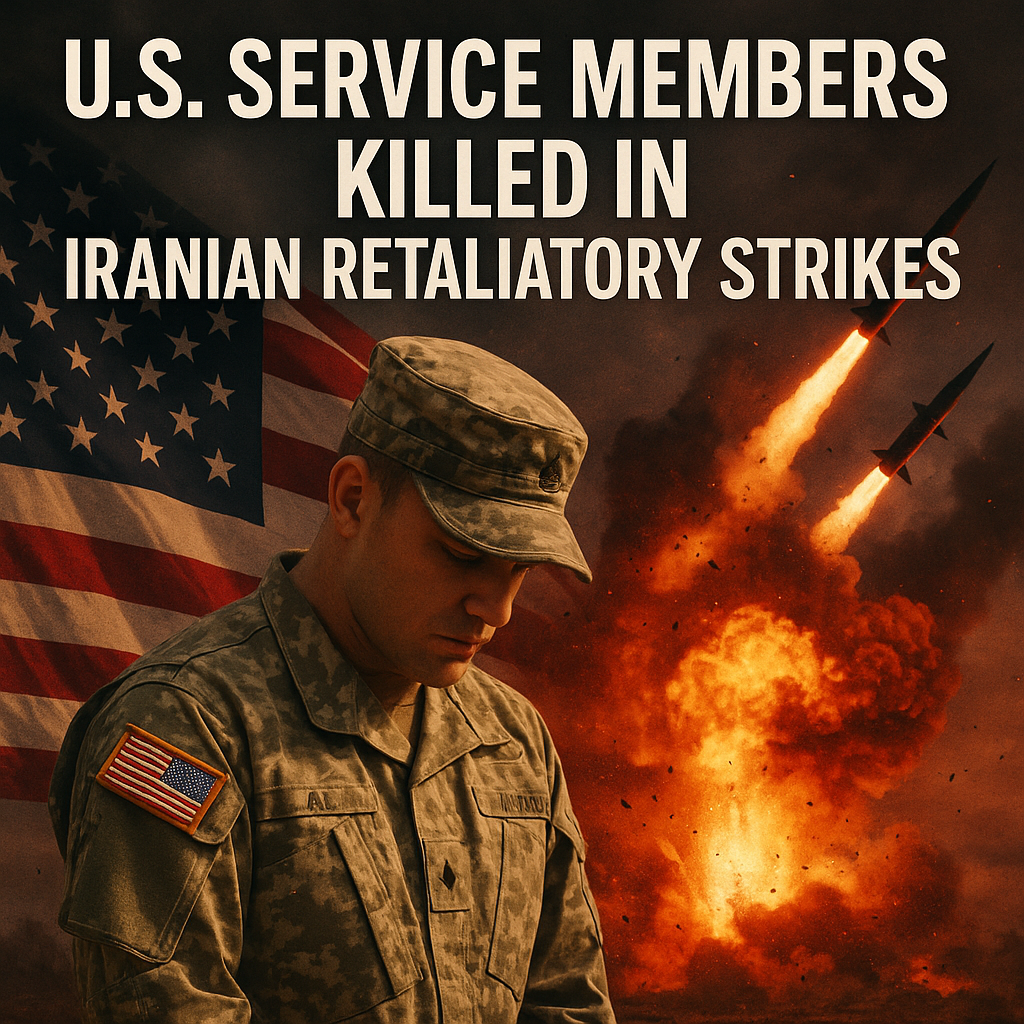
US Service Members Killed in Iranian Retaliatory Strikes
US Service Members Killed in Iranian Retaliatory Strikes
In a troubling escalation of tensions in the Middle East, two US service members lost their lives during recent Iranian retaliatory strikes, prompting a wave of reactions from multiple stakeholders, including military officials, analysts, and political leaders.

The Incident and Immediate Reactions
The Pentagon confirmed that these fatalities occurred as part of a broader conflict involving Iran’s response to previous military actions by US forces and allied groups. The circumstances surrounding their deaths have ignited discussions around the ongoing tensions in the region, and critics have raised concerns regarding the implications for US military strategy and foreign policy.

Iran’s military actions were described as a “calculated response” to provocations, with Iranian officials emphasizing that such strikes are meant to safeguard their national sovereignty. In contrast, US officials have framed the incident as a reminder of the persistent threats facing American forces stationed abroad. As noted in recent reporting, US Secretary of Defense Lloyd Austin emphasized, “We will not be deterred by acts of aggression; our commitment to the safety of our service members is unwavering.” This statement signals a staunch US position, aiming to reassure both military personnel and domestic stakeholders.

Broader Context of US-Iran Relations
The relationship between the US and Iran has been tense for decades, characterized by mistrust and hostility. The recent casualties highlight a potentially dangerous escalation in a long-standing conflict that intermittently flares back to the forefront of international relations. Analysts argue that these events may represent a crucial inflection point.
A viewpoint expressed by military analysts suggests that the US’s increased presence in the region has invited greater hostility from Iran. Many contend that the recent strikes may invoke a cycle of retaliation, where both sides feel pressured to respond in kind, risking greater military engagement. Notably, Charles Lister, a senior fellow at the Middle East Institute, observed, “This incident could lead to further retaliatory actions from both parties, potentially dragging other regional powers into the conflict.” Therefore, the risks associated with these actions extend beyond the immediate fatalities to encompass a wider geopolitical landscape.
Conversely, some experts argue that a show of military might may be necessary to deter Iran and prevent further incursions. They suggest that while the loss of life is tragic, it underscores the reality that international relations, particularly in the Middle East, are fraught with peril. As geopolitical analyst Michael Weiss put it, “The specter of future confrontations is real. It’s crucial that both diplomatic and military strategies are employed to ensure stability.”
Congressional Response and Public Sentiment
In the wake of the incident, reaction from Congress has been mixed, with some lawmakers expressing support for immediate military action against Iran, while others advocate for a more diplomatic approach. The public sentiment appears divided; many support a strong military response to protect service members, whereas others call for renewed dialogue to prevent further loss of life.
Recent polls indicate a growing wariness among the American public regarding prolonged military engagements abroad, especially after decades of involvement in conflicts in Iraq and Afghanistan. The question remains whether the US can balance its military commitments with the desire for peaceful resolutions. Representative Ilhan Omar articulated this sentiment succinctly: “We must carefully consider the costs of war, not just in dollars but in human lives.” This perspective resonates with a significant portion of the electorate, fostering conversations about the future of US foreign policy in the Middle East.
Conclusion: A Fragile Balance
The recent fatalities of US service members at the hands of Iranian forces serve as a poignant reminder of the fragility of peace in the region. As the US grapples with the implications of its military presence and the recent actions taken by Iran, it remains crucial to seek a multifaceted approach—one that encompasses both military preparedness and diplomatic engagement.
With the stakes continually rising, the international community watches closely. Achieving a stable resolution requires concerted efforts and nuanced strategies that assess both immediate security concerns and long-term diplomatic relationships. In a landscape marked by uncertainty and complex geopolitics, the path forward remains steeped in challenge, requiring a blend of strength and dialogue to navigate the rocky terrain ahead.















