
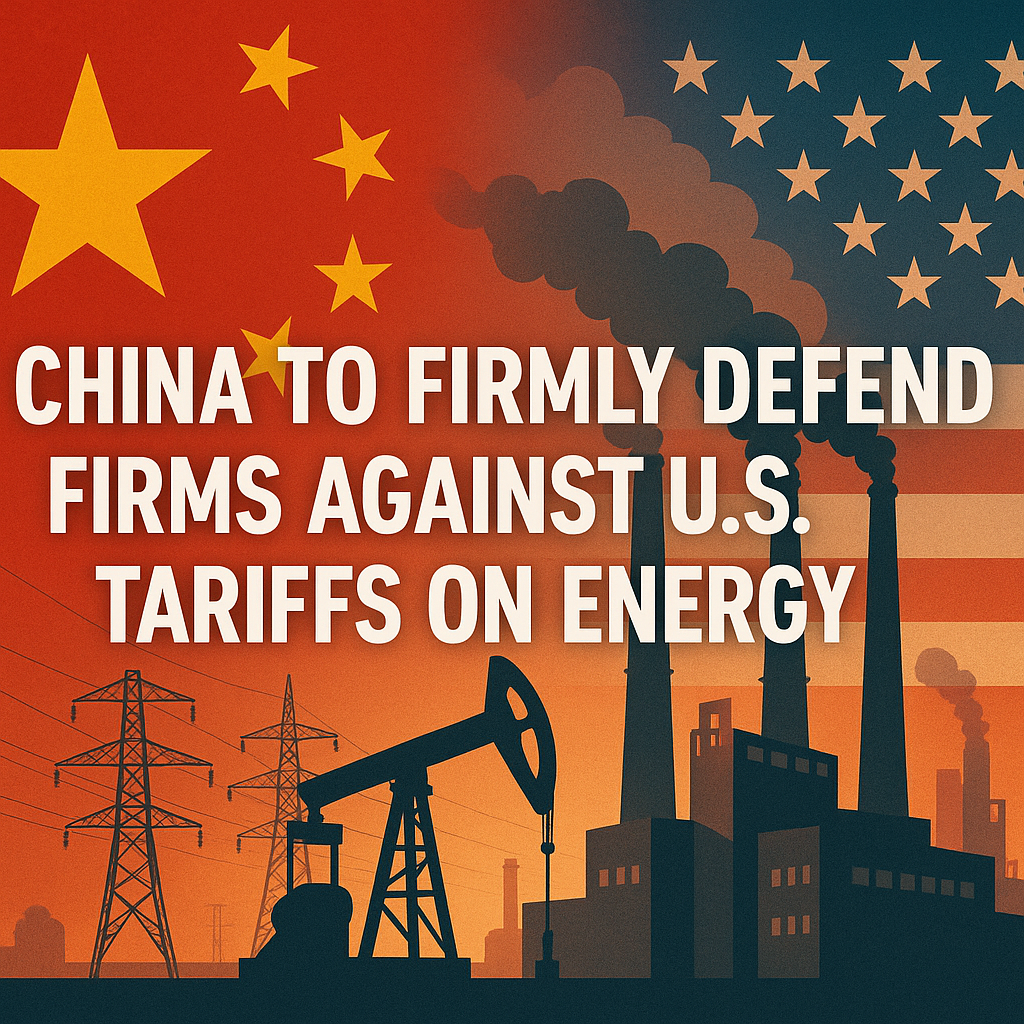
China to Firmly Defend Firms Against US Tariffs on Energy
China is poised to firmly defend its firms against U.S. tariffs on energy products, a move that reflects the nation’s robust stance in the ongoing trade tensions between these two global superpowers. The imposition of tariffs by the United States has created numerous challenges for Chinese energy companies, impacting their competitiveness and market access both domestically and internationally.

Understanding the Impact of U.S. Tariffs
The United States has argued that tariffs on Chinese energy products are necessary to protect American industries and maintain national security. The rationale is primarily based on perceived unfair practices in trade, including subsidies and currency manipulation. However, these tariffs have not only strained economic relations but also complicated global supply chains.

– Economic Consequences: The tariffs have been particularly felt in sectors such as solar energy, where U.S. suppliers have faced increased costs. According to reports, prices for solar modules have risen significantly, which could hinder the transition to renewable energy, a major goal of the current U.S. administration. Companies in China, especially those specializing in solar panel production, are now facing added pressure that could stifle innovation and investment.

– Impact on Innovation and Competitiveness: Chinese firms have historically been leaders in solar technology, and tariffs designed to protect U.S. manufacturers could inadvertently lead to reduced competition in the energy market, ultimately slowing technological advancements. This perspective highlights the complexity of global trade relations and the unintended consequences of protectionist measures.
China’s Response: A Commitment to Defend Its Firms
In response to the U.S. actions, China has reiterated its commitment to support its energy companies. Chinese officials argue that the tariffs violate international trade protocols and compromise fair competition. The government is expected to implement measures aimed at mitigating the adverse effects of these tariffs, including financial support for affected companies and diplomatic efforts to resolve trade disputes.
– Diplomatic Measures: China has suggested that it may take the issue to international tribunals, citing a need for adherence to World Trade Organization (WTO) rules. The countermeasures may also include tariffs on U.S. products, which could escalate the trade conflict further. Some analysts believe that such a standoff could hinder negotiations for broader trade agreements, complicating an already volatile relationship.
– Public Sentiment: The Chinese public has shown a supportive stance towards their government’s efforts to defend domestic companies. Many view the tariffs as an external threat, rallying behind their leaders in a show of national solidarity. This sentiment is often leveraged by the government to create a narrative around national pride and economic resilience.
The Road Ahead: Competing Visions
The ongoing saga of U.S.-China trade tensions underscores a broader narrative of competing visions for global energy markets. While the U.S. aims to elevate domestic production through tariffs, China is focused on its ambition to become a world leader in renewable energy technologies. This clash of ideologies creates a complex backdrop for companies and consumers globally.
– Global Energy Supply Chains: Many countries find themselves caught between these competing interests. Nations reliant on energy imports must navigate the increasingly politicized trade landscape, affecting pricing and availability. For instance, countries in Southeast Asia, which have significant energy ties with both the U.S. and China, may face tough decisions on how to align their policies.
– Future Market Dynamics: Should the current trend of tariffs and counter-tariffs continue, the market could see a bifurcation, where companies align themselves with U.S. or Chinese standards, ultimately creating an “East vs. West” dichotomy in energy policy and production. Analysts are closely monitoring how this dynamic will evolve and whether it will lead to a new form of energy geopolitics.
In conclusion, the conflict over U.S. tariffs and China’s commitment to defending its firms illustrates a significant chapter in global trade relations. As both countries navigate this complex issue, the ramifications will likely influence energy markets and international relations for years to come. The outcome remains precarious, with uncertainties still looming over the future of trade agreements and economic cooperation.















