
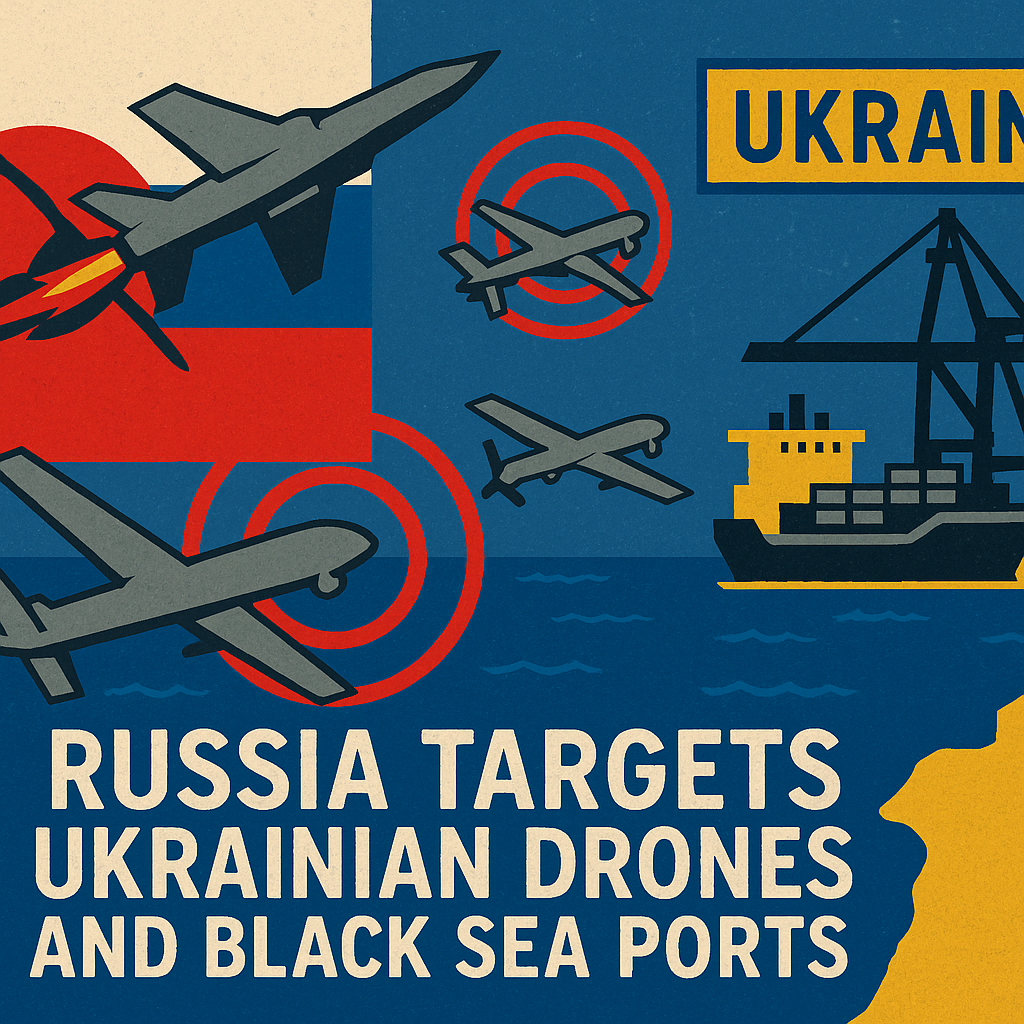
Russia Targets Ukrainian Drones and Black Sea Ports
Russia Targets Ukrainian Drones and Black Sea Ports
In the ongoing conflict between Russia and Ukraine, recent military actions have focused on key infrastructures, particularly Ukrainian drone production facilities and strategic Black Sea ports. This escalation reflects the complexities of modern warfare, where technological advancements play a pivotal role in determining battlefield outcomes.

The Significance of Drone Warfare
Drones have become a crucial asset in warfare, offering both surveillance capabilities and offensive strategies. Reports have emerged that Russia intensified its strikes against Ukrainian drone manufacturers, aiming to cripple Ukraine’s operational efficiency. A source from RT highlights that Russia has targeted locations in Kyiv and the surrounding regions, claiming these facilities are central to the Ukrainian military’s drone program.

The emphasis on drone warfare is not unilateral. Ukrainian forces have utilized drones effectively for reconnaissance and strikes against Russian targets. In contrast to conventional warfare, drones allow for precision strikes that can minimize collateral damage while maximizing operational impact. Al Jazeera reports that Ukraine has ramped up its own drone production, partly in response to these attacks, indicating a notable adaptation to the evolving landscape of this conflict.

The Black Sea: A Strategic Arena
Alongside drone warfare, the Black Sea has become a focal point in the conflict. Control over this region offers significant strategic advantages for both nations, particularly regarding naval operations and shipping routes. Recent reports indicate that Russia’s focus on Black Sea ports aims to disrupt logistical lines essential for Ukraine’s military.
In retaliation for attacks on its infrastructure, Ukraine has increasingly targeted Russian naval assets in the Black Sea. This creates a precarious situation, as both countries push to dominate critical maritime territories. The potential for miscalculation is high, and military experts warn that these actions can lead to broader escalations beyond the immediate conflict.
Diverging Perspectives and Consequences
Perspectives on these military actions vary widely. Proponents of Russia’s strategies argue that targeting Ukrainian drone industry and port infrastructure is a legitimate approach to undermine military capabilities. Russia emphasizes that its operations are aimed at defending its sovereignty and protecting its interests against what it views as aggressive actions from Ukraine and its Western allies.
Conversely, critics argue that these strikes may represent an escalation that could spiral into more significant conflicts, impacting civilian populations and international relations adversely. International observers express concern that a consistent pattern of strikes on civilian infrastructure could contravene international laws regarding warfare, raising ethical questions that could be pivotal in future diplomatic negotiations.
Uncertainties and Future Implications
As the conflict unfolds, uncertainties remain regarding the ramifications of these military strategies. While Russia seeks to neutralize Ukraine’s drone capabilities and assert dominance in the Black Sea, the reaction from Western powers could complicate the situation further. Sanctions and military support for Ukraine from the West could intensify, creating a cycle of retaliation and escalating tensions.
Furthermore, the potential for drone technology to shift the balance of power remains significant. Should Ukraine manage to bolster its drone capabilities even amidst ongoing attacks, it could stand to gain an upper hand in both short-term operations and long-term military engagements.
In conclusion, Russia’s targeting of Ukrainian drones and Black Sea ports signifies a critical phase in the ongoing conflict. As both nations adapt their strategies to leverage technological advancements and exploit strategic locations, the landscape of warfare continues to evolve. The implications of these actions may not only affect Ukraine and Russia but could also reshape international military engagements and geopolitical alliances in the years to come.















