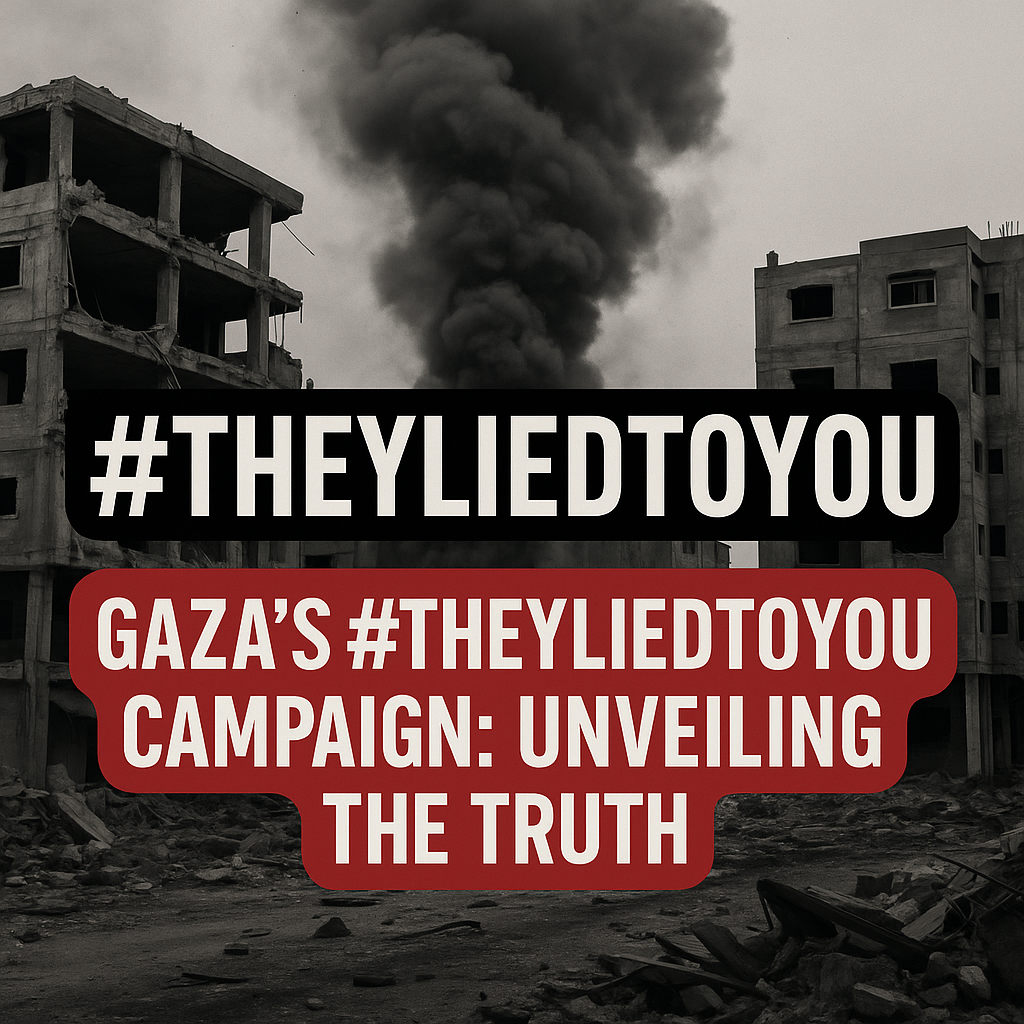
Gaza’s #TheyLiedToYou Campaign: Unveiling the Truth
Gaza’s #TheyLiedToYou Campaign: Unveiling the Truth
In recent weeks, the #TheyLiedToYou campaign has emerged from Gaza, aiming to confront various narratives surrounding the ongoing conflict in the region. This grassroots effort seeks to challenge media portrayals and highlight perspectives often overlooked in mainstream discourse. As tensions escalate and humanitarian concerns grow, understanding the motivations and implications behind this campaign is critical.

The Genesis of #TheyLiedToYou
The #TheyLiedToYou campaign was launched in response to widespread media coverage that activists and residents in Gaza believe misrepresents the realities on the ground. As the Gazan population faces dire humanitarian conditions, the campaign serves as a conduit for locals to voice their experiences and frustrations. According to reports, this initiative uses social media as a primary tool to disseminate its messages, aiming to create a broader awareness of the situation.

Many advocates of the campaign argue that mainstream coverage often oversimplifies the complexities of the conflict. A common concern voiced within this discourse is that narratives frequently frame Palestinians solely as aggressors without acknowledging the historical context that contributes to current tensions. This portrayal, they argue, neglects the severe socio-economic challenges faced by the people of Gaza, including blockade-related restrictions and ongoing violence that disrupts daily life.

In contrast, other voices in the media and political spheres assert that the campaign can sometimes obscure the actual complexities of differing perspectives in the conflict. Some analysts suggest that while highlighting the Gazan narrative is essential, it should not exclude the equally complex experiences and viewpoints of all parties involved. The danger, they argue, lies in the possibility of oversimplifying a multifaceted situation into binary perspectives of good versus evil.
Voices from the Ground: Varied Perspectives
The campaign has resonated across various platforms, gathering supporters through hashtags, testimonies, and artistic expressions. By leveraging social media, activists have shared emotional stories from individuals in Gaza, which provide immediate insight into day-to-day struggles under siege. These personal accounts serve to humanize the conflict, countering narratives formed from afar.
However, the #TheyLiedToYou campaign doesn’t exist in a vacuum. Diverse viewpoints inside and outside Gaza contribute to a more complex narrative landscape. While the local population shares stories of suffering and resilience, external reactions vary significantly. Some commentators argue that the campaign risks polarizing opinions further, while others believe it is a necessary corrective to entrenched biases.
Humanitarian organizations, for their part, recognize the importance of balanced narratives. They emphasize the need for all parties involved to communicate openly to reach shared understanding and solutions. As one representative noted, “It’s vital to amplify voices from conflict zones, but doing so in a way that reflects all aspects—successes, failures, and the need for peace—will be more beneficial in the long run.”
The Role of Media in Shaping Narratives
The media’s influence in shaping perceptions of the Gaza conflict cannot be overstated. Reports often highlight military engagements and political rhetoric; however, the human stories can get lost in translation, leading to a disconnect between on-the-ground realities and public perception. The #TheyLiedToYou campaign seeks to bridge that gap by ensuring the voices of Palestinians are not just heard but are also an integral part of the dialogue.
As debates circulate regarding the efficacy and implications of this campaign, it’s crucial to remain vigilant in separating individual stories from broader narratives. Objective reporting can play a significant role in fostering understanding but must be approached with a sensitivity that considers the historical complexities intertwined in this ongoing conflict.
In summary, the #TheyLiedToYou campaign serves as both a response to perceived injustices in media reporting and a call for broader recognition of the Palestinian experience. Opinions about the campaign are varied, reflecting the intricate landscape of perspectives on both the conflict and its portrayal. These differences underscore the importance of dialogue and understanding in a region marked by deep divisions and human suffering. As conversations continue, the hope remains that awareness leads to compassion and eventually, a resolution that addresses the needs of all people involved.