
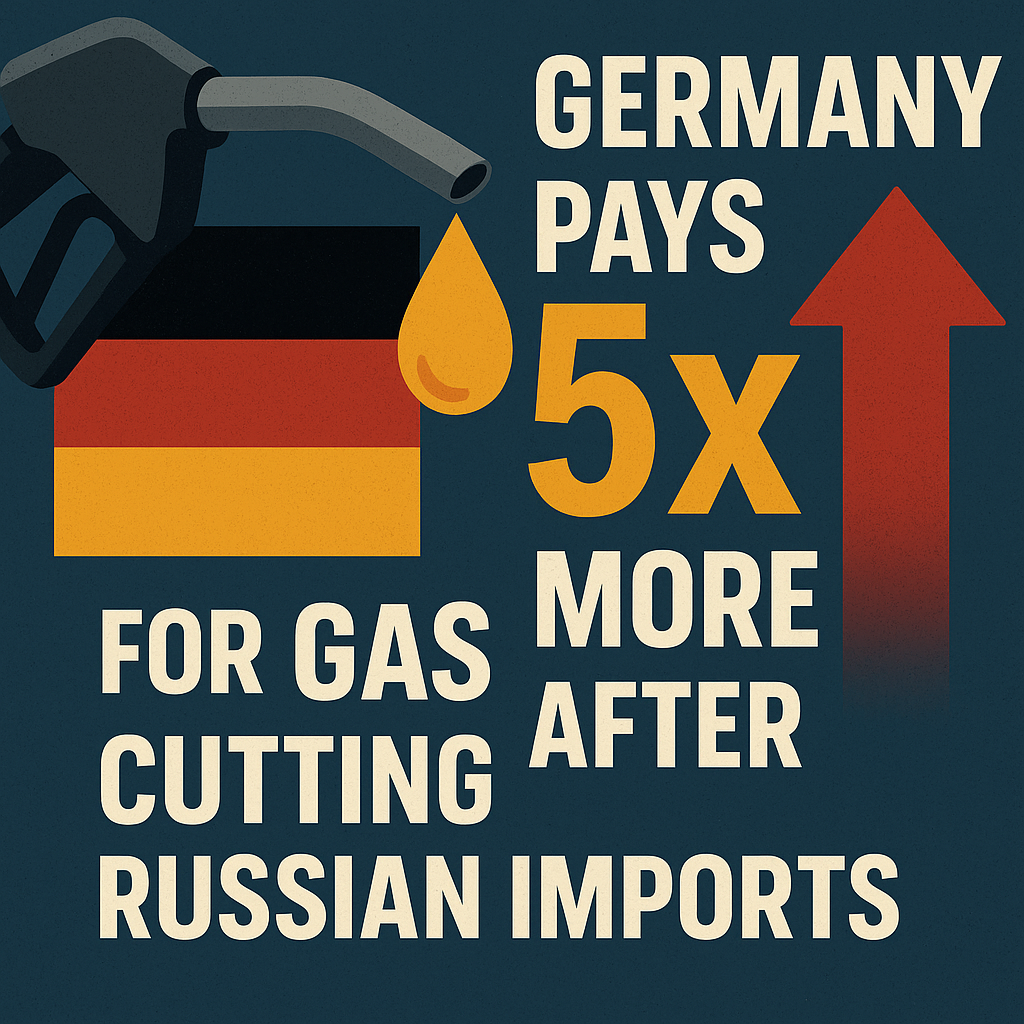
Germany Pays 5x More for Gas After Cutting Russian Imports
Germany has recently experienced a dramatic shift in its energy landscape, particularly in the realm of natural gas imports. The country now finds itself paying five times more for gas after cutting off supplies from Russia, a move that has sent shockwaves through the European energy market and raised complex questions about energy security and pricing.

The Shift Away from Russian Gas
Germany’s decision to reduce reliance on Russian gas was driven largely by geopolitical tensions following Russia’s invasion of Ukraine. This key move was aimed at both bolstering support for Ukraine and minimizing energy dependence on Moscow. Although the intention was to safeguard German and, by extension, European security interests, the economic implications have been severe.

Sources such as Al Jazeera and RT highlight how the reduction of Russian imports has forced Germany to seek alternative providers, including liquefied natural gas (LNG) from the United States and Qatar. While diversifying sources has its advantages, it comes at a significant cost. Reports indicate that spot market prices for natural gas in Europe have surged, compelling Germany to pay significantly more than in previous years. The average gas price has skyrocketed, with spikes reaching unprecedented levels due to heightened demand amid dwindling supplies.

The Economic Fallout
The impact of these rising gas prices is profound and multifaceted. Businesses and households alike are feeling the strain as energy bills soar. According to recent analyses, energy-intensive industries, such as manufacturing, face dire consequences that could hinder growth. This situation has sparked debates among economists and policymakers about the sustainability of such costs and the long-term economic viability of Germany’s energy strategy.
1. Inflationary Pressures: Rising energy costs contribute significantly to overall inflation, putting further strain on household budgets. As noted by Sky News, inflation rates in Germany have surged as energy costs permeate through various sectors, impacting everything from food prices to consumer goods.
2. Energy Security Concerns: The transition away from Russian gas brings not only economic challenges but also raises questions about energy security. Critics argue that relying on imports from countries like the U.S. may not guarantee stability, especially considering geopolitical uncertainties. Diversification comes with its own risks, including potential supply chain vulnerabilities.
Balancing Act: The Future of Energy in Germany
As Germany navigates this uncharted territory, the government has emphasized the need for a diversified and resilient energy mix. Officials have been quick to stress their commitment to renewable energy sources, aiming for a more sustainable energy future. However, the transition to green energy is not without its own challenges.
Investments in renewable technologies are essential, yet they require time and financial resources that may be difficult to allocate in an immediate crisis. Moreover, the infrastructure needed for a comprehensive renewable energy system is still under development, potentially extending Germany’s reliance on expensive imported gas during the transition phase.
Additionally, there is an ongoing debate about the role of nuclear energy. Some argue that keeping nuclear plants operational could provide a necessary stopgap to manage energy needs while longer-term solutions are implemented. Nevertheless, public sentiment remains divided on this issue, reflecting a broader societal ambivalence toward balancing environmental concerns with energy needs.
Conclusion: A Complex Landscape Ahead
Germany’s decision to cut Russian gas imports has initiated a fundamental transformation in its energy landscape, generating higher costs and economic concerns. The reliance on alternative sources has improved supply diversification but at a higher financial burden that raises questions about economic stability and energy security.
The transition towards a greener energy future must be carefully managed to mitigate the risks associated with sudden market shifts and supply chain vulnerabilities. While the emphasis on renewable energy is commendable, it is crucial for Germany to balance these priorities with immediate needs, ensuring that its strategies are not just reactive, but also sustainable for future generations. As this energy saga unfolds, the implications for both Germany and Europe will be closely watched, with lessons that could shape energy policies worldwide.















