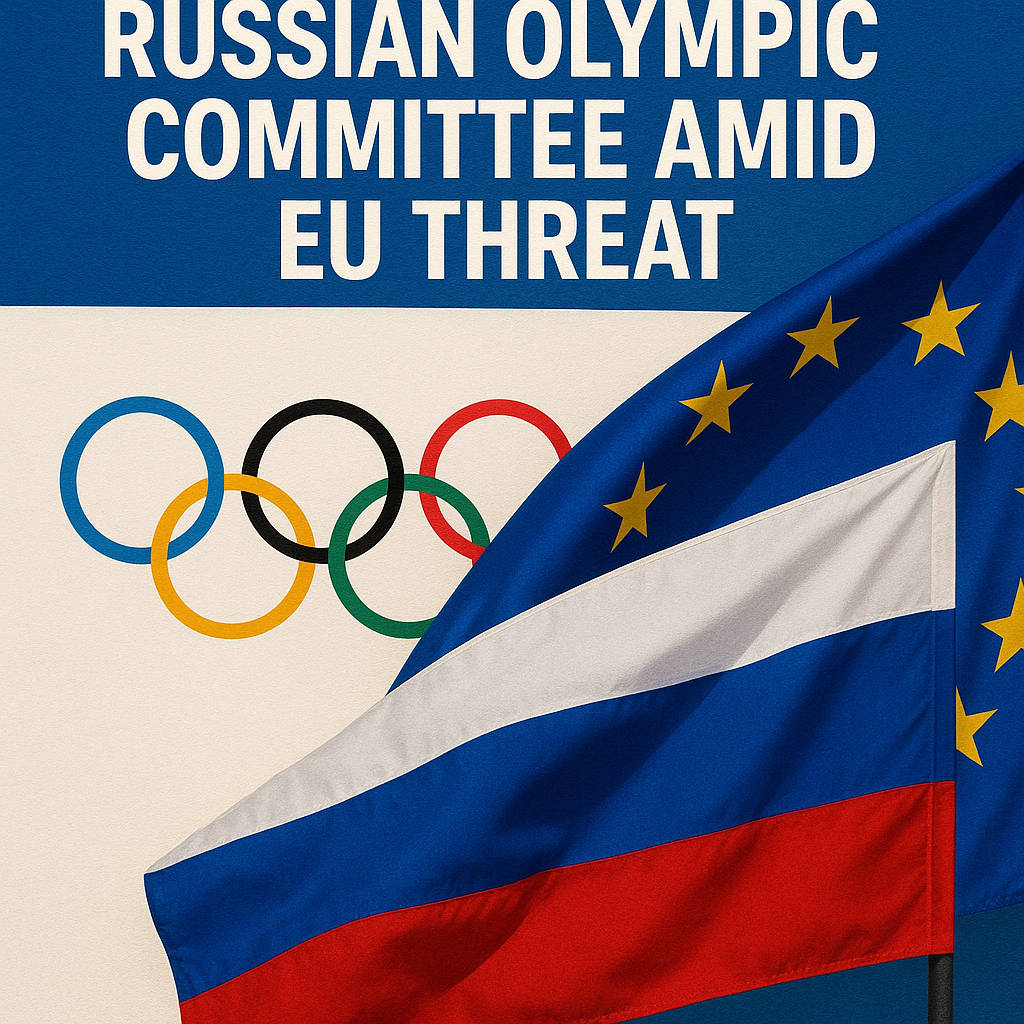
IOC Defends Russian Olympic Committee Amid EU Threat
The International Olympic Committee (IOC) has come under scrutiny as it defends the reinstatement of the Russian Olympic Committee, a decision that has stirred a contentious debate amid threats from the European Union. This scenario unfolds against a backdrop of geopolitical tensions and competing narratives around sportsmanship and national representation.

The Context of Reinstatement
In a recent statement, the IOC reaffirmed its commitment to inclusivity in the realm of international sports. They argued that the suspension of the Russian Olympic Committee, initially imposed due to violations related to doping scandals, should not preclude Russian athletes from participating in Olympic events. The IOC emphasized that it aims to uphold the principle of universality, proposing that athletes should not be collectively punished for the actions of their governing bodies.

This perspective finds support in various sports communities that advocate for fair competition devoid of geopolitical influences. Proponents of this view contend that the right to compete should not be determined by a nation’s political affiliations or the actions of its government. Examples from history, such as the Olympic Games not being boycotted despite political tensions, are often cited to illustrate this point.

The European Union’s Reaction
Conversely, the European Union has expressed strong dissatisfaction with the IOC’s stance, signaling that it may impose further sanctions or restrictions on Russian athletes. An official spokesperson indicated that the EU is considering measures that would isolate Russia from major sporting events, arguing that the IOC’s decision undermines the values that underpin the Olympic Spirit. They frame this move as necessary to uphold the integrity of sports, aligning with broader sanctions regarding Russia’s actions on the global stage.
Experts like Dr. Maria Tzankova, a political analyst, suggest that the EU’s proposed actions reflect an ongoing strategy to isolate Russia diplomatically and economically. “The EU’s decision is not just about sports; it’s a part of a larger narrative about resisting aggression and upholding international law,” she noted. Such sentiments resonate among countries that believe sports can serve as a tool for soft power and international relations.
Weighing Different Perspectives
The dichotomy between these positions illustrates the complexities surrounding sports governance in politically charged environments. On one hand, advocates for reinstatement argue that athletes should not be collateral damage in this conflict; on the other, many believe that allowing Russia back into the Olympic fold sends a message that actions violating international norms can go unpunished.
From a practical standpoint, the IOC faces the daunting challenge of maintaining its relevance as a unifying force in sports while navigating the socio-political landscapes that influence national participation. A balanced approach might necessitate the IOC implementing stringent oversight for Russian athletes, ensuring compliance with international standards, while still allowing them opportunities for competition.
Looking Ahead
The discussions surrounding Russian participation at the Olympic level are likely to evolve as geopolitical tensions shift and new developments unfold. The IOC has stated its intention to consult with various stakeholders, including national Olympic committees and international sports federations, to gauge opinions on the matter.
As the situation develops, it remains to be seen whether the IOC will modify its stance in light of external pressures or adhere staunchly to its principles of inclusivity. The outcome of this ongoing debate will not only influence the Olympic Games but could also serve as a reflection of the broader relationship between sports and politics.
In conclusion, while the IOC defends its position as a promoter of universality in sports, the European Union’s stern disapproval highlights the intricate balance between athletic representation and global diplomatic relations. As both sides articulate their beliefs, the conversation underscores the vital intersection of sports, ethics, and international relations, a complexity that will continue to challenge governing bodies for years to come.