
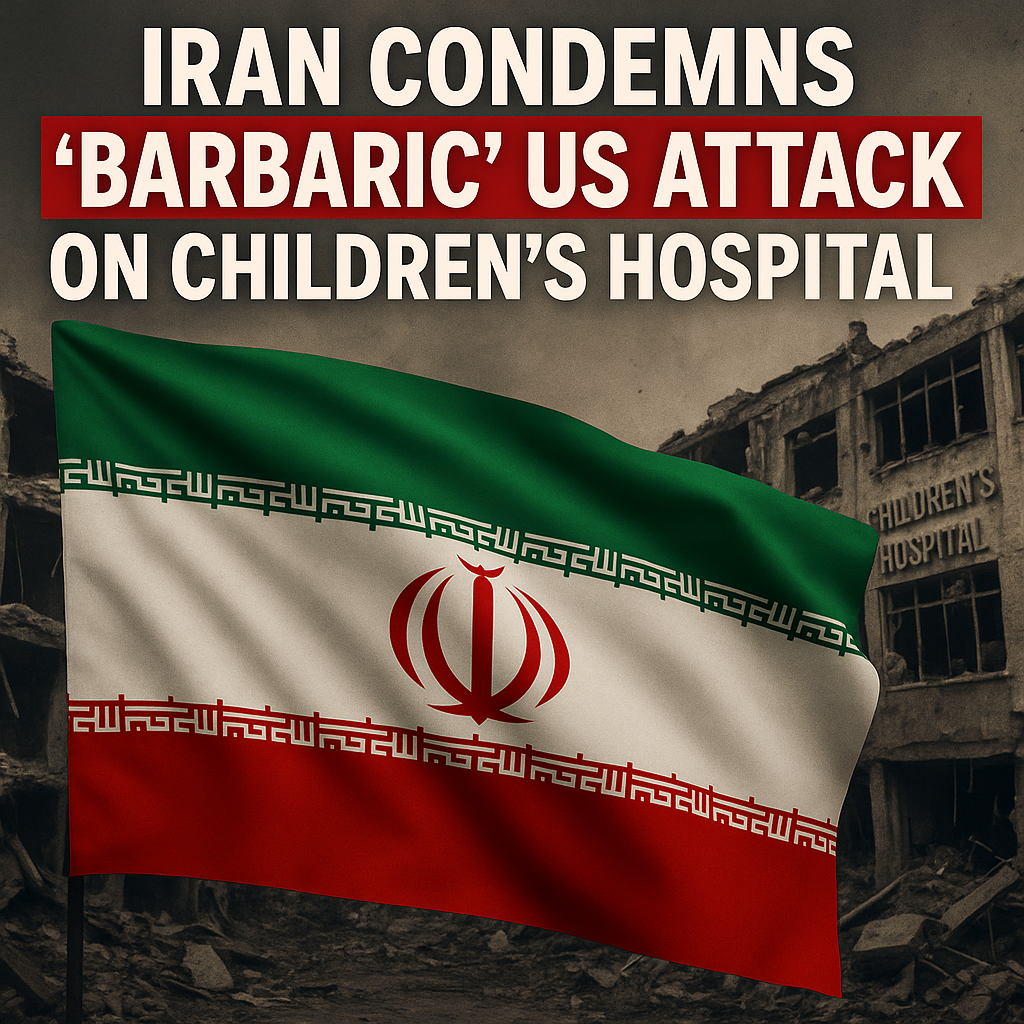
Iran Condemns ‘Barbaric’ US Attack on Children’s Hospital
Iran has recently condemned what it describes as a “barbaric” U.S. attack near a children’s cancer hospital, prompting widespread international attention and debate over the complexities of military operations in conflict zones. This incident, which has spurred outrage from Iranian officials, raises critical questions about the ethics of military engagement, humanitarian considerations, and geopolitical tensions in the region.

Context of the Attack
The U.S. airstrike in question reportedly occurred in a densely populated area, leading to significant civilian casualties and damage to essential medical facilities. The Iranian government responded swiftly, labeling the attack as inhumane and indicative of a broader pattern of aggression by the United States. Officials pointed to the plight of vulnerable populations, particularly children battling cancer, arguing that military actions should account for humanitarian implications.

In stark contrast, U.S. officials have defended their operations, asserting that the attack targeted verified threats posed by militant groups operating in the vicinity. These groups, according to statements from the Pentagon, are often embedded within civilian structures, complicating military decisions. This perspective emphasizes the challenge of navigating complex urban warfare, where combatants may utilize civilian infrastructure for cover.

International Reaction
Reactions to the attack have been sharply divided. In Iran, leaders have escalated their rhetoric, calling for a global outcry against what they term “American imperialism.” For Tehran, this incident serves as a rallying point to foster domestic solidarity and to portray the U.S. as the antagonist in a larger narrative of oppression faced by the Iranian people.
Conversely, international bodies and several human rights organizations have expressed concern over the strike’s implications for civilian safety. Advocacy groups argue that irrespective of military objectives, the loss of innocent lives—particularly children—should compel nations to reevaluate their engagement strategies. The United Nations has urged parties involved to prioritize the protection of civilians and adhere strictly to international humanitarian law.
Weighing Perspectives
This incident exemplifies the ongoing tug-of-war between national security imperatives and humanitarian obligations. While some justify military actions as necessary for combating terrorism, others emphasize that strategies causing civilian harm could engender further conflict and resentment.
Critics of U.S. military strategy argue that such actions may undermine efforts to build lasting peace in conflict zones. They posit that bombings leading to civilian casualties can radicalize local populations, potentially nurturing future generations hostile to foreign military presence. Thus, the broader ramifications of military strikes must include an assessment of their long-term impact on peace and stability.
In this case, Iranian condemnation highlights a potential strategy of the Iranian regime to consolidate domestic support while also framing the narrative against American forces. It sees the conflict not just as military aggression but as an affront to the moral fabric of international relations, thereby seeking to galvanize support both within Iran and among its allies.
Conclusion: Navigating Complexity in Military Engagement
The recent events surrounding the U.S. attack near a children’s hospital expose a fundamental dilemma in modern warfare: how to balance military objectives with ethical considerations regarding civilian safety. This incident underscores the global responsibility to advocate for comprehensive strategies that minimize civilian casualties and prioritize humanitarian needs.
As the world watches the consequences unfold, it remains clear that this situation is emblematic of broader geopolitical tensions. Striking the balance between security and morality is no easy task; however, the push for a dialogue that prioritizes humanity should resonate strongly in discussions about military interventions. Ultimately, responsible leadership should ensure that the pursuit of national security does not lead to tragic outcomes, particularly when vulnerable populations are at stake.















