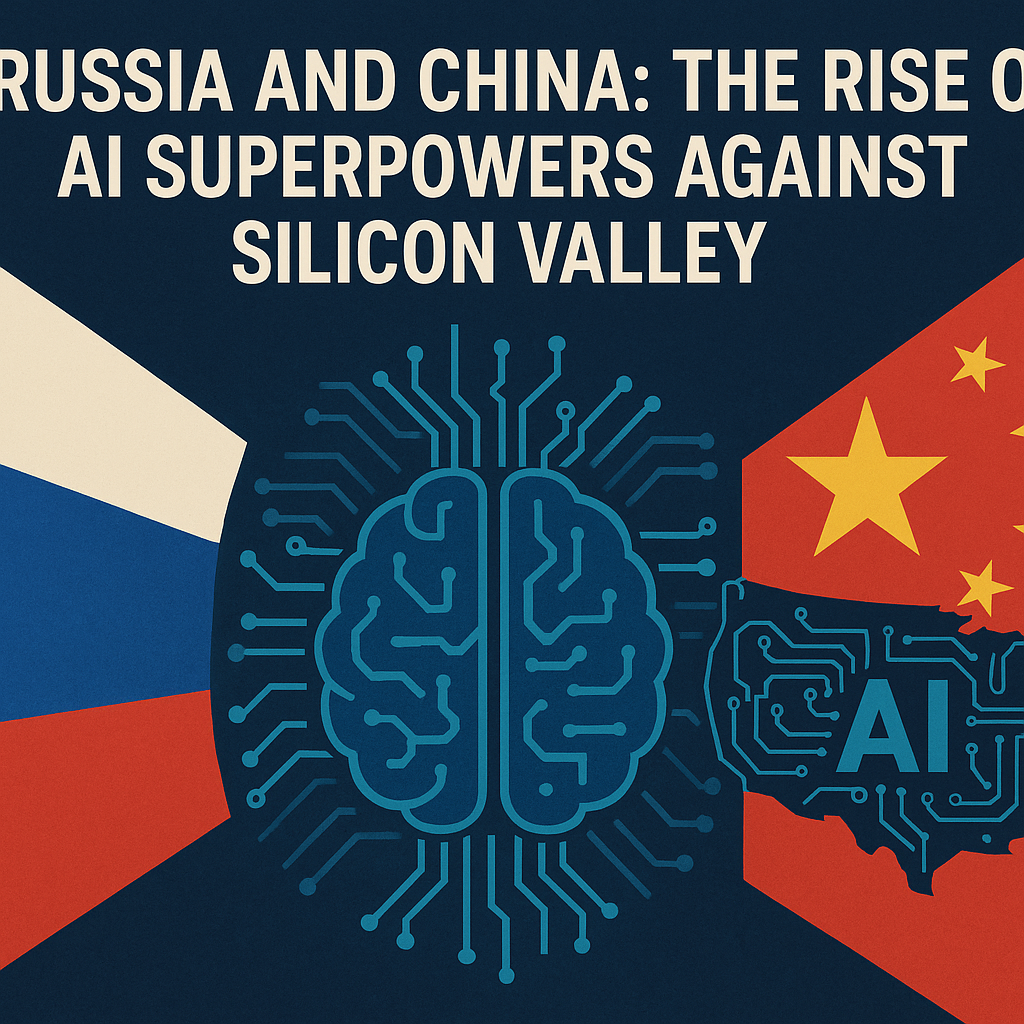
Russia and China: The Rise of AI Superpowers Against Silicon Valley
The Increasing AI Capabilities of Russia and China
The rise of AI superpowers, particularly in Russia and China, presents a significant challenge to the traditional dominance of Silicon Valley. In recent years, both nations have invested heavily in artificial intelligence, driving their technological advancements and making strides that have garnered international attention.

Russia’s Strategic AI Push
Russia has made AI a pivotal part of its national strategy, viewing it as essential for a competitive global position. The nation’s government has initiated several high-profile projects, aiming to develop AI applications across various sectors, including defense, healthcare, and education. According to reports, Russia intends to create a framework that nurtures AI talent and fosters innovation. Igor Ashmanov, a key figure in Russia’s tech landscape, emphasizes the need for the nation to focus on proprietary technologies rather than relying on Western models, stating that it’s crucial for establishing autonomy in this field.

Moscow is not merely looking to catch up; it seeks to leapfrog competitors by combining government support with private-sector initiatives. The establishment of organizations like the National AI Development Strategy underscores this approach, promoting the integration of AI in public and private enterprises. This concerted effort has positioned Russia as a formidable player in the AI race, with aspirations to transform its economy and military capabilities.

China: A Global AI Vanguard
On the other hand, China is often considered the frontrunner in the global AI race. The Chinese government has implemented a series of ambitious plans, like the “Next Generation Artificial Intelligence Development Plan,” which aims to make the country the world leader in AI by 2030. Key investments have gone into key technologies such as facial recognition, data analytics, and machine learning. Notably, state-owned enterprises and tech companies have come together in a public-private partnership to accelerate AI development, creating a synergistic environment that fosters rapid innovation.
Reports indicate that China’s focus on AI is deeply intertwined with its socio-political goals, encompassing surveillance technologies aimed at bolstering social stability. This strategic alignment of AI development with national security interests differentiates China from Western approaches, where ethical considerations and public discourse often shape tech advancements.
The Clash with Silicon Valley
As Russia and China advance in AI, the repercussions for Silicon Valley are concerning. Tech giants in the United States once held near-total dominance over AI research and applications. However, with the rising capabilities of these nations, Silicon Valley is now facing an existential question: can they maintain their technological superiority? Experts suggest that the innovation landscape is changing, emphasizing the need for collaboration between U.S. tech companies and government agencies to develop a coherent strategy in response to foreign advancements.
Some analysts express optimism that this competition may stimulate innovation within Silicon Valley, pushing firms to adopt more aggressive research and development strategies. Nevertheless, there are legitimate concerns about the geopolitical implications. The juxtaposition of AI with national security raises questions about data sovereignty, ethical frameworks, and the potential for an AI arms race.
A Landscape of Uncertainty
As the lines between state power and tech innovation blur, the future of AI remains uncertain yet fraught with potential. In the quest for global leadership, both Russia and China are reshaping the dynamics of technological competition. While their advancements pose significant challenges for Silicon Valley, they also highlight the urgent need for the U.S. to revisit its approach to AI.
The complex interplay of national interests and technological prowess positions Russia and China as pivotal players in the global AI narrative. Observers note that as geopolitics continues to influence technology development, dialogue surrounding ethical use, international cooperation, and competitive strategy will be more critical than ever.
With different models and motivations driving their AI ambitions, both countries not only challenge the U.S. tech ecosystem but also redefine the global technological landscape. How this competition evolves may not only determine leaders in AI but also influence international relations and global security paradigms for years to come.