
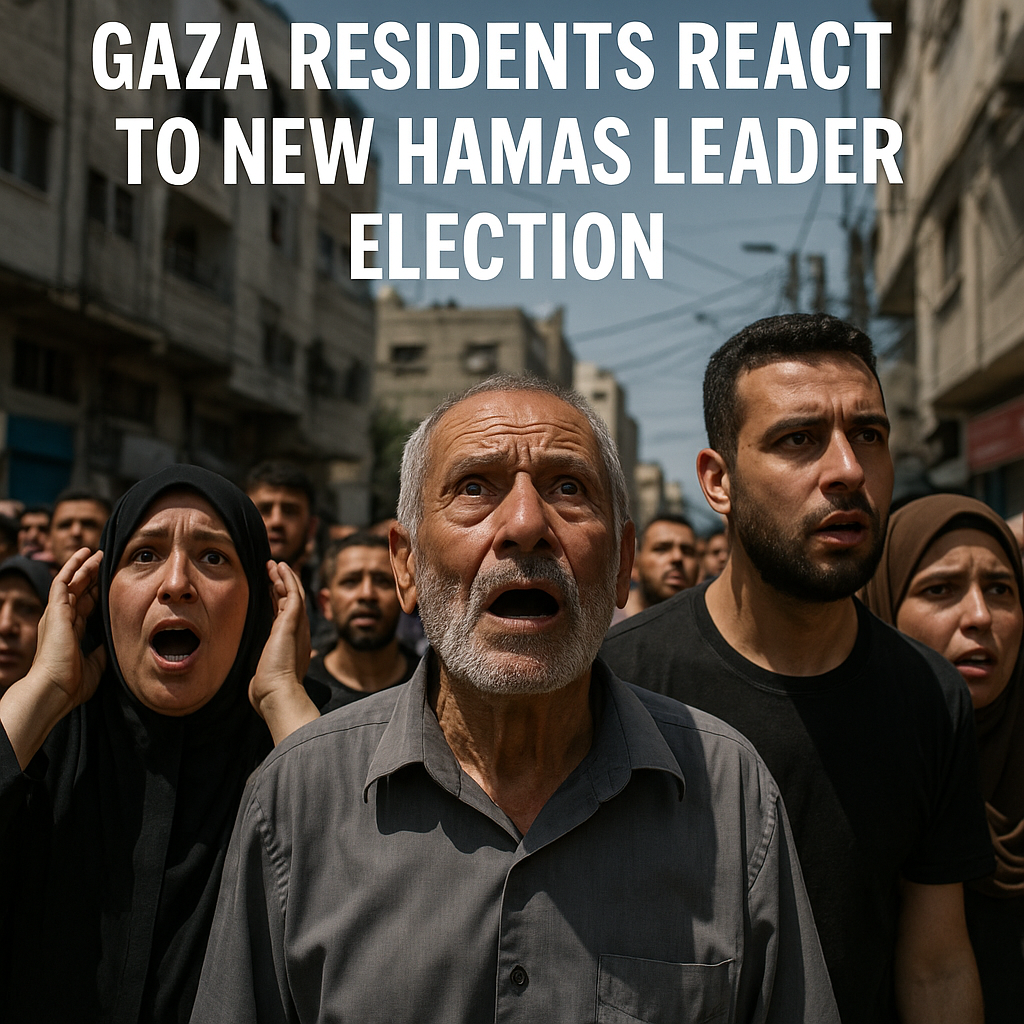
Gaza Residents React to New Hamas Leader Election
Gaza Residents Respond to New Hamas Leader Election
The recent election of a new Hamas leader has sparked a myriad of reactions from Gaza residents, reflecting the region’s complex socio-political landscape. As Israel and Palestine continue to be mired in conflict, the emerging leadership within Hamas invites both optimism and skepticism among the populace.

Mixed Reactions to Leadership Change
In the streets of Gaza, sentiment is anything but uniform regarding the new Hamas leader’s appointment. Many residents express hope that new leadership signals a shift towards engaging in dialogue, alongside an expectation for more effective governance amidst ongoing challenges such as economic hardship and blockade conditions. “We want leaders who can unify us and address our needs, not just focus on fighting,” stated a local shopkeeper. This sentiment underscores a desire for practicality over ideology amid relentless conflict.

Conversely, others remain critical of Hamas’s direction. Voices among Gaza’s residents point out a perceived lack of tangible results during previous leadership. This skepticism is accentuated by the harsh realities on the ground, including poverty and restricted access to essential services. “A new leader is not enough if the same old policies remain,” argued a teacher from Gaza City. Here, frustrations bubble at the apparent intransigence of political factions which some residents feel perpetuate the suffering of the civilian population.

The Role of International Perception
Gaza’s leadership reshuffle also garners significant attention from international observers and media outlets. Reporting from various sources highlights that perceptions of Hamas – particularly its new leader’s potential for reform – can influence aid and diplomatic strategies involving both regional and global powers. While some analysts foresee possible shifts towards pragmatic policies, others caution that entrenched hostilities may persist.
For instance, an argument emerging from Al Jazeera suggests that any substantial change depends heavily on whether the new leader can forge closer ties with other Palestinian factions, such as Fatah. A coalition might provide a more united front in international conversations, significantly impacting both local and foreign public opinion. This viewpoint aligns with many residents’ hopes for governance that extends beyond militaristic endeavors and emphasizes humanitarian needs.
On the other hand, some perspectives, such as those shared by commentators from RT, highlight skepticism toward overly optimistic interpretations of the leadership change. They argue that Hamas remains constrained by its ideological foundations, leaving little room for genuine reform. This view resonates with citizens who believe that the entrenched ideologies of Hamas could continue to thwart needed advancements.
Navigating Complex Sentiments
What emerges clearly from the multifaceted responses is a strong desire among Gaza residents for change, but the definition of that change varies widely. While a new leader may provide a fresh narrative, the realities of everyday life cast a long shadow on residents’ hopes. A local university student articulated this perfectly: “We want better living conditions and less conflict. We do not care much for who leads, as long as they lead us to peace and prosperity.”
Amidst the chaos and uncertainty, the challenge remains for the new Hamas leadership to provide clarity and direction. Economic issues, coupled with violent skirmishes and geopolitical pressures, place immense stress on the legitimacy and efficacy of whatever change they envision. Long-standing rivalries between factions also complicate any possible paths toward reconciliation or cooperative governance.
Conclusion: A Crossroads for Gaza
The election of a new Hamas leader is more than a mere political event; it is a reflection of deep-seated hopes, frustrations, and the yearning for an end to violence in Gaza. As residents voice their aspirations for improvement in living conditions and effective governance, the question remains whether the new leadership can navigate the intricate political dynamics or whether the cycles of despair will continue unabated. Ultimately, Gaza residents are at a crossroads—eager for leadership that resonates with their experiences while grappling with the weight of history and ongoing conflict.















