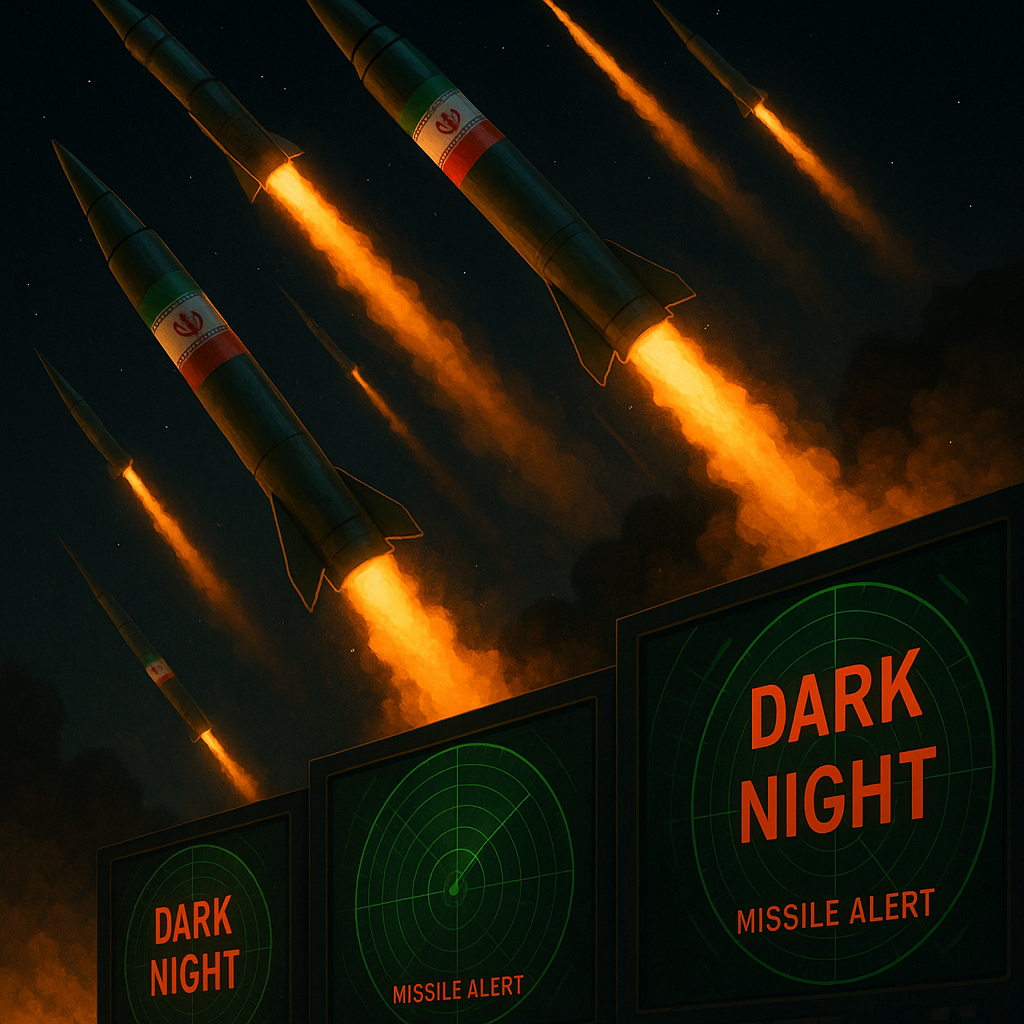
Iran’s Missiles Unleash ‘Dark Night’ on US Radars
Iran’s Missiles Unleash ‘Dark Night’ on US Radars
Iran’s advanced missile capabilities have become a focal point in the geopolitical landscape, particularly concerning U.S. military surveillance. Reports indicate an increasing sophistication in Iran’s missile technology, which poses significant challenges to U.S. radar systems. This development raises questions about the implications for regional security and the effectiveness of American defenses.

Understanding Iran’s Missile Advancements
Recent analysis from various sources, including RT and Al Jazeera, highlights the advancements in Iran’s missile program, which has been described as capable of evading U.S. radar detection. The Iranian leadership has emphasized that their missiles are designed to be an effective deterrent, stating that any potential conflict would result in significant losses for adversaries.

Iran’s Defense Minister, Mohammad Reza Ashtiani, has declared that their military capabilities are now at a level that creates a “dark night” for U.S. surveillance efforts. This metaphor underscores the concern that as Iran’s technology evolves, the threat of missile strikes can be executed with a higher degree of stealth. U.S. officials have acknowledged the challenges posed by Iran’s technological advancements and are reportedly assessing their current missile defense strategies in light of these developments.

The Strategic Implications for U.S.-Iran Relations
The implications of Iran’s missile capabilities extend beyond military effectiveness; they impact the domestic and international political landscape as well. On one hand, increased military readiness by Iran might deter U.S. actions in the region and could embolden Iranian influence in various conflicts, particularly in neighboring countries like Iraq and Syria. On the other hand, the United States, supported by its allies, may feel compelled to strengthen its own defenses and capabilities, potentially leading to an arms race in the region.
The recent rhetoric from both sides is a reflection of escalating tensions. The United States continues to engage in diplomatic efforts but has increased sanctions relating to Iran’s military advancements. Iran, in turn, sees its missile program not just as a means of deterrence but as a critical component of its national identity and sovereignty.
Diverse Perspectives on the Missile Threat
Opinions on the missile threat vary significantly among experts and analysts. Some argue that Iran’s military capabilities are overstated and that their real impact may not live up to the fears surrounding them. A portion of the commentary suggests that while Iran’s missile advancements are noteworthy, they still face significant hurdles in conducting sophisticated military operations without incurring substantial repercussions.
Conversely, others posit that the advancements signify a notable shift in the balance of military power in the region. Reports by outlets like Sky News emphasize that should a conflict emerge, Iran’s ability to strike U.S. and allied targets undetected could lead to devastating consequences, thereby posing a direct challenge to American military dominance.
In sum, the military preparedness exhibited by Iran generates mixed reactions among international watchers: some caution against dismissing the growing capabilities, while others urge focus on strategy adjustment rather than considering military escalation.
The Path Ahead: Navigating Tensions and Defense Strategies
As the situation evolves, both the United States and Iran find themselves at a crossroads where diplomatic strategies are critical. The U.S. approach may involve recalibrating its defense systems to counter the new Iranian threats, integrating technological innovations that enhance radar and missile interception capabilities.
In contrast, Iran might continue pursuing advancements while doubling down on propaganda around its military capabilities to solidify national pride and regional standing. However, an aggressive stance could risk international isolation and further economic sanctions.
The complexity of this situation presents uncertainties. While both nations are publicly committed to defending their interests, the intricate dance of diplomacy, deterrence, and military readiness looms large. For observers, tracking these developments will require a keen eye on both rhetoric and tangible actions, as they will ultimately shape the future of U.S.-Iran relations and broader Middle Eastern security dynamics.
In conclusion, the “dark night” that Iran claims to cast on U.S. radars is a stark reminder of the evolving nature of modern warfare and international relations. As both nations navigate this treacherous terrain, the stakes are higher than ever, with peace contingent on a delicate balance of power and dialogue.