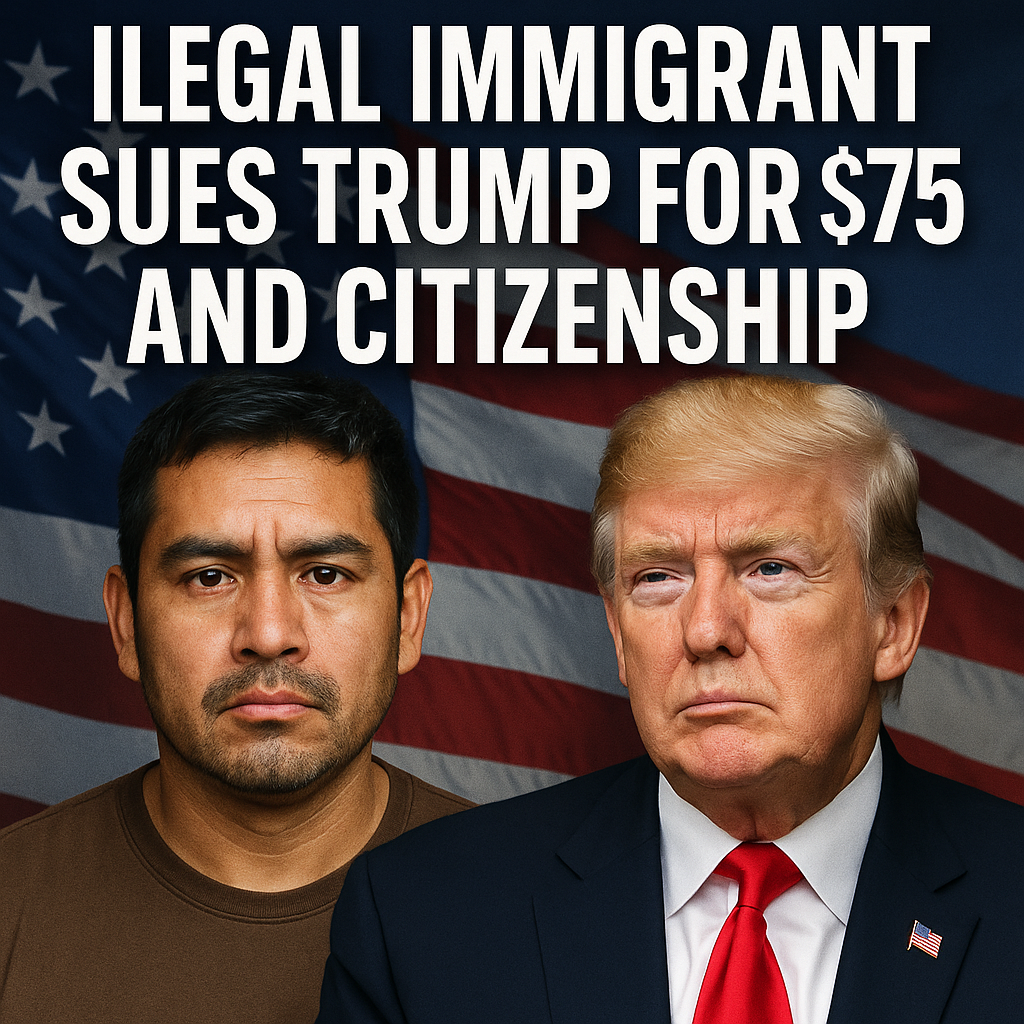
Illegal Immigrant Sues Trump for $75M and Citizenship
Controversial Legal Action: An Illegal Immigrant Sues Trump for $75 Million
In a striking turn of events, a lawsuit has emerged where an illegal immigrant is suing former President Donald Trump for $75 million while simultaneously seeking U.S. citizenship. This case not only highlights the murky intersections of immigration law but also ignites intense debates about civil rights, accountability, and the responsibilities of former leaders.

Background of the Lawsuit
The plaintiff, an undocumented individual from Mexico, claims that Trump’s comments during his presidency incited violence against immigrants, creating a hostile environment that led to threats against his life. Reports suggest that the lawsuit outlines incidents where Trump referred to immigrants in derogatory terms, contributing to a culture of fear and discrimination. Such rhetoric is argued to have direct consequences, especially in communities where immigrants are already vulnerable to violence and harassment.

Legal experts have weighed in on the case, acknowledging the unusual nature of the lawsuit. “Typically, civil lawsuits involve personal injury or damages based on specific actions,” noted one analyst. “However, the attempt to tie those actions to a political figure, especially a former president, complicates the case significantly.” This indicates that the legal grounds of the suit may test the boundaries of First Amendment rights and the responsibilities of public figures.

Varying Perspectives on Immigration and Accountability
As discussions around this case unfold, opinions diverge starkly among various observers. While some individuals advocate for the importance of holding political leaders accountable for their words, others firmly believe that the lawsuit is an abuse of the legal system. Critics argue that such lawsuits could set a dangerous precedent where public figures might be intimidated into self-censorship for fear of potential legal action.
In a report by Al Jazeera, community advocates have highlighted the real fear that immigrants face, often stemming from inflammatory political discourse. “When public figures dehumanize a group, their followers may feel emboldened to act on those words,” one advocate stated. This sentiment resonates with many who view verbal attacks as not merely speech but actions that possess tangible consequences.
Conversely, some legal scholars caution against conflating political speech with actionable harm. They argue that civil lawsuits driven by political rhetoric may distract from systemic issues that need addressing. “This case could dilute serious conversations about immigration reform and lead to an overreach of legal action against free speech,” commented a constitutional lawyer.
The Broader Implications
The implications of this lawsuit stretch beyond individual circumstances, representing a broader conversation about immigration rights and the treatment of undocumented individuals in the United States. With approximately 11 million undocumented immigrants living in the country, this case underscores the ongoing struggle for recognition, rights, and justice.
While the lawsuit calls into question the effects of public discourse on immigrants, it also opens the door to discussing larger humanitarian concerns. For many, the focus should shift toward creating pathways for legal status and protection against violence, rather than merely pursuing punitive actions against those in political positions.
Legislative measures that seek to support vulnerable immigrant populations could serve as a proactive solution, addressing systemic issues rather than allowing the judicial system to navigate political grievances. Advocacy groups emphasize that while holding leaders accountable is crucial, directing efforts toward meaningful reforms could yield more significant benefits for the immigrant community.
Conclusion: Navigating Complexity in Immigrant Rights
The case of an illegal immigrant suing Donald Trump for $75 million not only surfaces issues of personal injury claims and constitutional rights but also probes the larger framework of how society treats its most vulnerable groups. It stands at a crossroads of legal action, political responsibility, and community health, reflecting the tensions inherent in a polarizing immigration debate.
As this lawsuit progresses, it serves as a reminder of the complex landscapes surrounding immigration policy and the profound impacts of how leaders communicate. While the resolution may hinge on legal technicalities, the broader conversations surrounding accountability and immigrant rights are far from settled, highlighting the continued need for dialogue and reform in American immigration discourse.