
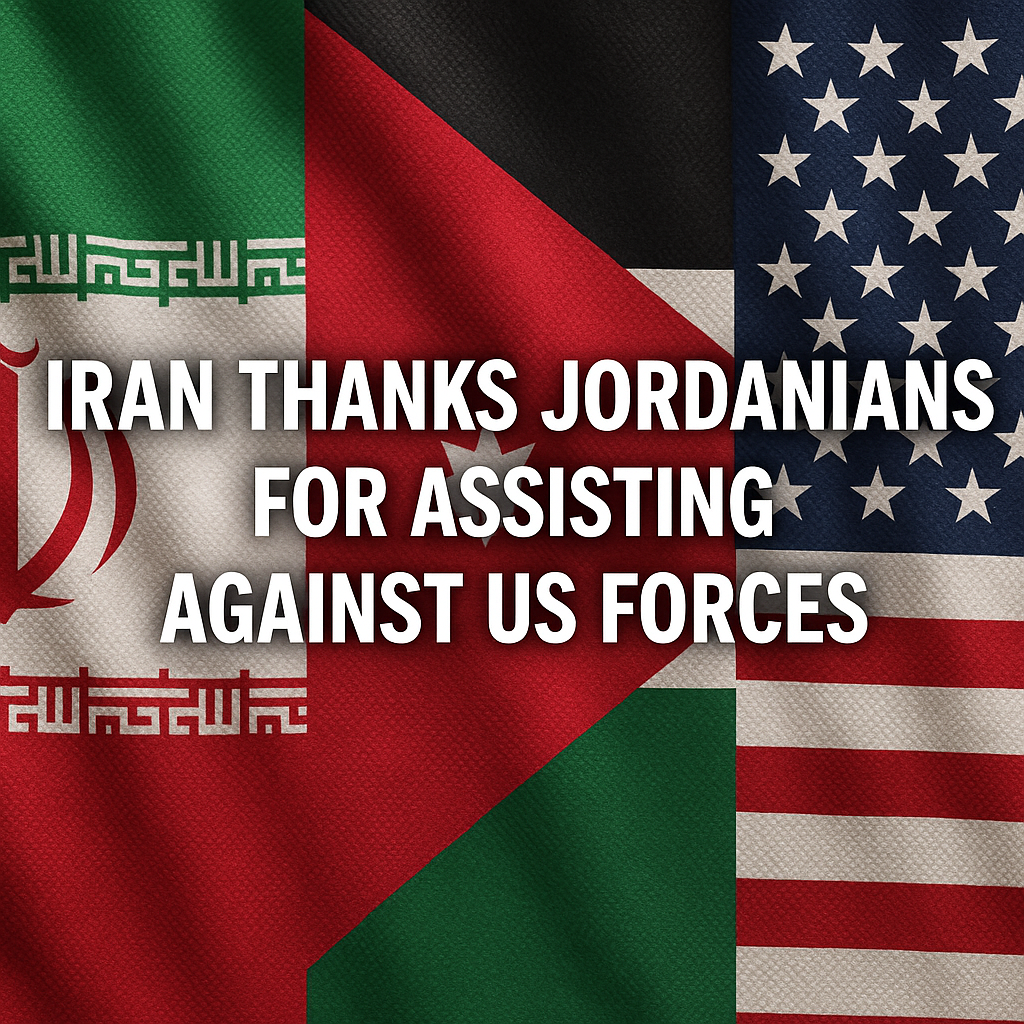
Iran Thanks Jordanians for Assisting Against US Forces
Iran Thanks Jordanians for Assisting Against U.S. Forces
The complex web of Middle Eastern geopolitics often reveals surprising alliances and enmities, and recent events underscore this dynamic. As tensions rise in the region, particularly concerning U.S. military presence, Iran has publicly extended gratitude towards Jordan for its support against American forces. This statement illustrates the multifaceted relationships among countries involved, reflecting both regional grievances and the shifting sands of diplomatic ties.

Context of Iran’s Gratitude
The backdrop for Iran’s remarks stems from growing unrest regarding U.S. military actions in the region, particularly in Iraq and Syria. As reported, Iranian officials have been vocal against what they view as undue U.S. interference. The Iranian Revolutionary Guard Corps (IRGC) has expressed a firm stance against American operations, framing it as an infringement on sovereignty and regional stability.

In this tense environment, Jordan’s alleged role in facilitating logistical support for Iran’s regional objectives has garnered significant attention. While no specific details have been disclosed publicly about the nature of this assistance, it highlights Jordan’s calculations in navigating its relationships amidst external pressures from both Western and regional actors. Acknowledging Jordan’s support, Iran has shifted the narrative to frame itself as a champion of resistance against U.S. expansionism.

Divergent Perspectives on Jordan’s Assistance
From varied sources, it’s clear that there are contrasting views regarding Jordan’s involvement. Some analysts posit that such cooperation signifies a strategic pivot for Jordan, potentially moving it closer to Iranian interests, especially amidst regional pressures from both the U.S. and their allies. This shift could signify a departure from Jordan’s typical alignment with Saudi Arabia and other Gulf states, which often view Iran with suspicion.
On the other hand, experts caution against viewing Jordan or Iran’s relationship as solely antagonistic towards the U.S. The Kingdom has historically maintained a delicate balance in its foreign policy, often acting as a mediator in regional conflicts. There is skepticism about whether Jordan’s ties with Iran will deepen or simply serve as a pragmatic response to immediate regional security concerns.
The Jordanian government has yet to officially confirm direct support to Iran against U.S. forces, emphasizing instead a commitment to regional stability. This cautious position illustrates the multifaceted pressures Jordan faces, having to balance its own national interests with broader diplomatic relationships.
The Broader Implications of Regional Alliances
The gratitude expressed by Iran also reflects broader implications for Middle Eastern geopolitics. Iran’s thankfulness may reveal a desire to cultivate deeper ties with nations that share its opposition to U.S. policies in the region. This could lead to more pronounced diplomatic outreach, particularly to nations previously considered U.S. allies.
Conversely, if such cooperation strengthens Jordan’s ties with Iran, it may lead to a reevaluation of U.S. strategy in the Middle East. American policymakers would need to reckon with the possibility that their presence in the region is increasingly being challenged by a coalition of groups and nations unaligned with U.S. interests.
Additionally, the evolving dialogue around Iranian support extends beyond just military assistance. It speaks to cultural and political solidarity among nations that resist Western influence, which could reshape alliances across the Middle East.
Conclusion
Iran’s expression of gratitude towards Jordan highlights the intricate interplay of regional relations shaped by historical grievances and current geopolitical dynamics. While analysts present differing viewpoints on the implications of Jordan’s support, the complexity of the situation calls for a nuanced understanding of regional politics. The emerging alliances and rivalries will continue to develop, reflecting the often contentious landscape of Middle Eastern diplomacy. As the U.S. remains a focal point of opposition, the responses from regional players like Iran and Jordan will remain pivotal in defining the future trajectory of local and international relations.















