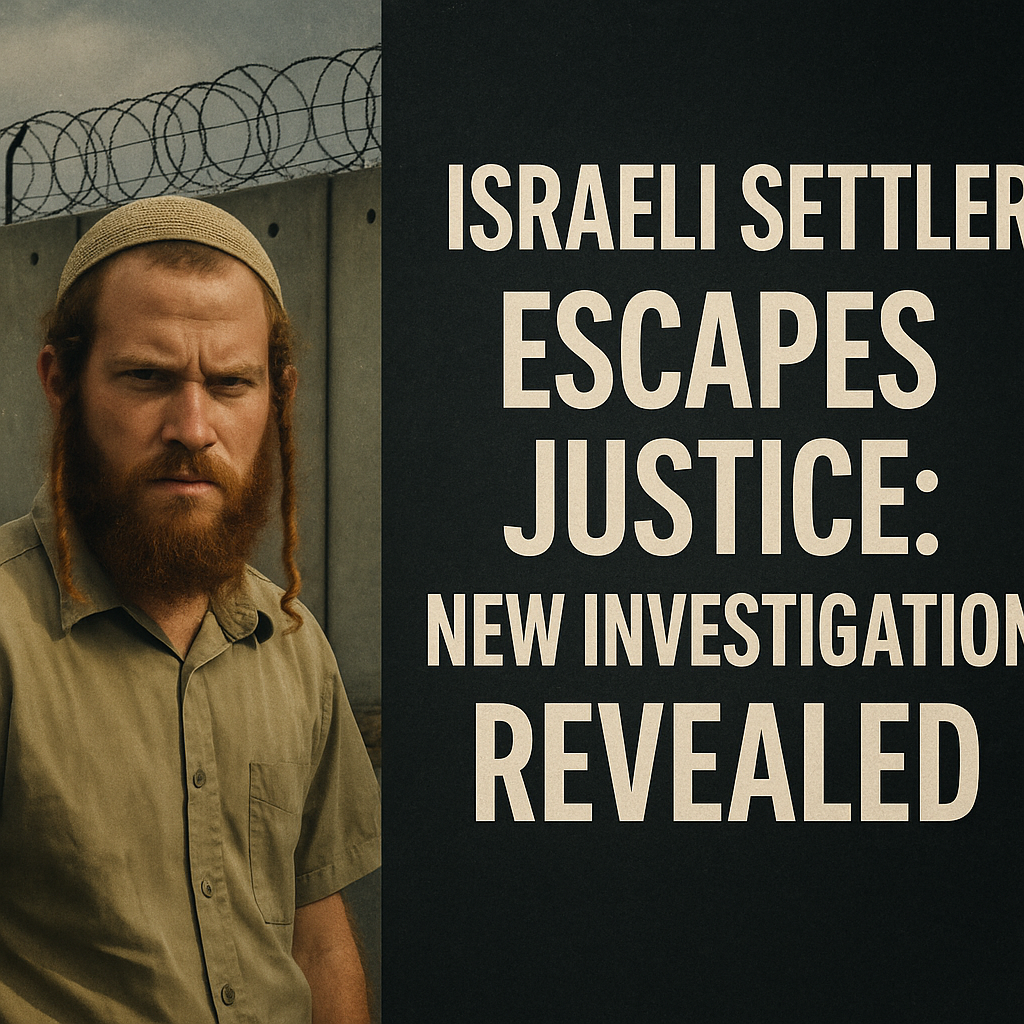
Israeli Settler Escapes Justice: New Investigation Revealed
Israeli Settler Escapes Justice: A Closer Look at New Investigations
Recent developments surrounding Israeli settlers and the legal frameworks that govern their actions have sparked significant controversy and debate. A new investigation sheds light on how an Israeli settler reportedly evaded legal repercussions for actions that many say should have warranted serious consequences. This situation raises a multitude of questions regarding justice, accountability, and the complexities of the Israeli-Palestinian conflict.

The Case in Question: An Overview
The investigation, as reported by Al Jazeera, details a particular incident where an Israeli settler allegedly engaged in violent behavior against Palestinian residents. Initial accounts suggest that the settler’s actions included both physical aggression and property damage. Despite these serious allegations, the legal outcomes have been remarkably lenient, leading to claims that systemic issues within the Israeli justice system may have allowed the settler to escape accountability.

Key elements of the case include:

– Allegations of Violence: Testimonies from Palestinian witnesses describe a scene of fear and reprisal, with claims that the settler’s actions were part of a larger pattern of violence against non-Jewish residents in the area.
– Lack of Accountability: Reports indicate that, instead of facing charges, the settler was allowed to evade prosecution, raising questions about the fairness of the judicial process.
Reactions and Perspectives
The dual narratives surrounding this case highlight a significant chasm in perceptions of justice in the region. On one hand, Palestinian advocates and human rights organizations argue that the investigation underscores a persistent bias in the Israeli legal system. They feel that such incidents are not isolated but rather reflective of a broader culture where settlers often face minimal repercussions for violent actions against Palestinians.
For instance, these groups often cite that, statistically, cases involving settlers tend to result in lighter penalties or no penalties at all. They contend that this lack of accountability fosters an environment where settlers feel emboldened to act with impunity.
On the other hand, Israeli officials and many settlers argue that the complexities of the situation are often overlooked in media narratives. They assert that security concerns and the fraught nature of the Israeli-Palestinian conflict necessitate a more nuanced examination of events. Settlers maintain that they, too, face threats and violence, positioning themselves as individuals who are simply defending their homes.
The Role of the Justice System
Understanding the intersections of law and societal dynamics requires an acknowledgment of the unique aspects of the Israeli legal system. Israel operates under a dual legal framework—civil law for its citizens, including Jewish settlers, and military law for Palestinians in occupied territories. This dichotomy has generated a fragmented justice system where outcomes can vary drastically based on identity.
Critics of the system assert that it helps perpetuate a cycle of violence by allowing settlers to sidestep consequences. For many Palestinians, the law becomes a tool of oppression rather than a means of protection. The disparity in legal outcomes not only raises moral concerns but also fuels tensions in an already volatile environment.
The Broader Implications
If contextualized within the ongoing Israeli-Palestinian conflict, this incident serves as a reminder of the broader issues at play. Escaped justice for settlers raises questions about the sustainability of peace and coexistence in the region. Frustrations stemming from perceived injustices can lead to greater animosity, making the prospects for resolution appear increasingly grim.
Moreover, as discussions around human rights continue to gain traction internationally, the implications of such investigative findings may also influence public opinion and diplomatic narratives. Advocates for Palestinian rights could leverage this incident to highlight systemic injustices, while supporters of the Israeli government may argue for more robust security measures to protect all civilians—both Jewish and Arab.
Conclusion: A Call for Accountability
The investigation into how this Israeli settler escaped justice encapsulates a critical moment in understanding the relationship between law, power, and societal perceptions within the context of the Israeli-Palestinian conflict. As long as legal frameworks appear biased, the cycle of violence and conflict is likely to persist.
Moving forward, the need for accountability and fairness in the legal system is paramount. Both sides must confront the hard truths of these dynamics if there is any hope for a resolution. The complexities of justice in this region remain intricately tied to the overarching pursuit of a peaceful coexistence, but without addressing these issues, the path forward remains hindered by mistrust and grievance.