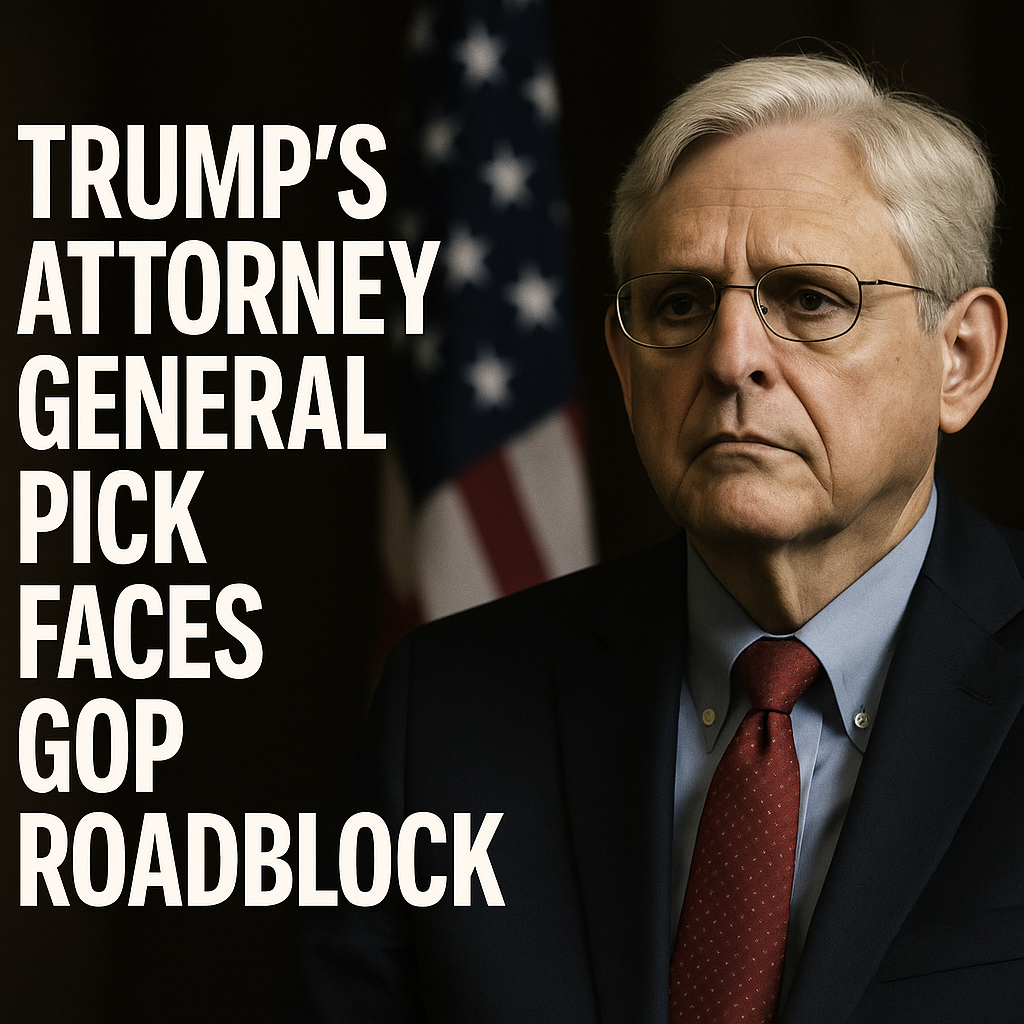
Trump’s Attorney General Pick Faces GOP Roadblock
Trump’s Attorney General Pick Faces GOP Roadblock
Donald Trump’s nominee for Attorney General is currently navigating a complex political landscape marked by skepticism and resistance within the Republican Party. The selection of this candidate is not only pivotal for the administration but is also stirring considerable debate regarding party unity and priorities moving forward.

The Controversial Nomination
The nomination process has already raised eyebrows, particularly given the stakes involved. Trump’s choice for the role has been met with a mixed response among GOP lawmakers. Several prominent figures from within the party have expressed hesitations based on the nominee’s previous positions and actions, especially related to law enforcement and criminal justice reform. This trepidation is underscored by a growing desire among some Republicans to distance themselves from past controversies that have marred previous administrations, leading to calls for fresh approaches to governance.

Critics within the GOP argue that endorsing a nominee who is closely associated with Trump’s more controversial policies would undermine their efforts to present a more reform-minded image to the public. As noted in various reports, these divisions represent a deeper ideological rift within the party, revealing contrasting views on how best to address issues of justice and public safety in today’s climate.

Key Opposition Voices
Several influential Republicans have publicly stated their concerns about the nomination. For instance, members of Congress have reiterated that the Attorney General’s role is critical in setting the tone for federal law enforcement, especially in a post-Trump era. They are advocating for a candidate who prioritizes bipartisanship and the rule of law, instead of someone perceived to be a continuation of Trump’s approach.
In contrast, Trump’s supporters within the GOP are rallying around the nominee, arguing that this individual represents the administration’s commitment to law and order, which resonates with many conservative voters. They claim that the pushback from within the party is a misjudgment of the nominee’s qualifications. This faction believes that the nominee can effectively handle upcoming challenges, including rising crime rates and critical reforms in policing.
Navigating the Road Ahead
The road to confirmation is likely to be tumultuous. As bipartisan debates heat up, the nominee faces questioning not just from Democrats but also from Republicans who are wary of the implications of their choice. This dual-layer of scrutiny could significantly impact the timeline of the confirmation process and the nominee’s ability to garner enough support in the Senate.
The ongoing dialogues surrounding the nomination reflect a broader discussion about the future of the Republican Party. Many within the party are grappling with the legacy of Trump’s presidency, influencing not only candidate selection but also policy direction. The outcome of this nomination could set a significant precedent for future appointments, particularly in shaping a party that both honors its base and seeks to appeal to a wider electorate.
Conclusion: An Uncertain Path
As it stands, Trump’s Attorney General pick faces an uncertain path, complicated by internal divisions and a broader reevaluation of party values. The political landscape is continually shifting, with the nominee representing both a unifying figure for some and a flashpoint for dissenting voices within the GOP.
With each passing day, the dynamics surrounding the nomination illustrate the delicate balance of power at play and the critical decisions facing Republican leadership. The ultimate outcome will not only determine the future of the Attorney General’s office but could also signal the trajectory of the party itself in the post-Trump era.