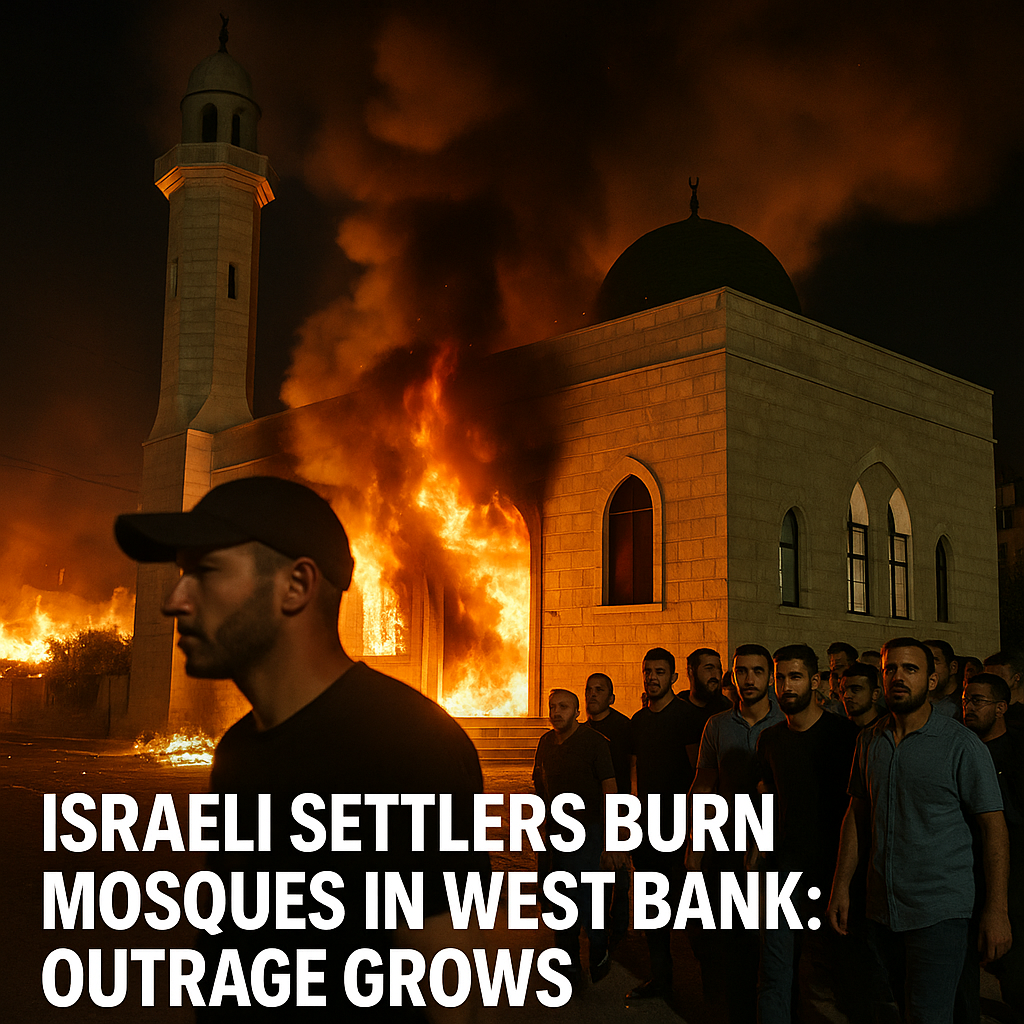
Israeli Settlers Burn Mosques in West Bank: Outrage Grows
Israeli Settlers Burn Mosques in West Bank: Outrage Grows
The disturbing incident of Israeli settlers burning mosques in the West Bank has sparked national and international outrage, highlighting the escalating tensions in a region fraught with longstanding conflicts. Recently, two mosques were set ablaze, raising alarm among both Palestinians and global observers, as these acts of violence pose serious questions about security, tolerance, and justice in the area.

The Incident and Its Implications
Reports indicate that the mosques were targeted during nighttime hours, with extensive damage inflicted on the buildings and surrounding areas. Eyewitness accounts describe flames engulfing the structures, leaving behind charred remains. Local Palestinian authorities have condemned the acts, labeling them as deliberate attempts to intimidate the Muslim community and assert dominance over local spaces.

In response, the Israeli government has reiterated its commitment to uphold the law and has promised investigations into the incidents. However, skepticism remains high among Palestinians and many international observers who argue that inadequate action against settlers often results in a climate of impunity. “This is not an isolated incident; it reflects a pattern of escalation fueled by extremist ideologies that promote hatred and violence,” one Palestinian leader stated, emphasizing the urgent need for accountability.

Diverse Perspectives on the Issue
The reactions to these attacks are varied, with sentiments oscillating between anger, sorrow, and calls for justice. Al Jazeera reported a growing demand for the Israeli government to take stronger measures against settler violence, arguing that a lack of action emboldens extremists and further inflames tensions in an already volatile environment. Many fear that such acts will provoke counter-attacks, keeping the cycle of violence alive.
Conversely, supporters of Israeli settlers argue that the actions of a few do not represent the larger community. They emphasize the complexities of security in the region and often cite historical grievances that frame these acts within a broader context of conflict. “While any act of violence is condemned, it’s crucial to look at the broader picture and the ongoing provocations that settlers face,” a spokesperson for a settler organization remarked.
Despite differing opinions, the overall conclusion among various observers is clear: the burning of mosques represents a concerning trend where the marginalization of Palestinian rights and properties is carried out, often without repercussions.
The International Response
The international community has also responded with growing alarm. Several civil rights organizations have issued statements condemning the violence, viewing it as part of a broader campaign of intimidation against Palestinians. Human rights groups have urged the United Nations to intervene and call for an independent investigation into the incidents.
“Incidents like these are not just local issues—they resonate on a global scale. They symbolize the broader human rights violations occurring in the occupied territories,” stated an official from Human Rights Watch. This growing international interest underlines the urgency for dialogue aimed at addressing both security and rights issues that have pervaded the Israeli-Palestinian conflict for decades.
In contrast, some political commentators suggest that international responses often fail to take into account the complexities on the ground, arguing that enabling frameworks for dialogue and cooperation are paramount for sustainable peace.
Conclusion: Navigating a Path Forward
The burning of mosques in the West Bank is a stark reminder of the volatility within the region and the enduring challenges that impede peace. While the Israeli government asserts its commitment to addressing these violent acts, significant skepticism remains regarding its ability to do so effectively. A clear path forward necessitates constructive dialogue, strong accountability measures, and sustained international engagement that acknowledges the rights and dignities of all affected parties.
As the situation continues to evolve, the need for a holistic approach that embraces both security and justice has never been more urgent. Bridging the divide between the perspectives of Israelis and Palestinians, cultivating empathy, and fostering understanding will be essential in resolving conflicts peacefully and equitably. The incidents of violence may not be the end of a difficult chapter in the region but rather a critical juncture from which to build toward a more just future.