
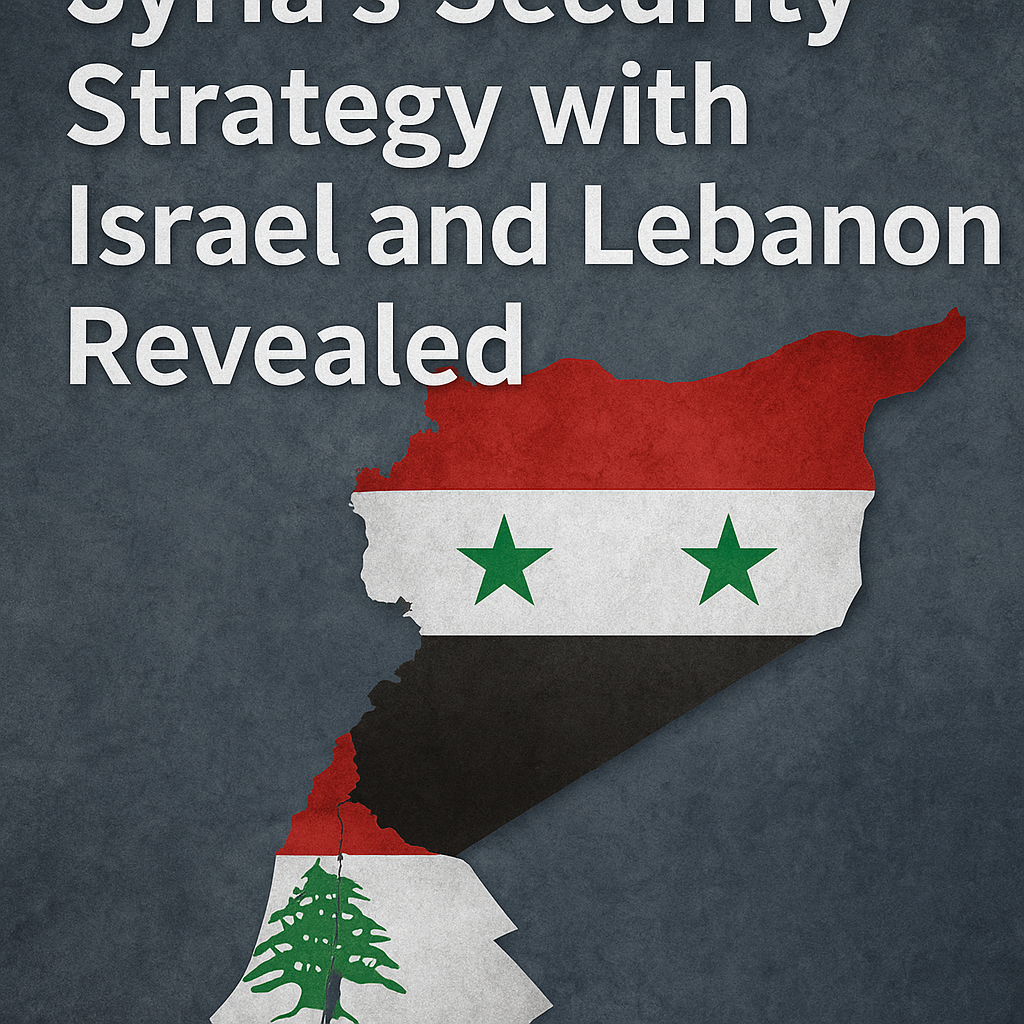
Syria’s Security Strategy with Israel and Lebanon Revealed
Understanding Syria’s Security Strategy Towards Israel and Lebanon
Syria’s security strategy regarding its neighbors, particularly Israel and Lebanon, reflects a history steeped in conflict and shifting geopolitical landscapes. As recent developments come to light, assessing Syria’s approach reveals a complex interplay of defense postures, strategic alliances, and the perpetual struggle for regional influence.

The Current Landscape: Key Elements of Syria’s Security Approach
Syria’s recent discussions regarding security strategies highlight a multi-faceted approach rooted in military preparedness and political diplomacy. Al-Sharaa, a key figure in Syrian foreign policy, outlines a framework that emphasizes the necessity of a strong defensive posture against perceived threats from Israel. This strategy seeks to secure Syria’s sovereignty while engaging in calculated risk assessments concerning military actions and diplomatic negotiations.

1. Military Readiness: Syria maintains a robust military infrastructure, which includes a variety of traditional and asymmetric warfare capabilities. This is aimed not only at deterring Israeli airstrikes but also at maintaining influence within Lebanon through support for Hezbollah. In a landscape where both Iran and Hezbollah play significant roles, Syria’s military readiness becomes a pivotal element of its security strategy.

2. Diplomatic Engagement: Despite a history of hostilities, Syria continues to engage in diplomatic channels. The country’s overtures towards Lebanon, particularly through discussions focusing on coordinated defense efforts, showcase a willingness to stabilize the region. Engaging with Lebanon on mutual security issues reflects a strategic pivot towards regional stability as a means to bolster national security.
Tensions with Israel: A Persistent Challenge
Syria’s relationship with Israel is characterized by ongoing tensions that complicate its security strategy. Recent developments illustrate a precarious balance where military posturing can quickly escalate into conflict. Al-Sharaa’s emphasis on deterrence is underscored by a history of Israeli airstrikes targeting Iranian assets within Syria, which the Syrian government perceives as a significant threat to its territorial integrity.
– Military Posturing and Risks: Israel’s operations in Syria pose direct challenges to the Assad regime. Al-Sharaa emphasizes the notion that maintaining a credible military presence is crucial in deterring such incursions. However, this strategy also carries risks; aggressive posturing may provoke further Israeli retaliatory actions, creating a cycle of violence that can undermine regional stability.
Relations with Lebanon: A Dynamic Strategic Alliance
Syria’s historical ties with Lebanon, particularly through Hezbollah, form another cornerstone of its security strategy. The relationship has both military and political dimensions, with Syria seeing Hezbollah as a vital ally in counterbalancing Israeli influence.
– Support for Non-State Actors: Supporting Hezbollah allows Syria to project power and influence in Lebanon while presenting a unified front against Israel. The complexity of this relationship underscores the interplay between state sovereignty and non-state actors, creating an environment where Syrian interests are intertwined with those of Hezbollah.
However, the Lebanese political landscape is fraught with its own challenges. Economic crises and internal divisions can affect Syria’s ability to rely on Hezbollah as a stable military partner. This duality creates uncertainties, where Syria must navigate not only external threats but also internal discontent among its allies.
Conclusion: A Complex Web of Security Strategies
Syria’s security strategy concerning Israel and Lebanon presents a multi-layered approach that reflects its historical context and contemporary challenges. While military readiness remains a central tenet, the balancing act of diplomacy, particularly with Lebanon, indicates a nuanced understanding of regional dynamics.
The complexities inherent in Syria’s strategy also highlight the uncertainties of future engagements. As Syria continues to face external pressures from Israel and internal pressures within Lebanon, its security strategy will likely evolve. The interplay between military preparedness, political alliances, and diplomatic negotiations will continue to shape Syria’s approach to its most contentious regional relationships.















