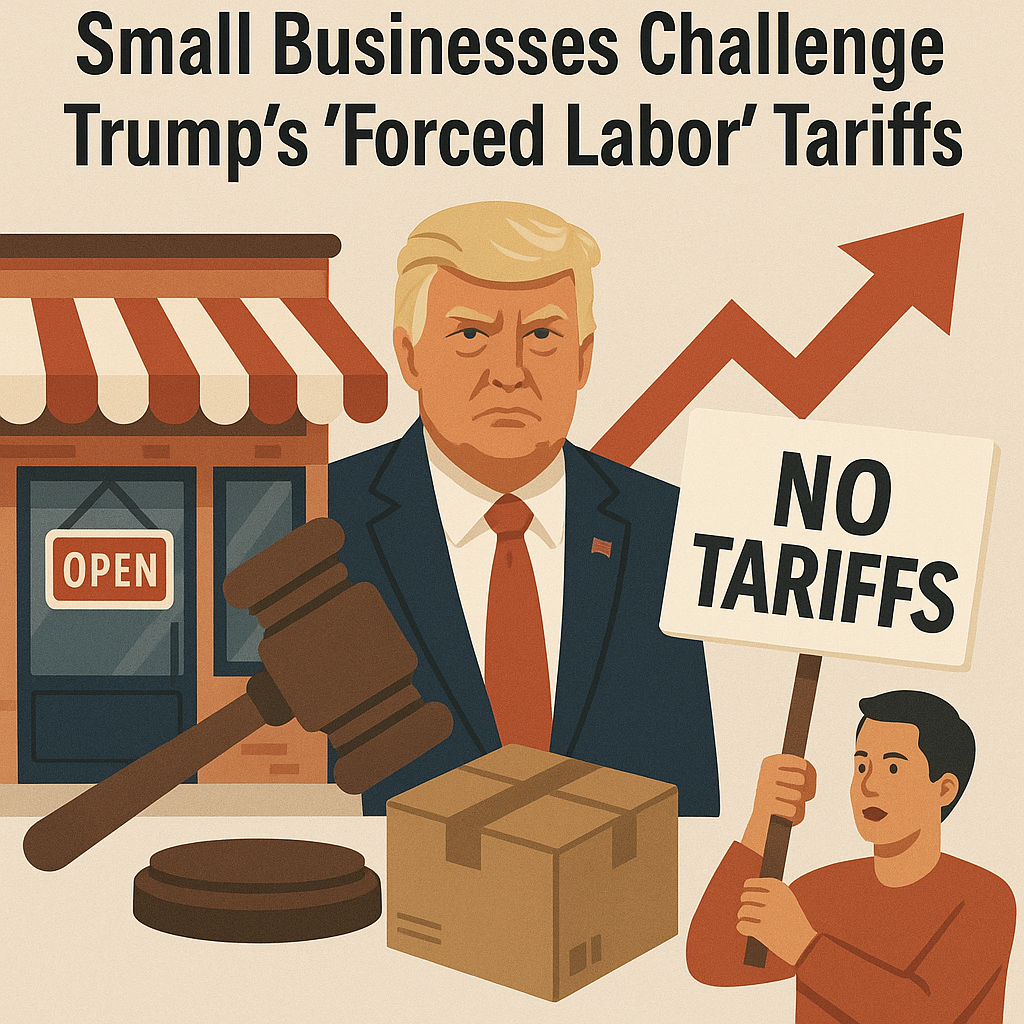
Small Businesses Challenge Trump’s ‘Forced Labor’ Tariffs
Small Businesses Challenge Trump’s ‘Forced Labor’ Tariffs
The recent implementation of what many call “forced labor tariffs” has thrust small businesses into a contentious legal battle, sparking a debate that delves deep into the economic and ethical implications of such trade policies. In response to concerns about human rights violations in global supply chains, these tariffs impose significant burdens on small enterprises already grappling with the fallout from the COVID-19 pandemic and inflationary pressures.

The Legal Landscape
According to reports from Al Jazeera, small businesses are teaming up to challenge these tariffs which they believe unjustly penalize them without sufficient evidence or recourse. The move is spurred by tariffs that target products from companies linked to alleged human rights abuses, primarily in regions like Xinjiang, China. Advocates for small businesses argue that these tariffs compromise their ability to compete effectively within the marketplace.

One anecdote shared highlighted how a small clothing retailer found its entire supply chain disrupted by these tariffs, resulting not only in increased costs but also in an uncertain future regarding regulatory compliance. Those in favor of the tariffs insist they are a necessary measure to combat human rights violations globally. However, small businesses contend that the broad-brush approach fails to account for the nuanced realities they face.

Diverging Perspectives
The latest discourse shows a split in public opinion on the tariffs. Proponents argue that the tariffs serve a crucial moral and ethical function, claiming they hold corporations accountable for their sourcing decisions. Supporters claim that businesses should prioritize ethical standards, even if it means higher production costs. Conversely, critics point out that small businesses may not have the resources to absorb these increased costs or manage complex logistics to comply with the new regulations.
For instance, while larger companies often have the financial bandwidth to navigate these changes, small businesses may find themselves outmatched. As the economic landscape evolves, small firms argue that such blanket tariffs threaten their viability rather than serving their intended purpose.
The Economic Impact
An analysis of various economic reports reveals a complex web of implications arising from the tariffs. According to RT News, the tariffs could lead to job losses in small businesses, compounding issues in an already fragile economy. Business owners argue that the increased cost of materials and compliance may lead to layoffs or even closures, which directly contradicts the very ethical principles the tariffs aim to uphold.
On the other hand, supporters of the tariffs argue they could lead to a long-term shift in supply chain practices that might ultimately benefit sustainable businesses. This involves fostering a marketplace that rewards ethical sourcing. The complexity here lies in finding a middle ground where trade practices do not undermine small businesses in pursuit of broader ethical standards.
Looking Ahead
As the legal challenges unfold, small businesses continue to advocate for a more tailored approach to tariffs that considers their unique position within the market. The voices coming together from various sectors are pushing for reforms that not only uphold human rights but also consider the economic landscape that small businesses inhabit. Solutions could include exemptions for certain product categories or enhancing support for affected businesses to adapt to new compliance costs.
There’s a sense of urgency as small businesses maneuver through this legal labyrinth. The outcome may define not just their future but could set a precedent for how ethical concerns are integrated into trade policies moving forward. Ultimately, the discourse around Trump’s forced labor tariffs underscores the importance of balancing moral imperatives with economic realities, suggesting that more nuanced and fair approaches are essential for a sustainable future.