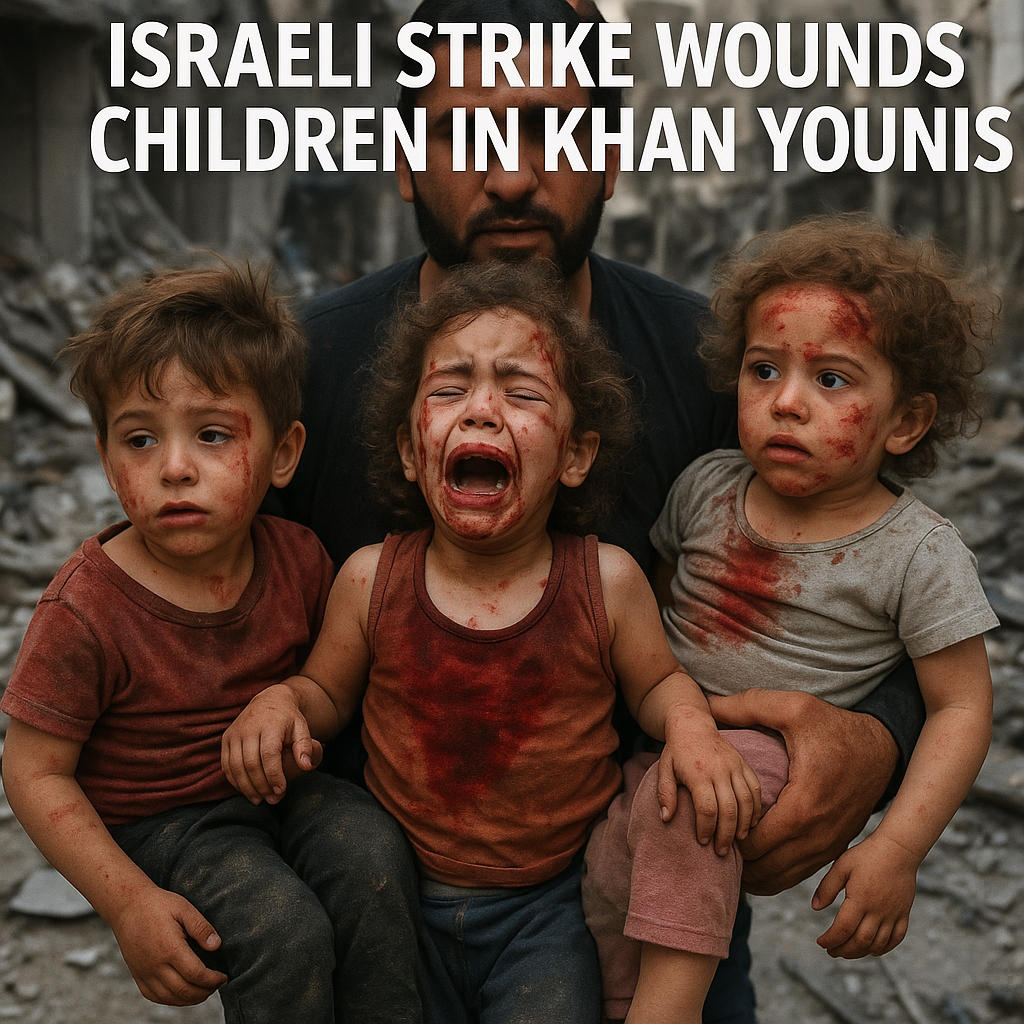
Israeli Strike Wounds Children in Khan Younis
Israeli Strike Wounds Children in Khan Younis
Recent military actions in Khan Younis have significantly impacted the lives of civilians, especially children. An Israeli airstrike in this densely populated area resulted in injuries to several minors, drawing widespread condemnation and stirring debates on the ongoing conflict.

The Incident and Immediate Reactions
The strike occurred amid heightened tensions in Gaza, and reports from Al Jazeera indicate that at least ten children were among the wounded. Eyewitness accounts depict scenes of panic and chaos as families scrambled to seek shelter. Local hospitals were overwhelmed with the influx of injured children, many suffering from shrapnel wounds and trauma.

The Israeli military justified the strike by citing ongoing Palestinian militant activity, claiming that the target was a site used to launch rockets into Israel. However, the presence of children in the vicinity raises critical ethical questions about the proportionality and precision of such military responses.

In stark contrast, human rights organizations have condemned the attack, emphasizing the need for accountability and a reassessment of military tactics in civilian areas. They argue that the protection of children should be a paramount concern in any military engagement.
Diverse Perspectives on the Conflict
The situation in Khan Younis, like much of the Israeli-Palestinian conflict, reveals a complex tapestry of narratives. On one side, supporters of Israeli military actions argue that these strikes are necessary to deter threats posed by militant groups such as Hamas, which they accuse of using civilians as shields. Proponents cite a need for security measures to protect Israeli citizens from rocket attacks.
Conversely, many Palestinian advocates and international observers assert that attacks on civilian populations, especially children, constitute violations of international law. They highlight that military strategies must prioritize the safety of non-combatants, and escalating violence only serves to deepen the cycle of hatred and retaliation.
Moreover, reports from various news outlets underline that this strike is not an isolated incident. Over the past months, numerous airstrikes in Gaza have led to civilian casualties, which the United Nations and other entities have termed unacceptable. The ongoing cycle of violence contributes to a pervasive sense of insecurity for families in the region, stifling any avenues for peaceful resolution.
Seeking a Path Forward
Understanding the impact of military actions on civilian lives is crucial for fostering dialogue and change. As humanitarian crises continue to unfold, there remains a pressing need for all parties involved to engage in constructive dialogue that prioritizes the well-being of children and civilians.
Efforts by international organizations to mediate could play a significant role in brokering peace and ensuring that the rights of affected civilians are upheld. However, the path to resolution is fraught with political complexities and longstanding grievances on both sides.
While there may not be consensus on the efficacy of military actions as a means of achieving security, the injuries suffered by children in Khan Younis stand as a reminder of the urgent humanitarian considerations that must be at the forefront of any conflict.
In conclusion, the events in Khan Younis should not just be seen as numbers or reports, but rather as a wake-up call to address the deeper issues that fuel conflicts and lead to tragic outcomes. Whether through diplomatic channels or community engagement, there is a collective responsibility to protect the most vulnerable populations from the horrors of war.