
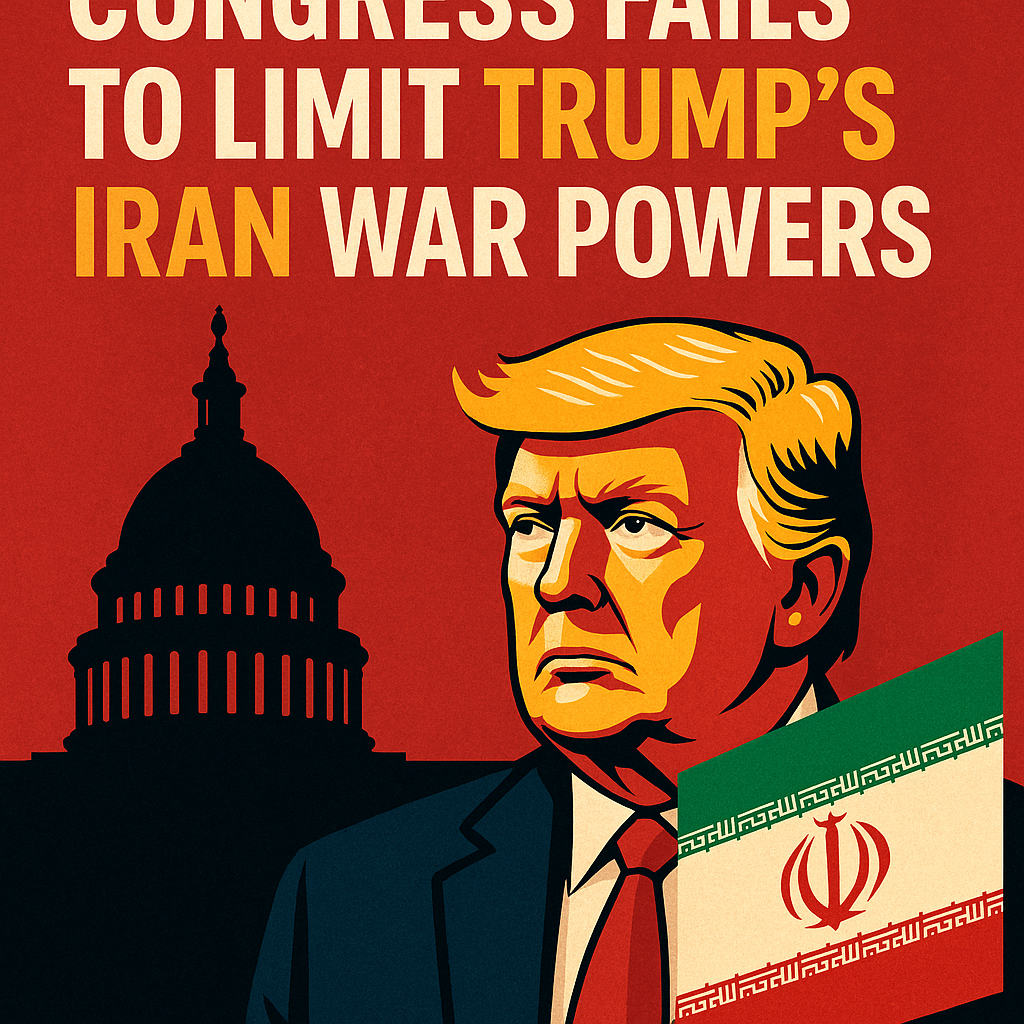
Congress Fails to Limit Trump’s Iran War Powers
Congress Fails to Limit Trump’s Iran War Powers
In a significant political maneuver, Congress recently failed to introduce measures aimed at limiting former President Donald Trump’s military overreach regarding Iran. Amid escalating tensions and a contentious political climate, the inability to place checks on presidential war powers has reignited discussions on the delicate balance of power between Congress and the executive branch.

The Context of the Decision
As tensions between the U.S. and Iran continue to simmer, the Senate debated a resolution that would have constrained Trump’s ability to engage in military actions against Iran without explicit congressional approval. Proponents of the resolution emphasized the necessity for a more rigorous framework governing military interventions, especially following Trump’s controversial decisions during his presidency, including the assassination of Iranian General Qassem Soleimani in January 2020. Advocates argue that congressional oversight is essential to prevent unchecked military actions that could lead to further escalation.

However, opponents voiced concerns that such restrictions could limit the executive’s ability to act swiftly in a volatile region. They fear that placing additional constraints on presidential powers could undermine national security and deter immediate responses to perceived threats. This perspective reflects a historical viewpoint where past administrations have often wielded significant unilateral authority in military matters.

Divided Perspectives on Military Authority
The failure to pass the resolution highlights a stark divide among lawmakers regarding military authority and foreign intervention policies. On one hand, many Democrats and some Republicans support increasing congressional oversight, viewing it as a safeguard against the potential for military overreach. Senator Tim Kaine articulated this sentiment, stating that “if the president intends to engage the military, Congress must be involved.”
Conversely, several Republican senators, particularly those aligned with Trump, argue that the president should retain broad military powers to protect national interests. They assert that the current geopolitical landscape necessitates agility and strategic maneuvers that could be hampered by congressional deliberations. This divide underscores a larger trend in contemporary politics where issues of war and peace are increasingly polarized along party lines.
The Implications of Inaction
The inability to curtail Trump’s war powers raises crucial questions about the role of Congress in foreign policy and military engagement. Without legislative checks, there is a legitimate concern that the executive could pursue aggressive military strategies that might escalate into larger conflicts. Moreover, this inaction potentially reinforces a precedential norm that could extend beyond Trump’s presidency, affecting future administrations.
Public sentiment also plays a role in this debate. A significant portion of the American populace has expressed fatigue over prolonged military engagements in the Middle East, showing a preference for diplomatic resolutions over military ones. Polls indicate that many citizens desire a reevaluation of how military authority is exercised, pushing Congress to act decisively on this issue.
Future Considerations
As Congress grapples with the ramifications of its recent decision—or lack thereof—on Trump’s war powers, the debate is likely to continue. The challenges posed by an increasingly contentious political environment will undoubtedly influence potential future resolutions. The varying perspectives within Congress reflect an essential tension between the necessity of national security and the fundamental principles of democracy that advocate for checks and balances.
In summary, the recent failure of Congress to limit Trump’s Iran war powers underscores a broader discussion on military authority, legislative responsibility, and the implications for U.S. foreign policy. As tensions persist and the geopolitical landscape evolves, the need for a reevaluation of congressional roles in military engagement remains ever relevant, reflecting the complexities of governance in a modern democracy.















