
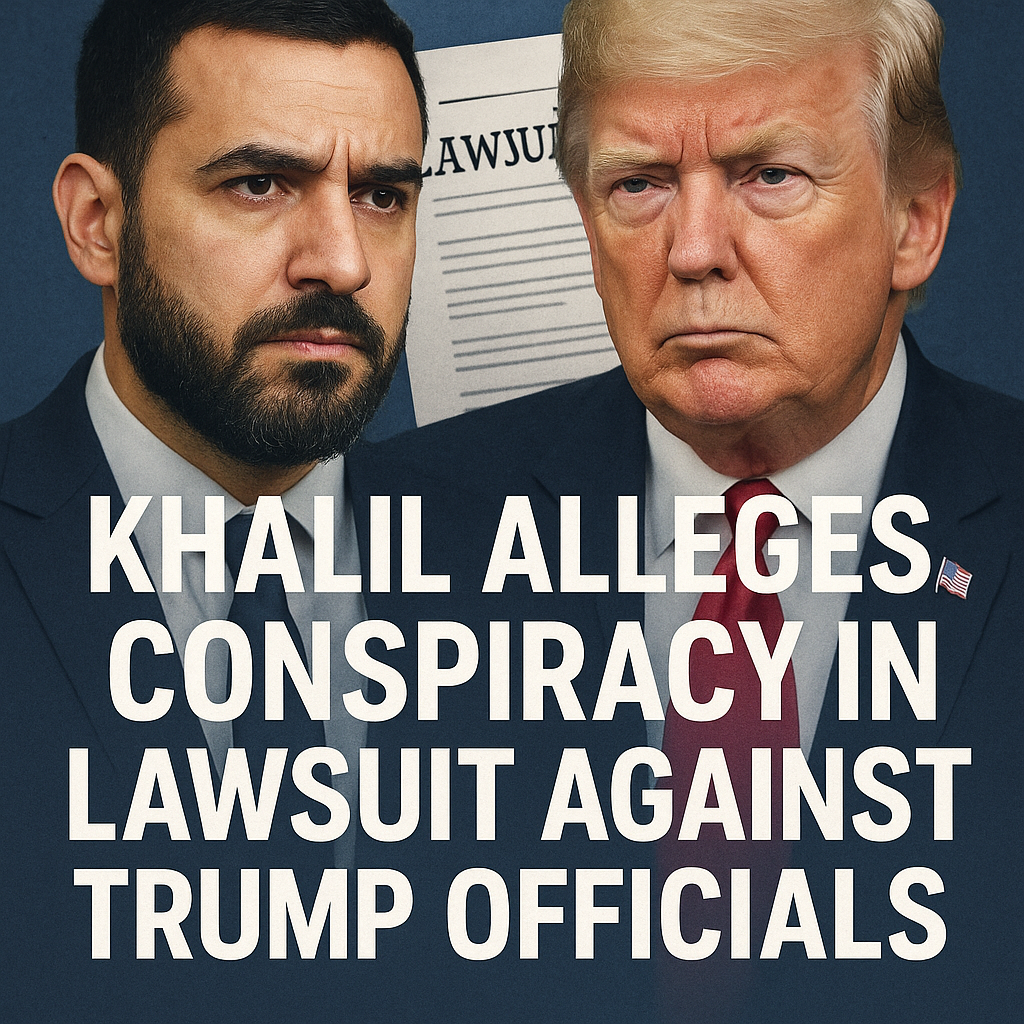
Khalil Alleges Conspiracy in Lawsuit Against Trump Officials
Khalil Alleges Conspiracy in Lawsuit Against Trump Officials
In a noteworthy development, Mahmoud Khalil has made serious allegations against former Trump administration officials, claiming their involvement in a conspiracy that adversely affected his political aspirations. This situation unfolds amidst a backdrop of increasing legal challenges faced by many who once served under Trump, highlighting the complex blend of legal and political narratives.

Background of the Allegations
Khalil, a political figure whose ambitions have drawn both support and scrutiny, asserts that certain officials from the Trump administration conspired to undermine his electoral bid. According to a report by Al Jazeera, Khalil’s lawsuit outlines specific instances where he believes these officials engaged in questionable practices aimed at discrediting him and manipulating public perception against his political goals.

These claims have sparked a mix of reactions, reflecting a broad spectrum of opinions about the legitimacy of the allegations and their implications for political discourse in America. Supporters of Khalil argue that such actions—if proven—underscore the lengths to which political opponents may go to maintain power and influence. Conversely, critics suggest that Khalil’s motivations might be rooted in a desire to elevate his profile rather than to expose any wrongdoing.

Analyzing the Evidence
The evidence surrounding Khalil’s assertions remains a significant point of contention. As reported, the lawsuit contains a combination of circumstantial evidence and testimonies that Khalil believes support his claims. However, legal experts caution that proving conspiracy in such politically charged contexts can be particularly challenging due to the requirement of demonstrating intent and collusion.
A contrasting viewpoint emerged from coverage by RT, which emphasized skepticism regarding the motivations behind the lawsuit. Analysts highlighted that similar accusations have been a recurring theme among various political figures attempting to redirect responsibility for their defeat onto external factors. This commentary points to a broader trend in American politics where narratives of conspiracy and victimization can overshadow substantive policy discussions.
The Implications of Khalil’s Claims
The implications of Khalil’s lawsuit extend beyond his personal ambitions; they capture the ongoing narrative of division within American politics. As political polarization continues to proliferate, such allegations may further entrench the public’s disenchantment with established political structures. The allegations also open a discussion about accountability and transparency in political campaigning, particularly concerning the ethics of information dissemination and targeted opposition tactics.
Experts warn that without a clear consensus on these types of allegations, the political landscape may continue to be marred by distrust. The environment creates fertile ground for speculation and conspiracy theories, which can detract from meaningful conversation about governance and policy reform.
Future Developments
As the legal proceedings unfold, attention will likely focus not only on Khalil’s specific claims but also on the broader implications for Trump and his former officials. Engaging with this lawsuit may also reveal new insights into the ethical contours of political strategies utilized during Trump’s tenure.
Moreover, the lawsuit has the potential to spark further challenges against former officials, as individuals feeling aggrieved by past administrations may feel emboldened to speak out against practices they believe were unjust. This trend suggests a possible re-examination of the actions and decisions made at the highest levels of government during the Trump administration, as the legal ramifications of such claims play out in the public eye.
Conclusion
Khalil’s allegations of conspiracy against former Trump officials reflect a complicated intersection of law and politics that demands close scrutiny. While supporters frame it as a fight for accountability, detractors raise concerns about political opportunism. As this case progresses, it serves as a reminder of the complex narratives that shape American political life, illustrating the challenges in discerning truth in a polarized atmosphere. Observers will need to closely monitor the developments, as they could have lasting ramifications for both Khalil and the broader political landscape.















