
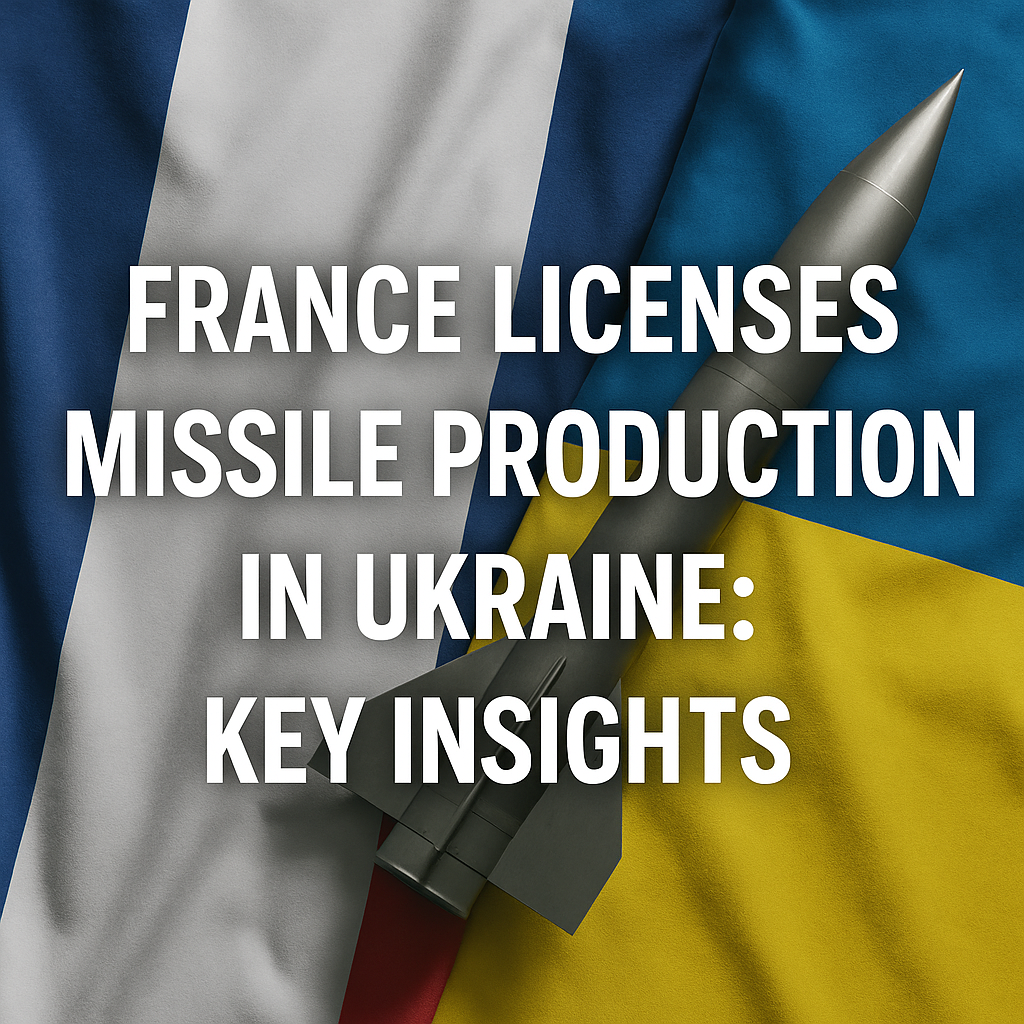
France Licenses Missile Production in Ukraine: Key Insights
France has made significant strides in strengthening its military cooperation with Ukraine by licensing the production of missiles within the war-torn country. This development marks a notable escalation in France’s commitment to bolster Ukraine’s defense capabilities amid ongoing tensions with Russia.

The Significance of Missile Production Licensing
Licensing missile production in Ukraine is not merely a matter of supplying arms; it represents a profound shift in defense strategy and geopolitical dynamics. The French government’s decision enables local production of missiles under a joint venture agreement, aiming to empower Ukraine’s military industrial base while reducing reliance on imported military equipment.

A Step Towards Self-Sufficiency
One of the focal points of this initiative is the enhancement of Ukraine’s self-sufficiency in defense technology. According to sources, the partnership between French defense contractors and Ukrainian manufacturers aims to create a robust local manufacturing capacity for advanced missile systems. This approach aligns with Ukraine’s broader strategy of transforming its military procurement system from dependence on external sources to a more autonomous model capable of responding quickly to battlefield needs.

France’s move is also seen as a response to the criticisms surrounding the limitations of Western military support, which at times has been perceived as insufficiently decisive. While many NATO countries have stepped up military assistance, the local production of key defense systems could provide a critical edge in modern warfare, reflecting an understanding that prolonged conflicts require sustainable solutions.
Diverse Perspectives on This Development
While support for Ukraine has garnered a broad consensus among Western nations, reactions to this licensing decision reveal a range of opinions and strategic outlooks.
Support and Optimism
Proponents of the initiative believe that increasing arms production within Ukraine is not only a practical step but also a political statement endorsing Ukraine’s right to self-defense. Advocates argue that local missile production could significantly enhance Ukraine’s operational capabilities, allowing for quicker adjustments and adaptations to battlefield conditions. Boosting local artillery and missile systems should, in theory, enhance the resilience of the Ukrainian defense sector.
This sentiment is echoed by several defense analysts who emphasize the importance of integrating local production into the broader strategy for long-term military resilience. They argue that developing domestic defense capabilities could serve as both a deterrent against aggressors and a foundation for future military innovations.
Concerns and Skepticism
Conversely, some critics voice concerns about the practical implications and long-term sustainability of such initiatives. Issues like corruption, bureaucratic inefficiencies, and the current instability of Ukraine’s infrastructure may hinder effective production. Skeptics argue that despite the positive intentions, the current socioeconomic landscape and ongoing conflict could challenge the feasibility of establishing a fully operational and self-sustaining defense manufacturing sector.
Moreover, there are apprehensions about how this move might exacerbate the already tense relations between Russia and NATO countries. Moscow has historically responded assertively to increased military advancements in Ukraine, and the licensing of missile production could provoke further escalations and exacerbate hostilities in the region.
Potential Implications for Regional Security
The licensing arrangement bears significant implications for both regional and global security. As Ukraine bolsters its military capacity, the landscape of Eastern European geopolitics could undergo substantial shifts. Enhanced defense capabilities may alter the tactical calculations of both Ukrainian forces and their adversaries, compelling Russia to reassess its strategies.
Furthermore, this decision could prompt other states to explore similar arrangements. As countries like Poland and the Czech Republic step up their defense initiatives, there is a potential for a broader coalition of Eastern European nations working together to secure their borders against external threats.
Conclusion: The Road Ahead
In summary, France’s decision to license missile production in Ukraine represents more than just a military maneuver; it illustrates a multi-layered approach to regional security, defense strategy, and international cooperation. While the initiative presents significant opportunities for enhancing Ukraine’s military capabilities, it also introduces a host of challenges and uncertainties that need to be navigated thoughtfully.
As the situation unfolds, ongoing dialogue and cooperation amongst international partners will be critical in ensuring that the intended benefits of this initiative can be realized while minimizing the risk of escalation in tensions with Russia. For Ukraine, the path to a robust and self-sufficient defense strategy is laden with both promise and peril, requiring careful navigation as it seeks to strengthen its position in a complex geopolitical landscape.















