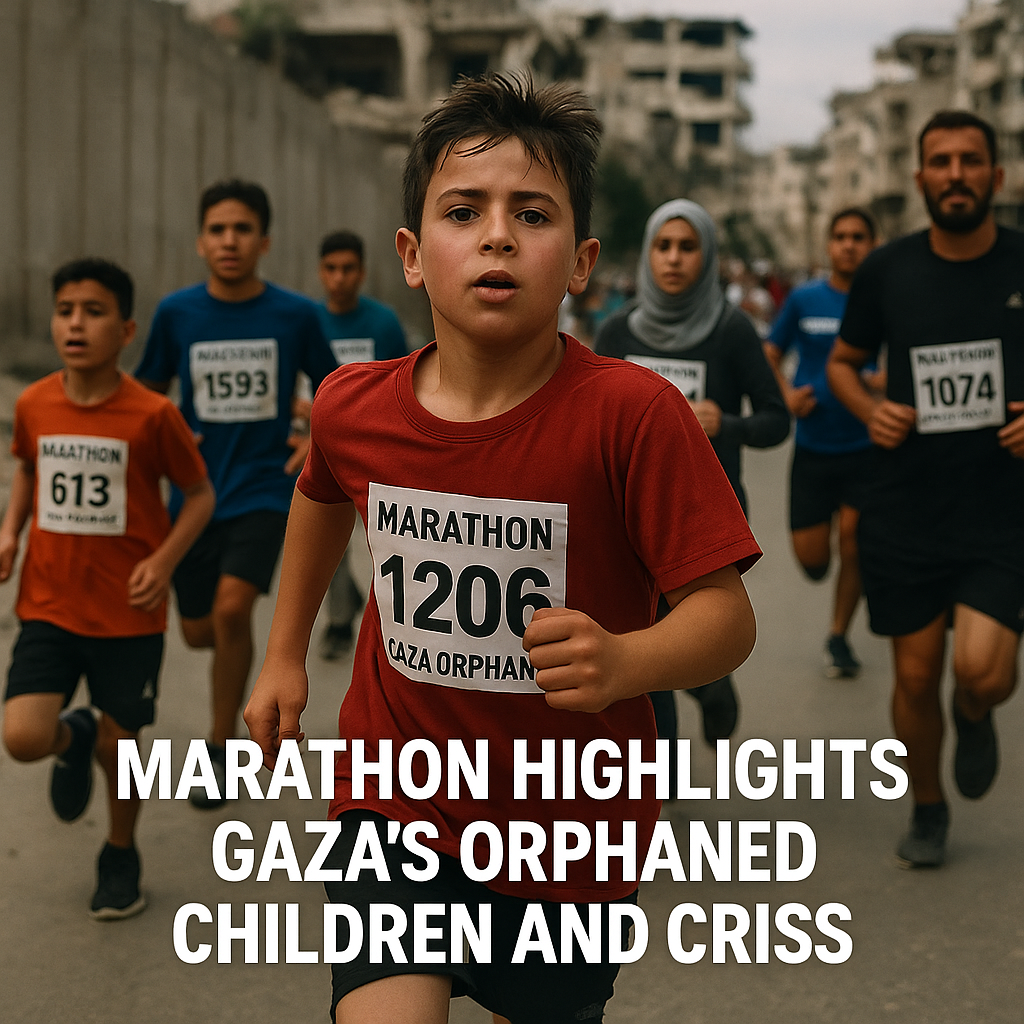
Marathon Highlights Gaza’s Orphaned Children and Crisis
The Humanitarian Crisis Facing Gaza’s Orphaned Children
The recent marathon in Gaza has brought much-needed attention to the plight of orphaned children amidst a severe humanitarian crisis. As the world witnesses ongoing conflicts in the region, events like this not only serve as athletic gatherings but also as poignant reminders of the devastating effects of war on vulnerable populations.

Understanding the Context
For many, Gaza conjures images of ruins and despair. The ongoing Israeli-Palestinian conflict has resulted in significant loss of life and displacement, leaving countless children orphaned and in dire need of support. According to reports, the social fabric in Gaza has been frayed, with families torn apart and communities left reeling from the aftermath of violence.

In a recent event, athletes gathered not just to compete but to highlight the struggles of these orphaned children. The marathon served as a symbolic act of solidarity, aiming to raise awareness and funds for their care. Organizers emphasized that such initiatives are crucial for drawing international attention to the humanitarian crisis.

Voices from the Ground
Various reports from Al Jazeera and RT illustrate the situation’s complexity. Al Jazeera outlined how these orphaned children often lack basic necessities, such as food, healthcare, and education. According to a local charity spokesperson, “These children are not just statistics; they are future leaders who need our help now.” This sentiment echoes the urgency of addressing their plight, which is felt deeply within the community.
Conversely, RT highlighted the resilience exhibited by the people of Gaza, noting how community efforts are ongoing to provide for the orphans. Many families take in orphaned children, sharing their limited resources to ensure no child has to face abandonment alone. This grassroots response underscores the fortitude of Gazans in the face of adversity—serving as a testament to human compassion even amidst dire circumstances.
A Call to Action
The marathon did more than celebrate physical endurance; it underscored the collective responsibility to support the most vulnerable. Donations from participants and attendees were directed to organizations focused on healthcare, education, and psychological support for orphans. The hope is that the greater public will not only contribute but also turn their attention toward advocating for policy changes that address the root causes of the conflict.
Reports from different sources have highlighted a stark contrast in global reactions. While some western nations emphasize humanitarian aid, others prioritize political resolutions. A nuanced discussion emerges around whether short-term aid can be effective without addressing the systematic issues fueling the conflict. Supporters of both perspectives agree, however, that immediate action is essential to alleviate current suffering.
Reflecting on Global Responsibilities
As the world becomes increasingly interconnected, the collective response to Gaza’s humanitarian crises, particularly regarding orphaned children, reveals differing attitudes toward international aid. The emphasis on local and global partnerships is crucial. Events like the marathon serve as a bridge, connecting local struggles with international sympathy and action.
Many argue that while awareness is a vital first step, sustained engagement is necessary to ensure that funds and resources are allocated for long-term solutions. Educational programs, psychosocial support, and community rebuilding are some ways that aid can be structured to create lasting positive impacts on the lives of orphans.
Conclusion
The marathon’s ability to bring visibility to Gaza’s orphaned children amid a humanitarian crisis echoes the heartache of many families in this besieged territory. While the struggle continues, the event serves as both a beacon of hope and a reminder of our collective responsibility to protect the most vulnerable. Ensuring that these children not only survive but thrive is a task that falls on us all—it calls for local resilience, international support, and a commitment to long-term solutions that can help rebuild lives. As the marathon concluded, the real race to secure a better future for these children remains ongoing.