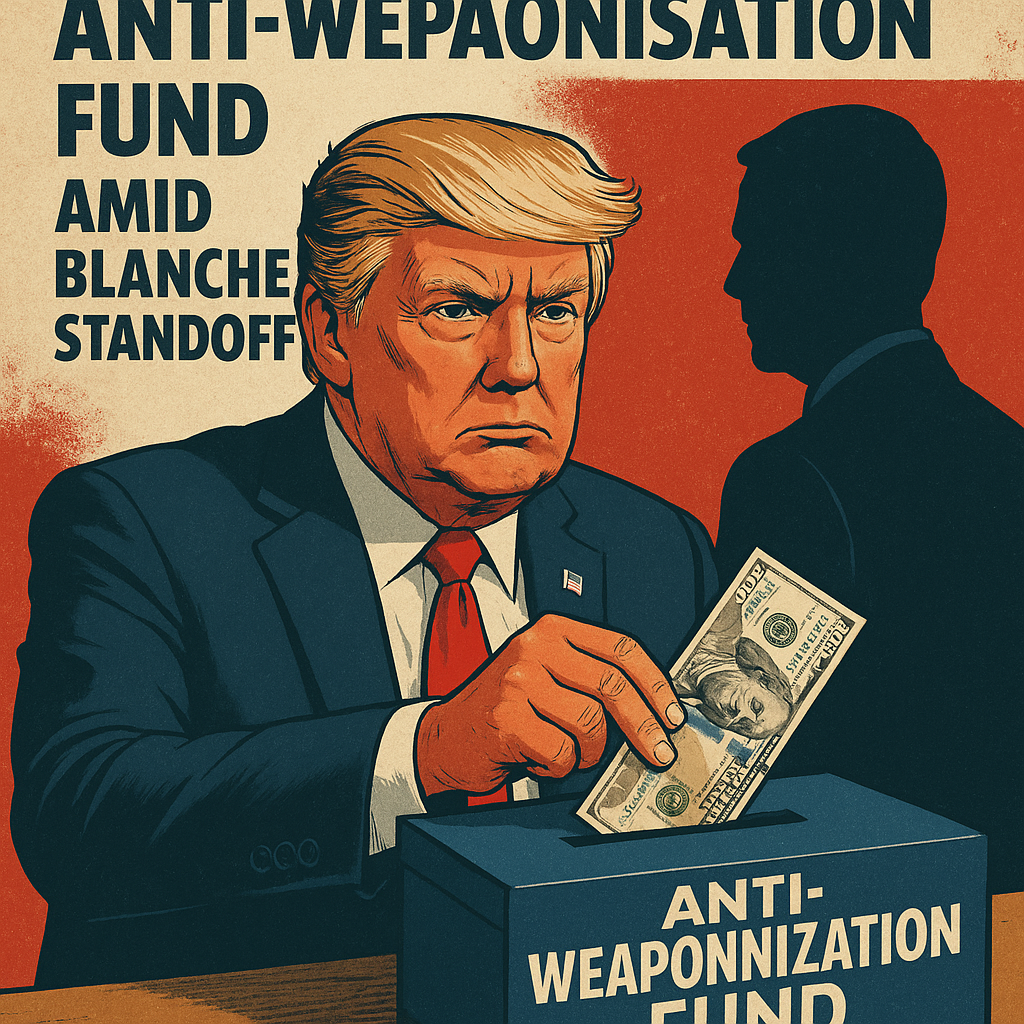
Trump’s Anti-Weaponisation Fund Amid Blanche Standoff
Trump’s Anti-Weaponisation Fund: A Strategic Maneuver Amid Blanche Standoff
In light of escalating tensions surrounding the Blanche standoff, Donald Trump has proposed the creation of an Anti-Weaponisation Fund aimed at combatting the misuse of military and industrial power. This initiative reflects a broader conversation about modernization and accountability within national defense systems, inviting scrutiny and discussion from a variety of perspectives.

Understanding the Context of the Blanche Standoff
The Blanche standoff has emerged as a focal point in U.S. military strategy discussions. Various sources underscore the need to navigate the complexities surrounding the conduct of defense operations amid claims of weaponisation. While some analysts express concern that this conflict signals deeper underlying issues related to military strategies, others view it as a moment for reform within existing frameworks.

According to Al Jazeera, this initiative involves reallocating funds to create a safeguard against potential military overreach. Trump’s proposal emphasizes the need for transparency and regulation in arms distribution. Critics within this narrative argue that the proposition, while well-intentioned, risks becoming a tool for political posturing rather than genuine reform. The dual motives at play—both an appeal to his base and a genuine desire for systematic change—create a complex backdrop against which this plan may evolve.

Conversely, RT provides insights highlighting the support for Trump’s initiative from various lawmakers eager to modernize military oversight. Proponents believe that creating an Anti-Weaponisation Fund will establish clearer guidelines and accountability mechanisms, ultimately leading to more responsible military action abroad.
The Political Implications of the Anti-Weaponisation Fund
The launch of an Anti-Weaponisation Fund inevitably raises questions regarding its political significance. While Trump’s supporters laud the fund as a bold step towards greater regulation in arms distribution, detractors contend that it may serve more to galvanize his electoral base than to advance substantive changes in military policy.
On one hand, advocates argue that this fund could potentially reduce military conflicts driven by economic interest rather than necessity. By prioritizing accountability, it stands to ensure that military resources are utilized responsibly and ethically. Realigning American military expenditures to consider international humanitarian impacts might also garner support from an increasingly critical electorate.
On the other hand, skeptics note that historic precedents suggest that proposed funds often become mired in bureaucratic inefficiencies. They warn that without stringent oversight, the Anti-Weaponisation Fund could devolve into another funding mechanism free of the accountability Trump claims to promote. The contention surrounding how effectively such a fund can be implemented is a crucial issue that merits careful consideration.
Conclusion: Weighing Perspectives on a Complex Initiative
Ultimately, Trump’s proposal for an Anti-Weaponisation Fund amid the Blanche standoff illustrates the complexities inherent in U.S. military policy discussions. The initiative promises to usher in a new chapter of accountability, but uncertainties about its execution remain. By weighing diverse viewpoints, it becomes clear that while there is a shared concern over military conduct, varying interpretations of the fund’s efficacy remain at the forefront of public discourse.
As the situation develops, it will be essential to monitor how this proposal influences not only military strategies but also electoral dynamics. A better understanding of the intersection between military policy and political maneuvering will be crucial to engaging with this evolving narrative. Ultimately, whether Trump’s fund succeeds in fostering genuine reform or serves merely as a platform for political posturing will hinge on future actions and political climates.