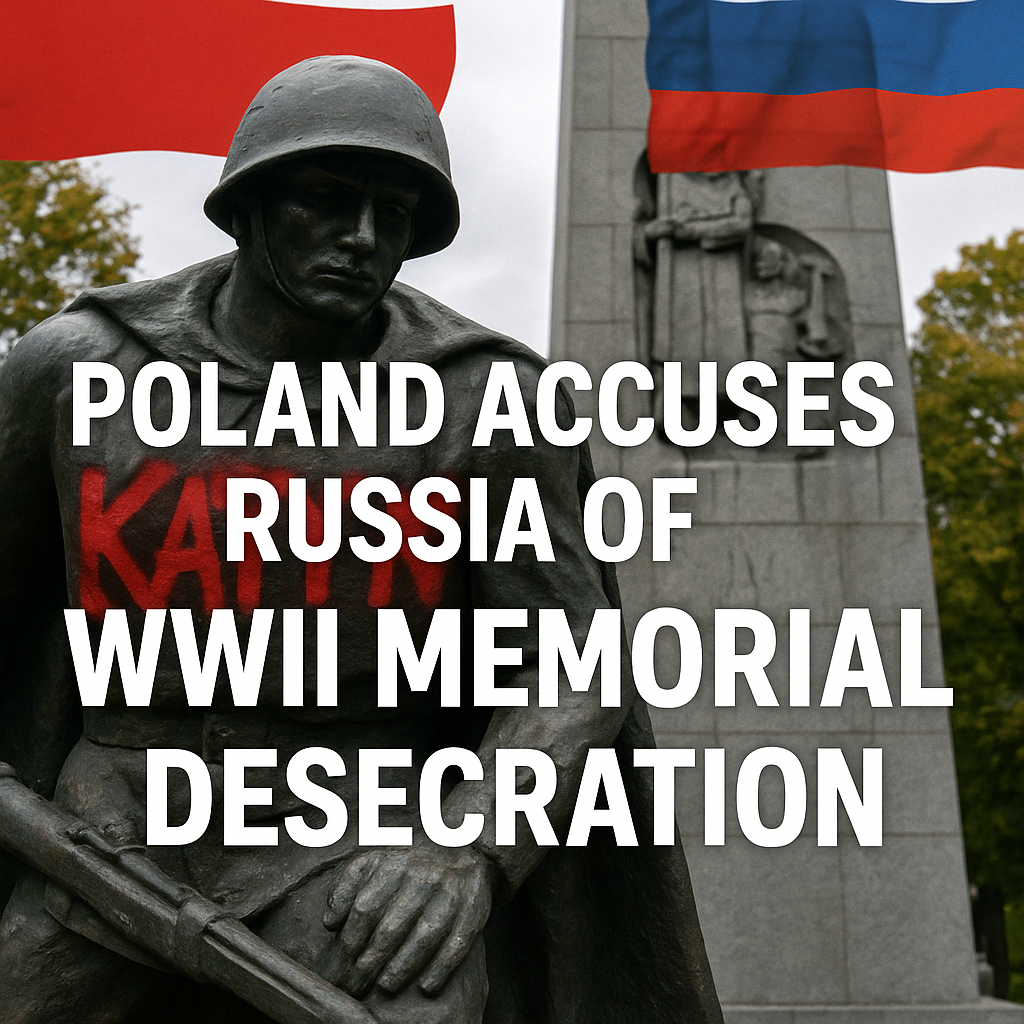
Poland Accuses Russia of WWII Memorial Desecration
Poland Accuses Russia of WWII Memorial Desecration
In recent developments, Poland has accused Russia of desecrating memorials dedicated to World War II, an act that has reignited tensions steeped in historical grievances. The Polish government claims that actions taken by Russian authorities threaten the sanctity of memorials that honor the sacrifices made during the war. This situation underscores the ongoing friction between the two nations and highlights the complexities surrounding the remembrance of historical events.

Political Context and Accusations
The dispute over memorials has a profound political backdrop. Poland’s Ministry of Foreign Affairs expressed outrage, claiming that Russian officials have systematically targeted memorials that commemorate Polish soldiers and their contributions during the war. This includes allegations of negligence in maintenance and outright vandalism of monuments.

Furthermore, the allegations are not only limited to Poland. Other countries that suffered immense losses during WWII have also raised concerns over the treatment of their memorials in Russia. In a statement reflecting wider European sentiments, an official from another Eastern European nation remarked, “The remembrance of our shared history should unite us, not drive us apart.”

The Polish accusations have prompted responses from Russian authorities, who have denied any wrongdoing and suggested that Poland is politicizing historical memory for its own agenda. Russian news sources frame the situation as an attempt by Poland to distract from its own historical complexities and failures.
Divergent Historical Narratives
The controversy emphasizes how different nations interpret their histories. For Poland, the war is a narrative of suffering and resilience against aggressors, while Russia portrays itself as a liberator who paid the ultimate sacrifice against fascism. These competing narratives have shaped national identities and continue to influence relations.
From the Polish perspective, desecration of these memorials symbolizes a broader disregard for historical memory and collective grief. Polish historians argue that the country’s contributions, particularly during the USSR-led operations against Nazi Germany, are often overlooked or minimized in the Russian narrative. This sense of erasure further fuels nationalist sentiments in Poland, pushing the government to take a firmer stance on issues of historical preservation.
On the flip side, Russian officials have characterized Poland’s accusations as inflammatory. They claim that such statements serve to enhance domestic political stability in Poland by rallying public sentiment against a perceived external threat. As one Kremlin spokesperson noted, “The real issue lies not in memorials but in historical distortions that seek to undermine our shared past.”
International Repercussions
The fallout from these accusations could extend beyond Poland and Russia, affecting diplomatic relations across Europe. European leaders must grapple with the reality that historical grievances can complicate alliances. The European Union, for instance, has worked towards a unified stance on various geopolitical issues, yet the discord over WWII memory has the potential to fracture that unity.
Analysts suggest that if the polarization over memorial treatment continues, it may lead to increased tensions in Eastern Europe. This concern is especially salient with Russia’s historical annexation activities and military operations in Ukraine, where the rhetoric surrounding historical memory, including WWII, has become further charged.
Moving Forward: Seeking Common Ground
As tensions escalate, it is essential for both Poland and Russia to engage in dialogue focused on reconciliation rather than division. Finding a way to honor the memories of those who fought during WWII, while respecting the differing narratives viewed through distinct cultural prisms, is crucial.
One potential avenue for peace could be the establishment of a joint commission aimed at preserving memorials and fostering discussions regarding historical memory. Such an entity might serve to create a shared understanding that allows both nations to honor their past while working towards a more cooperative future.
In concluding this examination of a deeply sensitive issue, it is clear that the accusations of WWII memorial desecration serve as a microcosm of the larger historical tensions between Poland and Russia. While both nations possess valid grievances shaped by their complex historical experiences, moving towards a reconciliatory approach could prove beneficial in mitigating further disputes. A commitment to understanding, transparency, and mutual respect for differing historical narratives may pave the way for a more peaceful coexistence.