
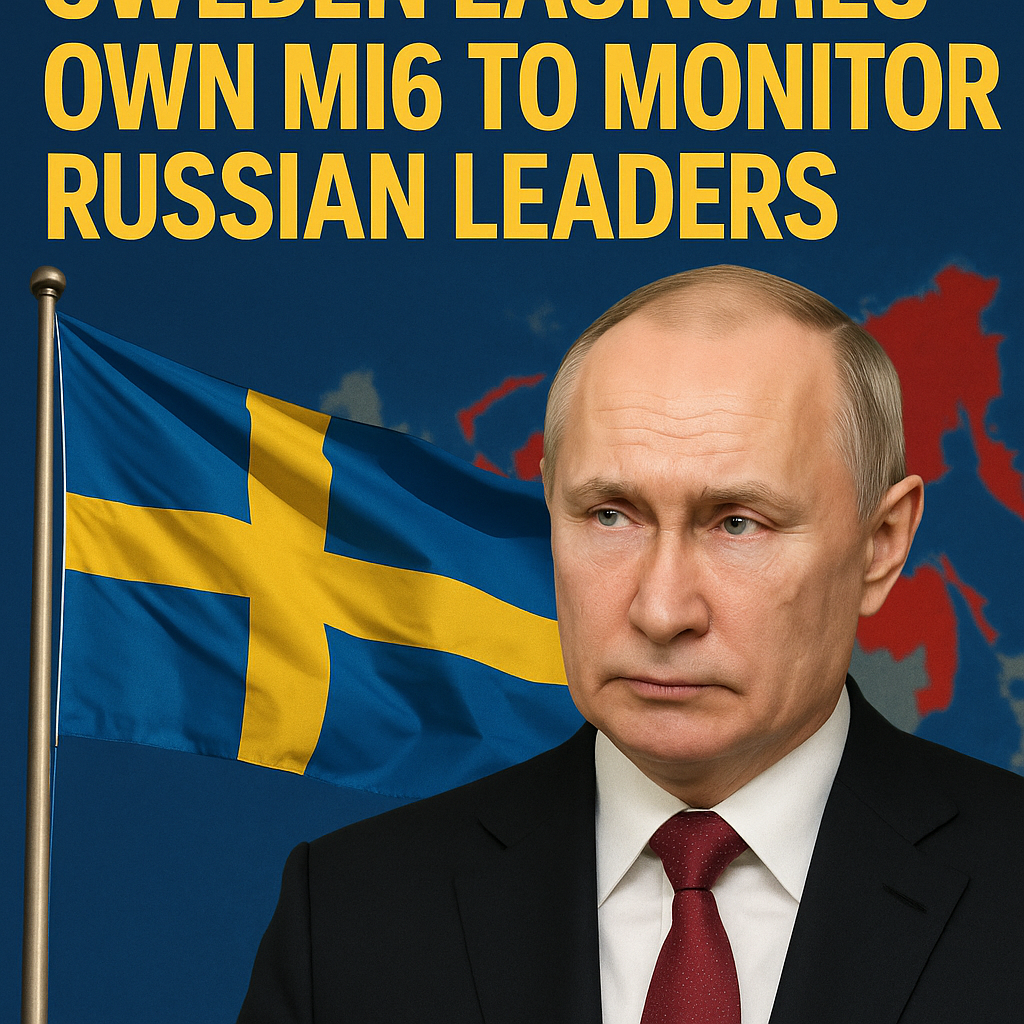
Sweden Launches Own MI6 to Monitor Russian Leaders
Sweden Launches Its Own MI6 to Monitor Russian Leaders
In an escalating geopolitical landscape, Sweden has announced the establishment of its own intelligence agency akin to the UK’s MI6, aimed at monitoring Russian leadership and activities. This move reflects a significant shift in Sweden’s defense strategy, as the country seeks to bolster its security in response to perceived threats from Russia, particularly following the invasion of Ukraine.

Strategic Context of Sweden’s Decision
The decision to create a new intelligence agency has been motivated by a range of factors, most notably the ongoing conflict in Ukraine and increasing Russian military maneuvers in Northern Europe. Sweden has long maintained a non-aligned status, but the dire security implications stemming from Russia’s aggressive posture have prompted a re-evaluation of its defense and intelligence requirements.

As highlighted by various analysts, including sources from Al Jazeera, Sweden’s initiative aligns with a broader trend among European nations to enhance intelligence-sharing capabilities and counter Russian disinformation campaigns. Concerns about cyber threats and espionage have also spurred the Swedish government to take decisive action. The new intelligence agency is expected to facilitate enhanced surveillance of Russian political movements and military developments.

Diverse Reactions and Implications
The launch of this intelligence agency has garnered mixed reactions domestically and internationally. Supporters argue that it is a necessary step to protect national security and ensure that Sweden can adequately respond to any potential aggression from the east. In an era where misinformation can quickly destabilize societies, having a dedicated agency focused on Russian activities may also prove beneficial for internal stability.
Conversely, some critics warn that this move could exacerbate tensions between Sweden and Russia. As reported by RT, the Kremlin has condemned the formation of the agency, accusing Sweden of contributing to a hostile environment in Northern Europe. This perspective suggests that rather than enhancing security, such undertakings could further provoke Russian responses, thereby escalating existing conflicts.
##### Impact on Regional Security Dynamics
The implications of Sweden’s new intelligence agency extend beyond its borders. It could notably reshape security dynamics within the Nordic region. The Scandinavian nations have historically cooperated on various security matters, including intelligence-sharing; thus, the formation of Sweden’s agency may lead to closer ties with NATO countries keen on collective defense strategies.
Moreover, the agency may also play a role in uniting other European nations facing similar threats from Russia. As highlighted by commentators, there is growing recognition among European nations that a unified and robust approach is essential to counteract Russia’s influence effectively.
Addressing Challenges Ahead
Despite the ambitious goals behind the establishment of this new spy agency, multiple challenges lie ahead. The complexities of intelligence work, especially in monitoring a nation like Russia, are considerable. There are not only technological hurdles but also ethical considerations regarding spying and surveillance. Ensuring that operations respect civil liberties while simultaneously addressing national security needs will be vital.
Furthermore, as Sweden bolsters its intelligence capabilities, it must remain vigilant against the potential for overreach or misinterpretation of intelligence. Balancing assertiveness with diplomacy will be critical to prevent any undesirable escalation of tensions.
Conclusion
The launch of Sweden’s new MI6-style intelligence agency represents a crucial development in its national defense strategy, especially in the context of rising tensions with Russia. As Sweden positions itself to monitor and respond to Russian activities, it must navigate a complex landscape of regional security, international relations, and domestic considerations. While the move reflects a necessary adaptation to contemporary threats, it also poses significant challenges, highlighting the delicate balance between security and diplomacy in an ever-evolving geopolitical terrain.















