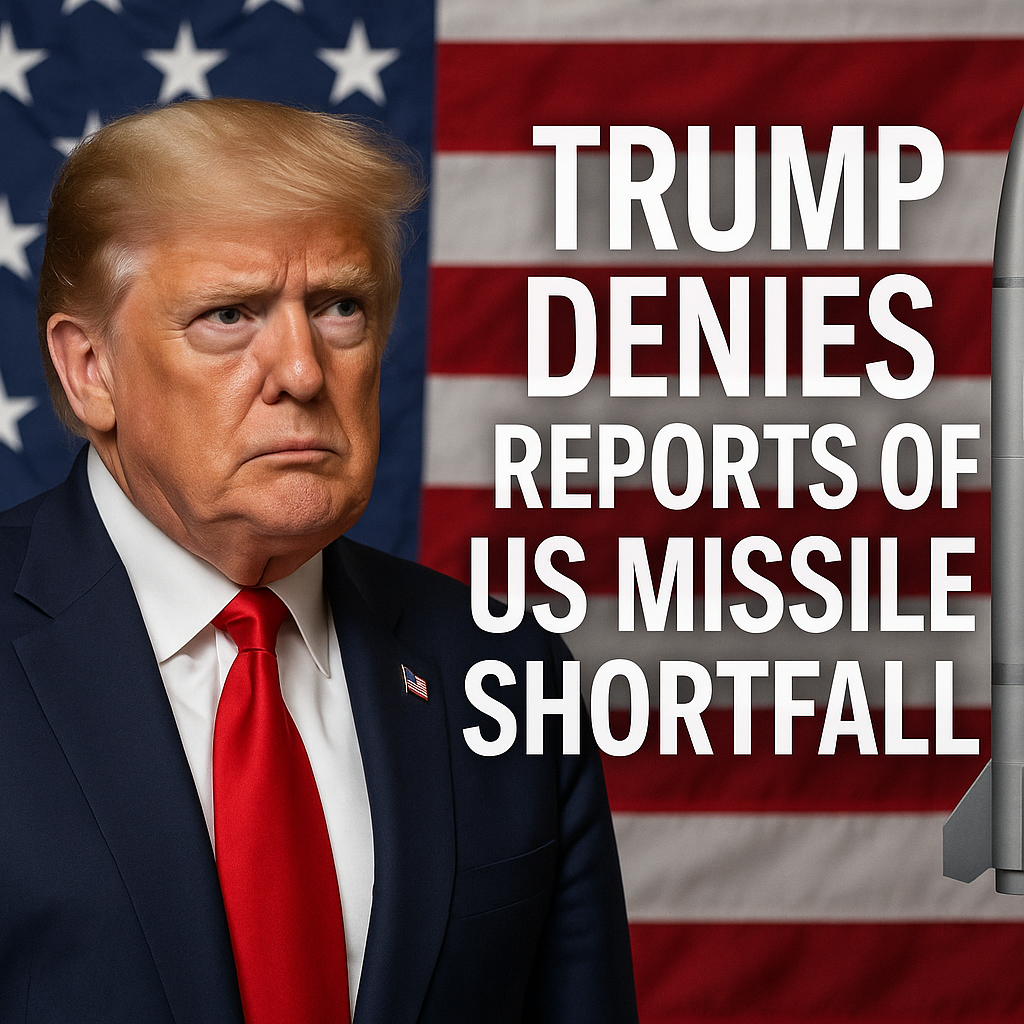
Trump Denies Reports of US Missile Shortfall
Trump Denies Reports of US Missile Shortfall
In a recent statement, former President Donald Trump has strongly denied claims regarding a significant shortfall in U.S. missile inventory, asserting that such reports are unsubstantiated and politically motivated. This assertion has reignited discussions around national security, military readiness, and the balance of power in foreign relations.

Understanding the Claims
Reports have circulated suggesting a shortage of missiles within the U.S. military arsenal, particularly in the context of ongoing geopolitical tensions. These reports, as highlighted by various sources, suggest that the supply chain disruptions from the COVID-19 pandemic and increased military expenditures in support of Ukraine could lead to vulnerabilities in U.S. defense capabilities. Trump responded to these claims by stating, “We have plenty of missiles, and our military is the most equipped in the world.”

The sources of these reports typically include military analysts, defense contractors, and news outlets that often rely on internal assessments of military readiness. According to a report from Al Jazeera, experts have indicated that while there may be challenges in replenishing missile stocks, the U.S. remains a formidable military power.

This contrast in perspectives showcases the complexity of interpreting military readiness. On one hand, there are concerns raised by defense analysts about the sustainability of U.S. munitions, particularly as global conflicts escalate. Conversely, proponents of Trump’s view argue that these claims are exaggerated, emphasizing the technological superiority and existing inventory of the U.S. military forces.
The Implications of Military Shortfalls
The allegations concerning a missile shortfall have broader implications for U.S. military strategy and foreign relations. If true, a diminished missile supply could hinder the U.S.’s ability to project power globally, especially in hotspots such as Eastern Europe or the South China Sea. Military experts, as reported by various news outlets, express that maintaining a robust missile inventory is crucial not only for immediate defense needs but also for deterrence against potential aggressors.
However, the reality appears to be multifaceted. As stated by a Sky News report, while the U.S. does face challenges in production rates due to factors such as supply chain limitations and increased demand, it remains equipped to meet its immediate defense needs. This complexity suggests that while there may be discussions around readiness and supply, the United States is not at a critical juncture as indicated by some reports.
Analyzing Perspectives
The divergent viewpoints on the Trump missile shortfall claims reflect wider debates about defense policy and military resource allocation. Critics argue that neglecting to adequately stockpile munitions poses risks not only in terms of military capacity but also in terms of national security strategy. They contend that adversaries may see this as a weakness, prompting them to take bolder actions.
On the flip side, Trump and his supporters advocate for a narrative that emphasizes the strength of the U.S. armed forces. They suggest that insisting on a national security crisis is merely an attempt to undermine his administration’s military policies during his presidency.
Conclusion: The Need for Critical Perspectives
Navigating through the conflicting narratives surrounding the U.S. missile inventory requires critical evaluation of the sources and the potential motivations behind these claims. While Trump’s blanket denial may serve a political purpose, it is equally important to recognize the underlying issues regarding military readiness, production capabilities, and strategic defense initiatives.
As the geopolitical landscape continues to evolve and new threats emerge, the dialogue surrounding military preparedness is crucial. Given the complexity and interconnectedness of these issues, fostering an informed discussion based on empirical evidence rather than partisan rhetoric will ultimately shape the future of U.S. military strategy.