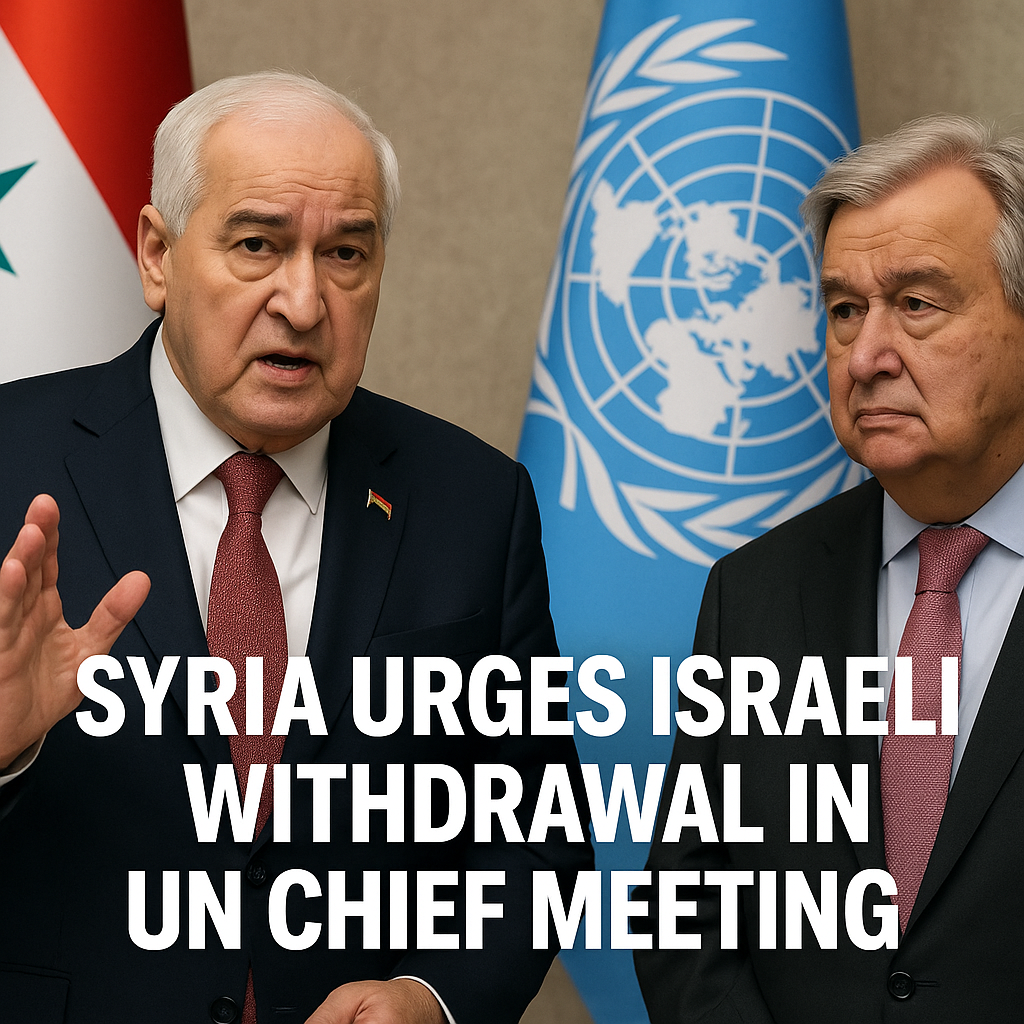
Syria Urges Israeli Withdrawal in UN Chief Meeting
Syria’s Call for Israeli Withdrawal: A Complex Geo-Political Landscape
In recent developments, Syria has reiterated its demand for the withdrawal of Israeli forces from the Golan Heights during a meeting with the UN Secretary-General António Guterres. This call, while not new, highlights the ongoing tensions and the complicated web of relationships in the region, reflecting a deep-seated historical conflict marked by territorial disputes, security concerns, and international diplomacy.

The Background of Tension
The Golan Heights, which Israel captured during the Six-Day War in 1967, has since been a focal point of contention. Following the war, Israel effectively annexed the region in 1981, a move that has not garnered international recognition and remains a point of dispute in Syrian-Israeli relations.

Syrian Foreign Minister Faisal Mekdad emphasized in his recent statements that the international community should address Israel’s ongoing occupation, framing it as an impediment to regional stability. In his meeting with Guterres, Mekdad stated, “Syria will not accept the status quo,” pointing to the continued military presence of Israeli forces as a significant barrier to peace negotiations.

Diverse Perspectives on the Issue
In assessing the implications of this meeting and Syria’s insistence on Israeli withdrawal, two main viewpoints emerge from various reports and analyses:
1. Support for Syrian Claims: Several sources, including Al Jazeera, express a strong sentiment that without addressing the issue of Israeli occupation, any peace talks in the broader Middle East are unlikely to succeed. Analysts suggest that the Golan Heights not only holds strategic military importance for Israel but is also crucial for water resources, making the fight over this territory multifaceted. The view here aligns with the sentiment that the UN should take a more active role in mediating the conflict.
2. Critique of Syrian Positioning: On the other hand, some commentators, particularly from outlets like RT and Sky News, argue that the Syrian government’s current stance might be less about reclaiming territory and more about domestic political posturing. Given the ongoing civil war and the fragmentation of authority in Syria, the call for withdrawal could be interpreted as an attempt by the Assad regime to distract from internal issues. These critiques emphasize that the reality on the ground is significantly altered and that any negotiations involving Golan should take into account the current geopolitical climate.
The Role of the International Community
The UN’s role in the ongoing dynamics between Syria and Israel remains pivotal. The UN Disengagement Observer Force (UNDOF) was established in 1974, but its effectiveness continues to be questioned. Guterres’ response to Mekdad’s claims included calls for de-escalation and continued dialogue. However, he also acknowledged the complexity of the situation, noting that both historical grievances and current realities shape perceptions and actions.
The challenge lies in balancing international law and respects for territorial sovereignty with the security concerns that Israel cites for maintaining its presence in the Golan. As noted in various analyses, the global community has been largely unsuccessful in creating a cohesive strategy to address these intertwined issues.
Looking Ahead: A Fragile Footing
As Syria calls for renewed attention to its sovereignty over the Golan Heights, the implications for Israeli security and regional dynamics are profound. Given the ongoing strife within Syria itself and the various international actors involved, the path towards resolution—or further entrenchment of conflict—remains uncertain.
Tensions are likely to persist as both sides hold firm in their positions, with external influences playing a crucial role. The necessity for diplomacy is apparent, yet the willingness from all parties to engage in substantive talks remains questionable.
In conclusion, the meeting between Syria’s Foreign Minister and the UN Secretary-General encapsulates a broader narrative of historical grievances, present conflicts, and the quest for a peaceful resolution. While aspirations for peace are universal, the discord on the ground illustrates just how nuanced and challenging this path continues to be. The international community remains at a crossroads, tasked with the delicate balancing act of advocacy, mediation, and the quest for stability in a region fraught with complexity.