
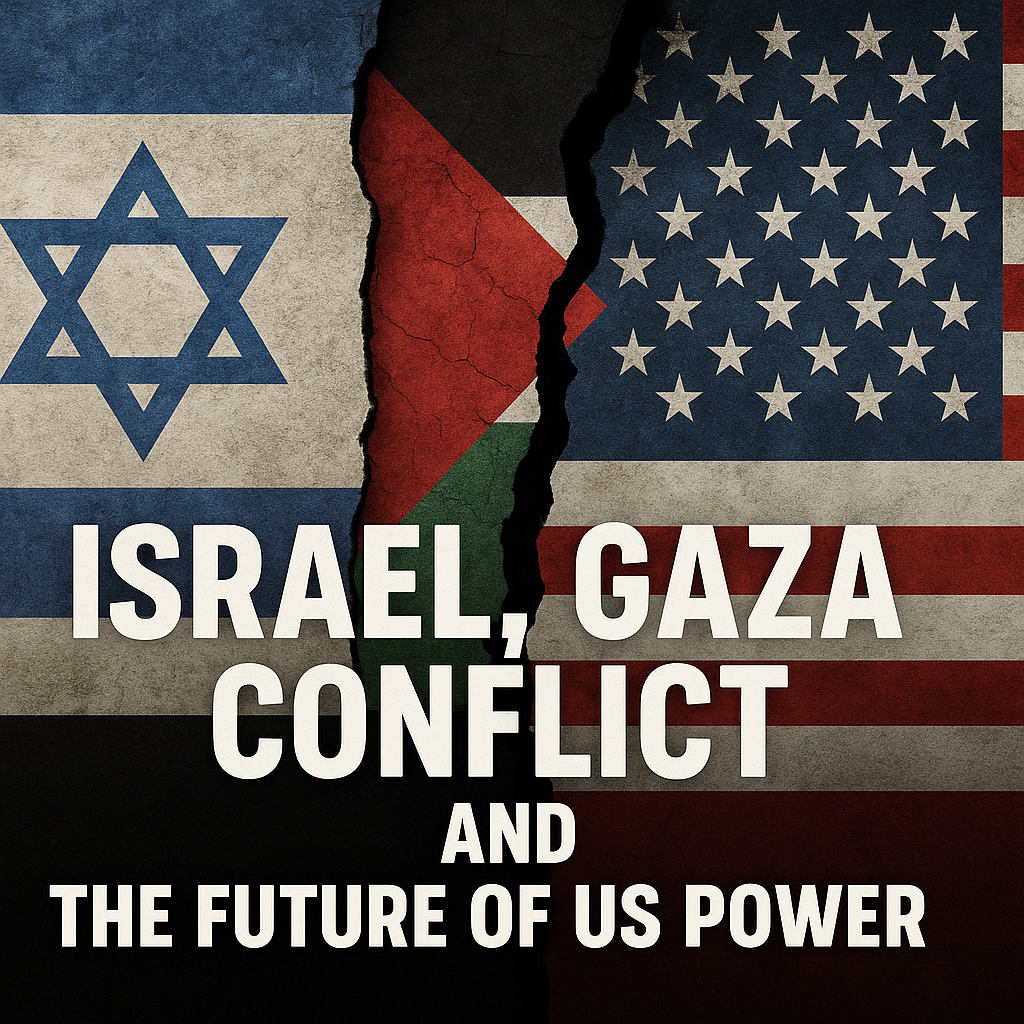
Israel, Gaza Conflict and the Future of US Power
The Complexity of the Israel-Gaza Conflict and Its Implications for US Power
The Israel-Gaza conflict has long been a focal point of international relations, particularly regarding the influence and power dynamics of the United States in the Middle East. As tensions escalate, understanding the multifaceted implications of this conflict becomes crucial—not merely for the nations directly involved but also for the global landscape and the role the US intends to assume moving forward.

The Current Landscape in Israel and Gaza
Recent developments have highlighted the deep-seated animosities and ongoing violence that characterize the Israel-Gaza situation. Al Jazeera reports that the humanitarian crisis in Gaza has intensified, with restrictions on essential goods, including food and medical supplies. The United Nations has warned of catastrophic conditions, underscoring a dire need for intervention and humanitarian support.

Conversely, media sources such as RT emphasize the Israeli perspective, pointing out the country’s security concerns regarding rocket attacks from Hamas, which it classifies as a terrorist organization. This schism in narratives highlights an ongoing struggle for legitimacy and sympathy on both sides, making it difficult to establish a consensus on the future.

Public opinion in the US is also evolving, reflecting a growing divide. While traditional support for Israel remains strong among certain demographics, a notable segment of the younger population expresses solidarity with Palestinian rights, indicating a shift in discourse that may influence US foreign policy.
The United States’ Role: Guardian or Instigator?
Historically, the US has positioned itself as a mediator in the Israel-Palestine conflict while simultaneously providing military and financial support to Israel. This dual role often draws criticism, especially in light of emerging voices advocating for a reevaluation of US intervention strategies. According to Sky News, analysts suggest that unwarranted allegiance to Israel could undermine the US’s credibility as a neutral peace broker, especially as it navigates calls for justice from Palestinian advocates.
Moreover, there is the question of what a prolonged engagement would mean for America’s influence in the region. Reports indicate that persistent support for Israel could lead to backlash against US interests, as countries in the Middle East observe shifts in public sentiment. These countries may pivot towards alliances that diminish US influence, particularly in the context of the growing importance of Asia and African nations on the global stage.
Divergent Perspectives on Future Strategies
Looking ahead, opinions diverge on how the US should approach the Israel-Gaza conflict. One perspective promotes a reaffirmation of unwavering support for Israel, reinforcing military ties while seeking to broker peace based on existing frameworks. Advocates of this approach argue that a strong Israel is vital for American interests in the region, allowing the US to balance against adversarial states such as Iran.
Meanwhile, another viewpoint emerges from a significant segment of policymakers and activists who are calling for a more balanced approach that addresses Palestinian rights and concerns. This strategy emphasizes a two-state solution grounded in mutual recognition and respect, suggesting that this could lead to lasting peace and stability, thereby elevating US stature as a fair mediator.
Several analysts caution that the current trajectory could lead to increased instability if the US fails to address the root causes fueling the conflict. They argue that without reforming its approach, the US risks being viewed as either an enabler of oppression or an ineffective mediator.
Conclusion: A Call for Nuanced Understanding
The Israel-Gaza conflict remains one of the most entrenched disputes in international relations, with implications for US power and diplomacy. As the landscape continues to shift, the United States faces a critical crossroads: uphold traditional alliances or adapt to a burgeoning moral and ethical compass that resonates with a diverse constituency.
A nuanced understanding and flexible response may be the key to safeguarding US interests while contributing meaningfully to peace in a complex and frequently volatile region. The path forward requires an acknowledgment of each narrative’s validity, fostering dialogue and cooperation aimed at sustainable solutions that resonate on the world stage. Consequently, the lens through which the conflict is viewed could determine not just the future of Israel and Gaza, but the very nature of US influence in global affairs for generations to come.















