
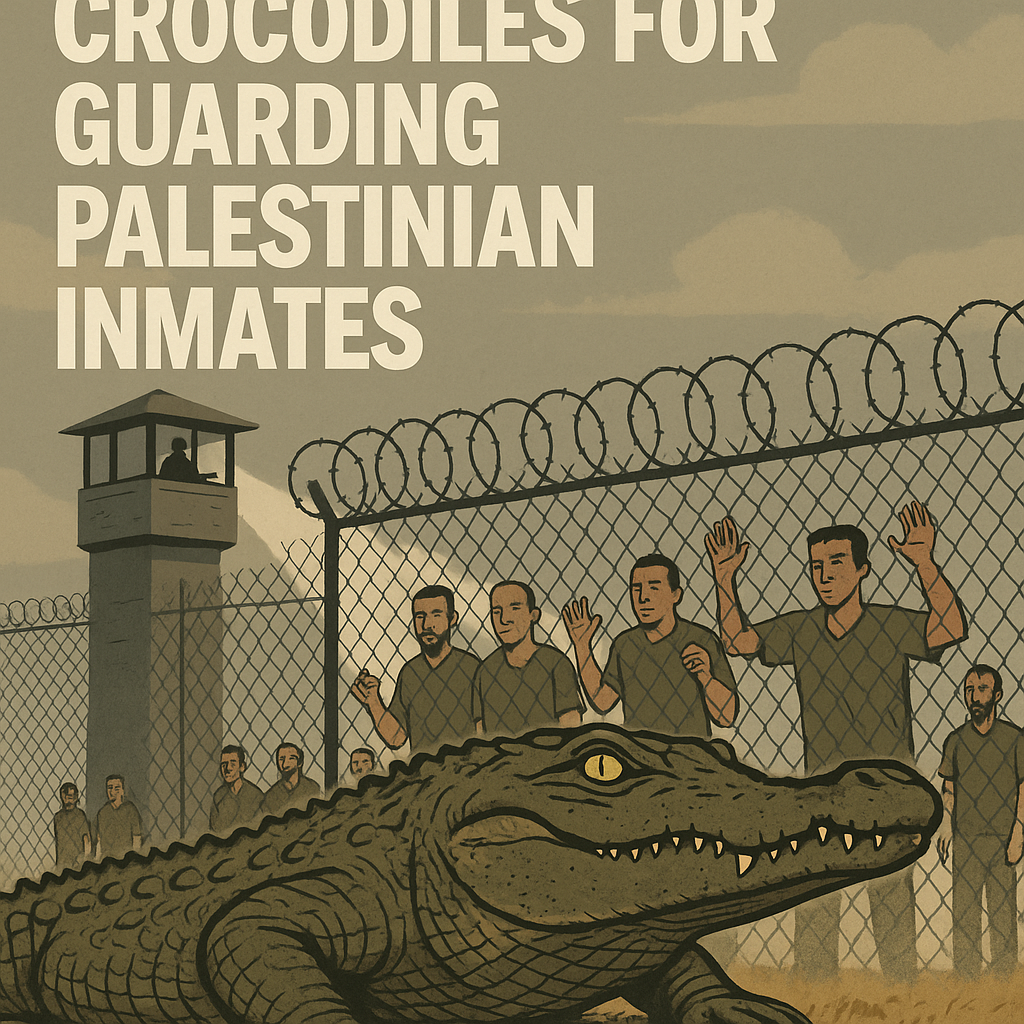
Israel to Use Crocodiles for Guarding Palestinian Inmates
Israel’s Unconventional Security Measure: The Use of Crocodiles for Guarding Palestinian Inmates
In an unexpected turn of events, Israeli authorities are reportedly considering the use of crocodiles as a security measure for guarding Palestinian inmates. This decision has elicited a spectrum of reactions and concerns, underscoring the complexities surrounding security practices in the region.

Security Strategy or Symbol of Control?
The Israeli government’s proposal to use crocodiles not only raises eyebrows but also ignites discussions about the underlying messages such strategies convey. The decision appears to stem from an ongoing commitment to enhance security within correctional facilities, which house a significant number of Palestinian inmates. Critics argue that utilizing crocodiles epitomizes a larger narrative of control and dehumanization.

According to a report by RT, the use of these reptiles is seen as a way to deter escape attempts, leveraging their natural predatory instincts to maintain order within prison walls. The practicalities of such a security measure, however, are being scrutinized. While some security experts may advocate for innovative methods to manage inmate populations, utilizing animals such as crocodiles may cross ethical lines and question the humane treatment of inmates—an aspect that many insist should be paramount in any justice system.

Al Jazeera, in its coverage, emphasizes the potential implications of this move, reiterating that the practice could exacerbate tensions between Israeli authorities and Palestinians. The optics of deploying reptiles as a form of control are not lost on observers, particularly amid ongoing critiques surrounding Israel’s treatment of Palestinian detainees.
Ethical Considerations and Public Opinion
The proposal’s feasibility and ethical implications have ignited debates both locally and internationally. Proponents might argue that the use of crocodiles could offer a novel solution to a long-standing problem of inmate management. However, critics have raised ethical concerns about the welfare of the animals themselves and the often perilous conditions faced by Palestinian inmates.
Public response has varied widely, with some viewing the move as a reflection of Israel’s broader security policies, which often prioritize deterrence at the expense of human rights considerations. Others warn that introducing crocodiles into the prison environment could open up a Pandora’s box of unintended consequences, potentially leading to serious injuries or fatalities.
Furthermore, the economic implications of such a decision are significant. Deploying crocodiles requires logistical planning and resources that could arguably be better spent on rehabilitation programs for inmates, a strategy that may address security issues with more humane alternatives.
Economist and human rights advocates suggest that improving prison conditions and implementing rehabilitative measures could yield more sustainable results in maintaining prison security. They argue that focusing on reform rather than intimidation could help break the cycles of violence and resentment that have long existed in the Israeli-Palestinian relationship.
Striking a Balance: Security and Human Rights
In a landscape fraught with complexities, the balance between security and human rights has never been more critical. The decision to consider crocodiles as a security measure for Palestinian inmates highlights not only the ongoing security dilemmas faced by Israel but also the broader ethical challenges associated with such decisions.
As the situation continues to evolve, it is crucial for various stakeholders, including human rights organizations, policymakers, and the general public, to engage in constructive dialogue regarding the implications of such unconventional measures. The potential for crocodiles to become a fixture in Palestinian prisons could signal a troubling trend if it reflects a mindset that prioritizes control over compassion.
With sources reporting various dimensions of this issue, from practical considerations to ethical dilemmas, a comprehensive understanding of the scenario becomes essential. While there are arguments supporting innovative security measures, the emphasis on humane treatment remains a crucial aspect that cannot be overlooked.
As Israel moves forward with its deliberations, the world watches closely, hoping for a resolution that respects the dignity of all individuals involved, both human and animal alike. The discourse surrounding these developments will undoubtedly play a vital role in shaping the future of security practices in the region and beyond.















