
Trump Open to Talks with Hezbollah, Promises Aid for Lebanon
The Complex Landscape of Trump, Hezbollah, and Lebanon
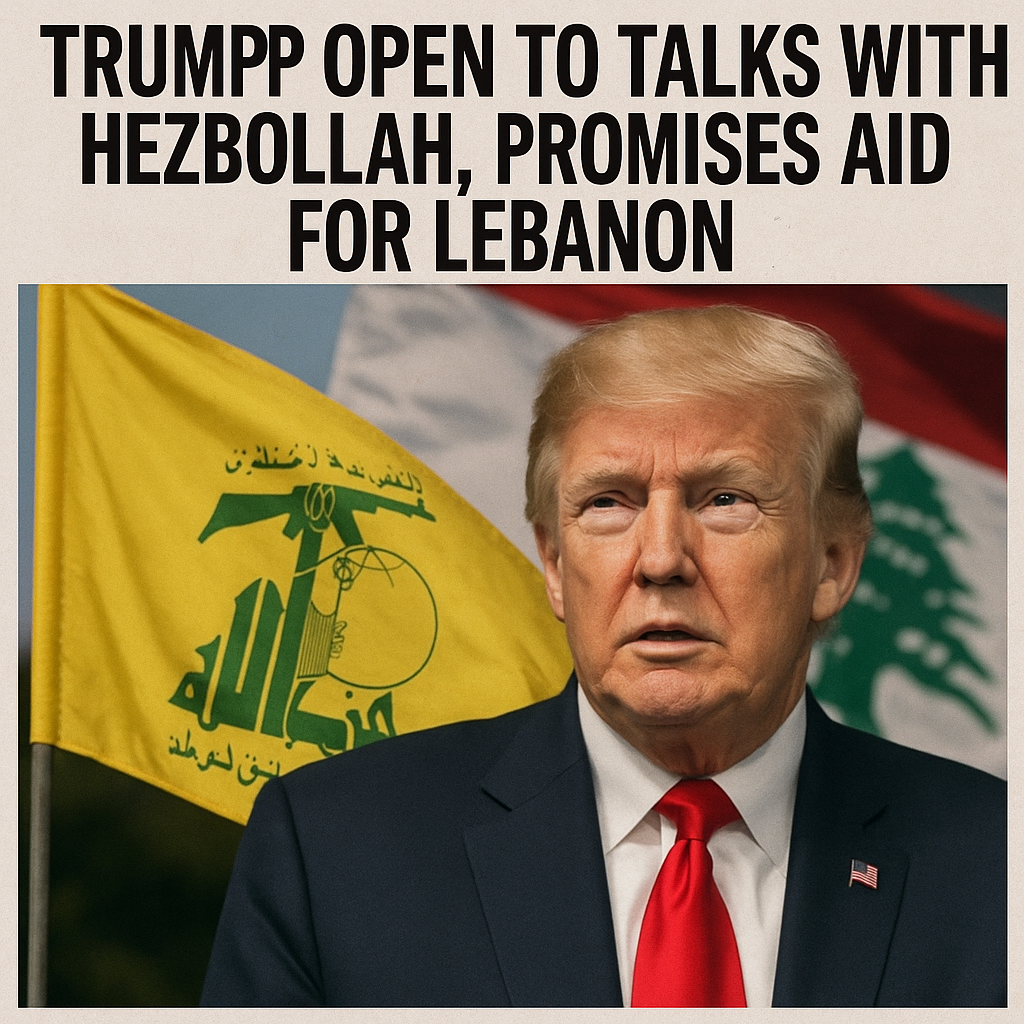
Former President Donald Trump recently stated he is “open to talks with Hezbollah” and expressed a commitment to aiding Lebanon. This surprising shift in his rhetoric has sent ripples through international relations, especially regarding U.S. engagements in the Middle East. Understanding the implications of this statement requires delving into the complexities that characterize both Hezbollah and the broader Lebanese context.

The Volatility of U.S.-Hezbollah Relations
Historically, Hezbollah has been viewed by the U.S. as a terrorist organization due to its militant activities and ties to Iran. The group’s involvement in various conflicts has positioned it as a significant player in the Middle East, often fueling tensions between the U.S. and Lebanon. Trump’s openness to dialogue with Hezbollah marks a notable departure from traditional U.S. policy, which has largely rejected engagement with groups labeled as terrorists.

This shift raises important questions about the U.S.’s long-term strategy in the region. From one perspective, engaging Hezbollah could be seen as a pragmatic approach to stabilize Lebanon, especially as the country grapples with severe economic challenges. Lebanon is facing a financial crisis exacerbated by political paralysis and the aftermath of the 2020 Beirut port explosion, making aid and dialogue increasingly necessary.

Diverse Viewpoints on the Implications of Aid
Experts and analysts are divided on the consequences of potentially increasing U.S. aid to Lebanon while simultaneously engaging with Hezbollah. Some argue that financial support could empower Lebanon’s government to implement meaningful reforms and address corruption—a critical factor in restoring public trust and stability. Trump’s stance may encourage dialogue that can lead to constructive outcomes in bilateral relations, potentially paving the way for more significant aid packages.
Conversely, others caution that engaging with Hezbollah could undermine U.S. credibility. Critics fear that any perceived legitimacy granted to Hezbollah through talks may embolden the group and complicate future negotiations with Western nations that maintain a hardline stance against it. Additionally, there is concern that U.S. aid might inadvertently bolster Hezbollah’s standing within Lebanon, allowing it to maintain its influence and military capabilities.
The Nuances of Lebanese Politics
Lebanon’s internal politics add another layer of complexity to the situation. The delicate balance of power among various factions means that American support, particularly if it includes engaging with Hezbollah, could be met with resistance from other political actors. Groups like the Future Movement, traditionally aligned with Western interests, might view such talks as a betrayal, deepening the divisions in an already fragmented political landscape.
In a recent report from Al Jazeera, Lebanese leaders expressed skepticism about the efficacy of external aid without the promise of significant reforms. This sentiment underscores a critical point: while financial support is welcome, its success hinges on the willingness of local leaders to act in the nation’s best interest rather than in service of individual factions or foreign agendas.
An Uncertain Path Forward
Navigating this complex landscape requires not just strategic foresight but also an understanding of the diverse sentiments present within Lebanon. Trump’s comments indicate a willingness to shift the dynamic, but the variegated responses from political factions both in Lebanon and the U.S. suggest that the road ahead is fraught with challenges.
As the international community observes this potential thaw in U.S.-Hezbollah relations, it remains essential to consider the opinions and experiences of those most affected by these developments—ordinary Lebanese citizens. With Lebanon facing one of its worst crises in decades, the success of any dialogue will depend on its ability to foster real change on the ground and not only serve as a tool for political posturing.
In conclusion, Trump’s openness to talks with Hezbollah and promise of aid for Lebanon reflects a desperate call for stability in a region marked by conflict. However, it also highlights the intricate web of local and international politics that will shape the future of U.S. engagement in Lebanon. As the dialogue progresses, it will be crucial to watch how these developments impact both the Lebanese political landscape and broader U.S.-Middle Eastern relations.















