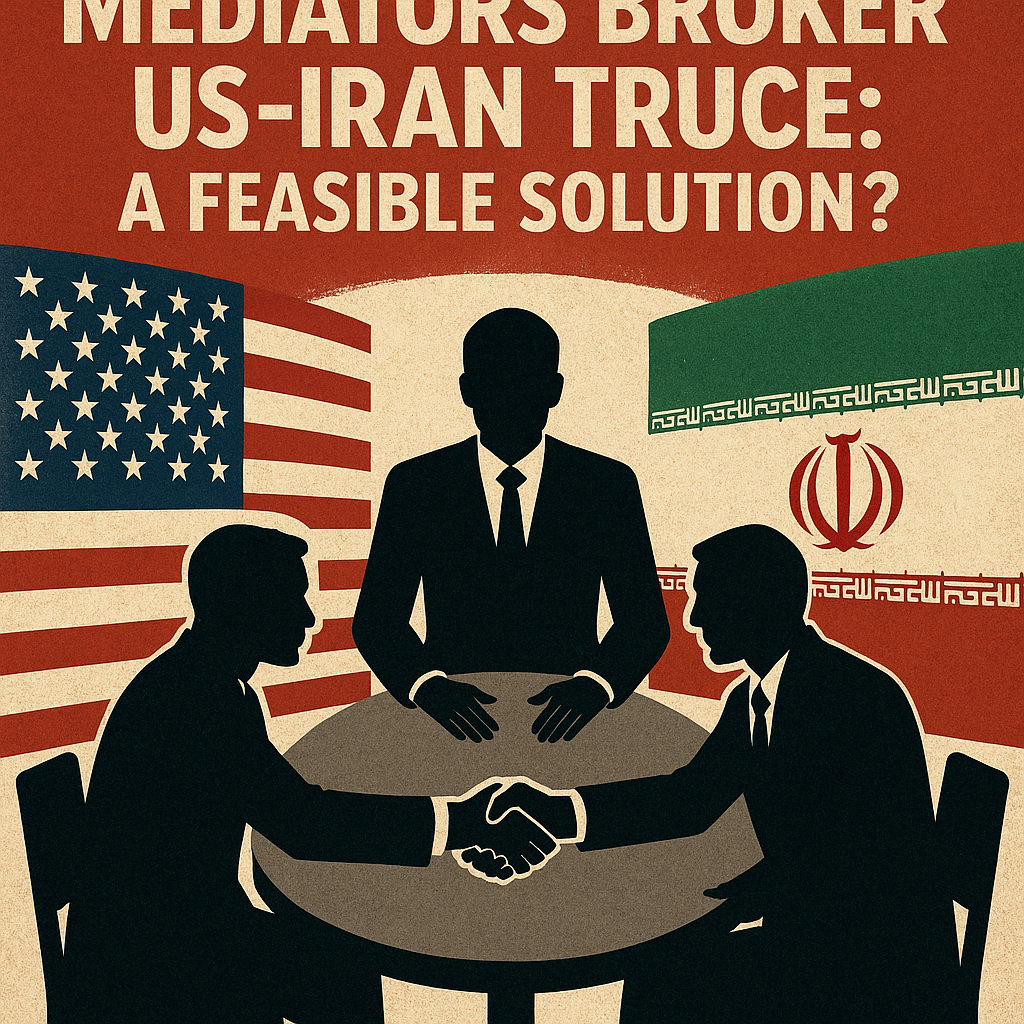
Mediators Broker US-Iran Truce: A Feasible Solution?
Mediators Broker US-Iran Truce: A Feasible Solution?
In recent discussions involving mediators, the complex relationship between the United States and Iran has once again come to the forefront, raising the critical question: Could a truce be brokered between these long-time adversaries? Both countries have been involved in a tumultuous back-and-forth of sanctions, diplomatic hostilities, and military posturing over the years, leaving many to speculate about the viability of a peaceful resolution.

The Context of the US-Iran Relationship
The history of U.S.-Iran relations is deeply rooted in events that date back over four decades, including the Iranian Revolution in 1979, which resulted in the severance of diplomatic ties, and various military confrontations and sanctions that have further strained interactions. Recently, heightened tensions have emerged with Iran’s advancement in nuclear capabilities and U.S. withdrawal from the Joint Comprehensive Plan of Action (JCPOA) in 2018. As a result, the stakes on both sides are perpetually high and laden with historical baggage.

In an effort to engage both parties in constructive dialogues, various mediators have stepped into the fray, attempting to facilitate discussions aimed at easing tensions. Countries that have shown interest in this role include Oman and Qatar, who historically maintained positive relations with Iran and are viewed as suitable brokers. These nations stand to leverage their diplomatic standing to create an environment conducive to negotiations.

Possible Pathways to a Truce
With the involvement of mediators, the potential pathways to a truce can be explored. Proponents of mediation argue that a neutral third party can alleviate the animosity and foster trust, making it easier for the U.S. and Iran to engage in meaningful conversations. As noted by Al Jazeera, intermediaries can help “navigate the complex political landscapes” by addressing the critical issues that define the rivalry—such as Iran’s nuclear program, support for proxy groups in the Middle East, and U.S. sanctions.
Additionally, the prospect of economic incentives represents another possible pathway to fostering dialogue. As sanctions continue to cripple the Iranian economy, there have been increasing calls for a relaxation of these measures in exchange for reciprocal actions from Iran on its nuclear ambitions. This kind of quid pro quo approach could serve as a basis for future negotiations, allowing both sides to find common ground.
However, the feasibility of such an approach is not without challenges. For instance, American hardliners often view negotiations based on perceived weaknesses and fear diplomatic concessions may embolden Iran. Similarly, Iranian leaders are cautious about appearing too conciliatory, as it may elicit backlash from domestic factions opposed to the U.S. engagement.
Competing Viewpoints on Mediation Effectiveness
Different observers have weighed in on the effectiveness of mediation efforts in the ongoing U.S.-Iran tensions. On one side, some analysts celebrate the involvement of neutral countries, emphasizing their role in bridging the gap between the two nations. They suggest that a focused negotiating process, facilitated by these mediators, could lead to tangible results, citing past instances where such approaches were successful in other conflict zones.
Conversely, skeptics argue that while mediation might create opportunities for dialogue, the fundamental issues at stake may prove too polarizing to overcome. Notably, some sources have pointed out the lack of trust and mutual suspicion between the U.S. and Iran, which could undermine any attempts at mediation. The divided opinions reflect a broader uncertainty about whether external parties can bring about substantial change in such a charged atmosphere.
The Role of International Dynamics
Additionally, international dynamics play an essential role in the potential for a U.S.-Iran truce. As geopolitical tensions fluctuate, the influence of global powers, such as Russia and China, may either aid or hinder mediation efforts. These countries have expressed varying interests in the Iranian situation, which could impact U.S. interests and complicate reconciliation efforts.
An additional layer of complexity arises from the ongoing conflicts in the region involving U.S. allies, such as Israel and Saudi Arabia, who oppose Iran’s influence and may resist any U.S. move that appears conciliatory. This interconnected web of relationships highlights the difficulty of achieving a lasting truce without addressing broader regional dynamics.
Conclusion: Charting a Path Forward
As discussions continue around the possibility of mediators brokering a truce between the U.S. and Iran, the outlook remains uncertain. While advocating for dialogue through neutral intermediaries opens the door for potential resolutions, the entrenched issues of mistrust and regional dynamics pose significant hurdles.
Both parties must navigate a complex landscape, balancing domestic pressures against the potential benefits of peace and cooperation. Until a clearer consensus emerges on the fundamental issues at hand, the possibility of a truce, while not impossible, remains a difficult and precarious ambition.