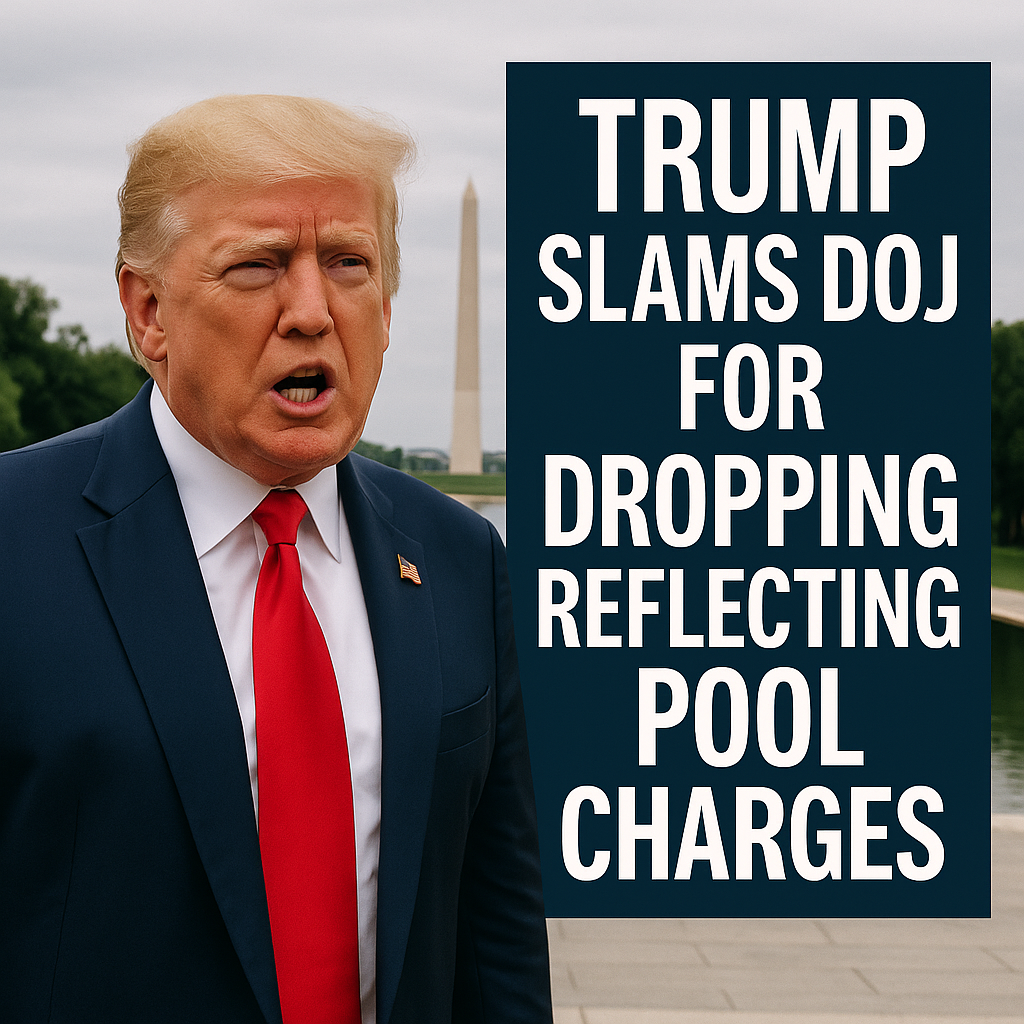
Trump Slams DOJ for Dropping Reflecting Pool Charges
In a recent turn of events, former President Donald Trump has vocally criticized the Department of Justice (DOJ) for its decision to drop charges related to the Reflecting Pool at the National Mall. This intricate issue, which emerged amidst broader discussions regarding the DOJ’s handling of politically sensitive cases, has drawn diverse reactions that underscore the ongoing tensions in American politics.

Background on the Reflecting Pool Charges
The Reflecting Pool, a significant feature of the National Mall, became a focal point for discussions around federal oversight and the appropriateness of certain legal actions. Initially, the DOJ had pursued charges connected to alleged misconduct surrounding the maintenance and accessibility of this historical site. However, the recent announcement of dropped charges has fueled criticism from Trump, who claims that the move exemplifies a broader pattern of bias within the justice system.

Trump’s assertion suggests a sentiment among his supporters that the DOJ is selective in its enforcement of laws, especially regarding figures tied to the previous administration. As he stated, “This is yet another example of how the justice system is being weaponized against those who dare to question the status quo.” This claim reflects a significant perception among some conservatives that the legal actions taken against political adversaries are disproportionate.

Divergent Perspectives on the DOJ’s Decision
The decision to drop the Reflecting Pool charges has not gone unchallenged. Critics of Trump argue that his response is emblematic of a broader strategy to undermine trust in government institutions. A report from Al Jazeera highlighted sentiments from legal experts who suggest that the DOJ’s choice to discontinue these charges was grounded in practicality. The rationale, they assert, is that the costs of pursuing the case did not outweigh the potential benefits, particularly in a landscape fraught with legal complexities.
Conversely, many Trump supporters see confirmation of their suspicions regarding political motivations within the DOJ. As articulated in a Sky News report, the former president’s followers believe that this is indicative of a trend where politically charged cases are handled with kid gloves, fostering a narrative of systemic injustice.
Assessing the Broader Implications
The broader implications of the DOJ’s decision and Trump’s subsequent critique are nuanced and multifaceted. On one hand, the decline of charges could signify a commitment to judicial prudence; on the other, it reinforces existing narratives of political bias that fuel distrust in the government’s legal mechanisms. The question of whether this reflects systemic issues within law enforcement remains contentious.
Analysts have pointed out that cases involving high-profile figures often become battlegrounds for political conflict. Consequently, the line between legal accountability and political maneuvering frequently blurs, which complicates public perception. According to RT news, even minor cases have heightened implications, impacting not just the individuals involved but also the trust and integrity of the justice system as a whole.
While some critics highlight the decision as a legitimate use of prosecutorial discretion, others contend it raises red flags about accountability in high-stakes situations. Trump’s rhetoric may serve to galvanize his base, yet it also risks alienating moderate supporters who may prefer a more measured approach to governance.
Conclusion: A Divided Landscape
In conclusion, the division in public perception concerning the DOJ’s handling of the Reflecting Pool charges encapsulates the larger cultural and political rifts in America today. Trump’s condemnation adds fuel to the fire of existing tensions, while the DOJ’s rationale for dropping the charges seeks to uphold standards of legal integrity.
As this situation continues to evolve, it serves as a reminder of the complications inherent in navigating justice within a politically charged environment. Whether one views the decision through the lens of prudence or negligence, it is clear that this incident has profound implications for the relationship between law and politics in contemporary America. The discourse surrounding it reflects a society grappling with issues of accountability and fairness—core tenets pivotal to the nation’s foundational values.