
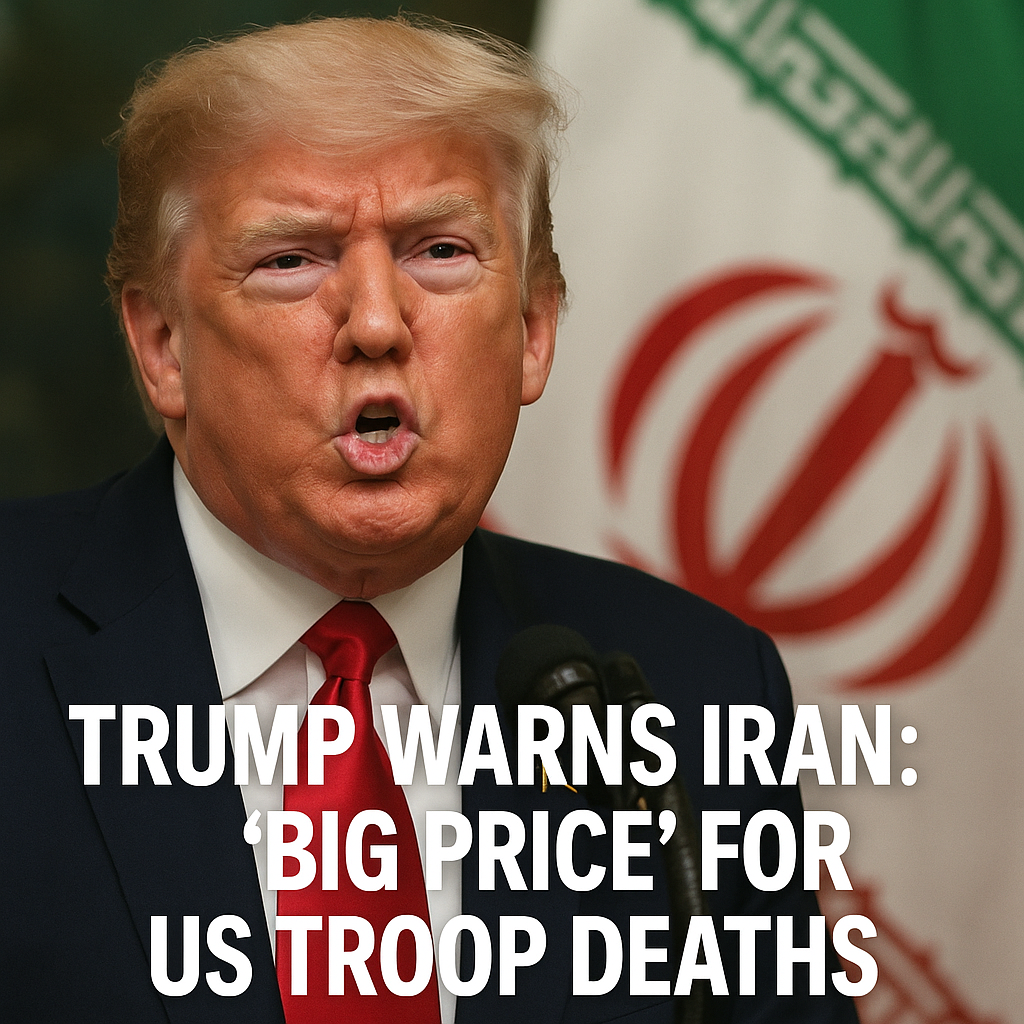
Trump Warns Iran: ‘Big Price’ for US Troop Deaths
The recent warning issued by former President Donald Trump regarding Iran carries significant implications for U.S. foreign policy and regional stability. Trump stated that Iran would “pay a big price” for any attacks leading to U.S. troop fatalities, reflecting his administration’s confrontational stance toward Tehran during his presidency. As tensions between the U.S. and Iran remain high, it’s crucial to explore the various dimensions surrounding this declaration and its potential outcomes.

Understanding the Context
Trump’s comments come amid ongoing tensions in the Middle East, particularly in Iraq, where U.S. forces are stationed. Recent reports indicate that Iranian-backed militias have been involved in attacks against U.S. personnel, raising alarms in Washington about the safety of its troops. This backdrop of military engagement forms a significant part of the narrative as Trump amplifies his warning.

Iran, for its part, has a history of leveraging asymmetric warfare tactics through proxies, which complicates any direct confrontation. The regime’s leadership tends to view U.S. actions through the lens of historical grievances and regional power struggle. Thus, Trump’s warning could be interpreted in various ways, both as a political maneuver to galvanize support at home and a genuine caution about military engagement in an already volatile region.

Diverse Reactions to Trump’s Warning
Reactions to Trump’s assertions have been multifaceted. Supporters of a hardline approach argue that a strong stance is necessary to deter Iranian aggression. They contend that Iran must be held accountable for its actions, arguing that a message needs to be sent not only to Tehran but also to other regional adversaries who may look to exploit perceived American weaknesses.
Conversely, critics caution against escalating tensions further. Some analysts warn that Trump’s statement might provoke retaliatory actions from Iran or its proxies, potentially endangering U.S. troops even more. They argue for a more restrained approach that emphasizes diplomacy over threats. This perspective highlights the risks involved in aggressive rhetoric and points to the complexities of dealing with a nation that has experienced decades of conflict with the U.S.
The Consequences of Escalation
The potential fallout from such a confrontational stance could be severe. Historically, aggressive posturing has often led to escalation rather than resolution. Countries involved in ongoing disputes tend to interpret threats as declarations of war, which could spiral out of control. There’s also the matter of domestic implications: any loss of American life due to heightened military engagement could drastically shift public opinion.
Furthermore, U.S.-Iran relations have been marked by cycles of escalation and de-escalation. The 2015 Nuclear Agreement, which Trump later abandoned, serves as a reminder of what can be sacrificed in the absence of diplomatic initiatives. The current situation threatens to revert to a cycle of hostility that could undermine any future efforts toward negotiation.
The Path Forward
Moving forward, the U.S. must carefully consider its options. Engaging in a dialogue that incorporates both deterrence and diplomacy could reduce the risk of conflict. Elected officials and policymakers face the challenge of crafting strategies that address security concerns while preventing a complete breakdown of relations with Iran.
In conclusion, Trump’s warning to Iran about facing a “big price” for U.S. troop deaths underscores the fragile balance of power in the Middle East. With diverse perspectives on the effectiveness of such rhetoric, it becomes increasingly evident that the path ahead requires a thoughtful approach. Both strategy and dialogue will play crucial roles in navigating this complex landscape. As tensions evolve, the focus should remain not only on immediate threats but on long-term stability in the region.















