UN Condemns Israel’s Illegal Settlements in West Bank

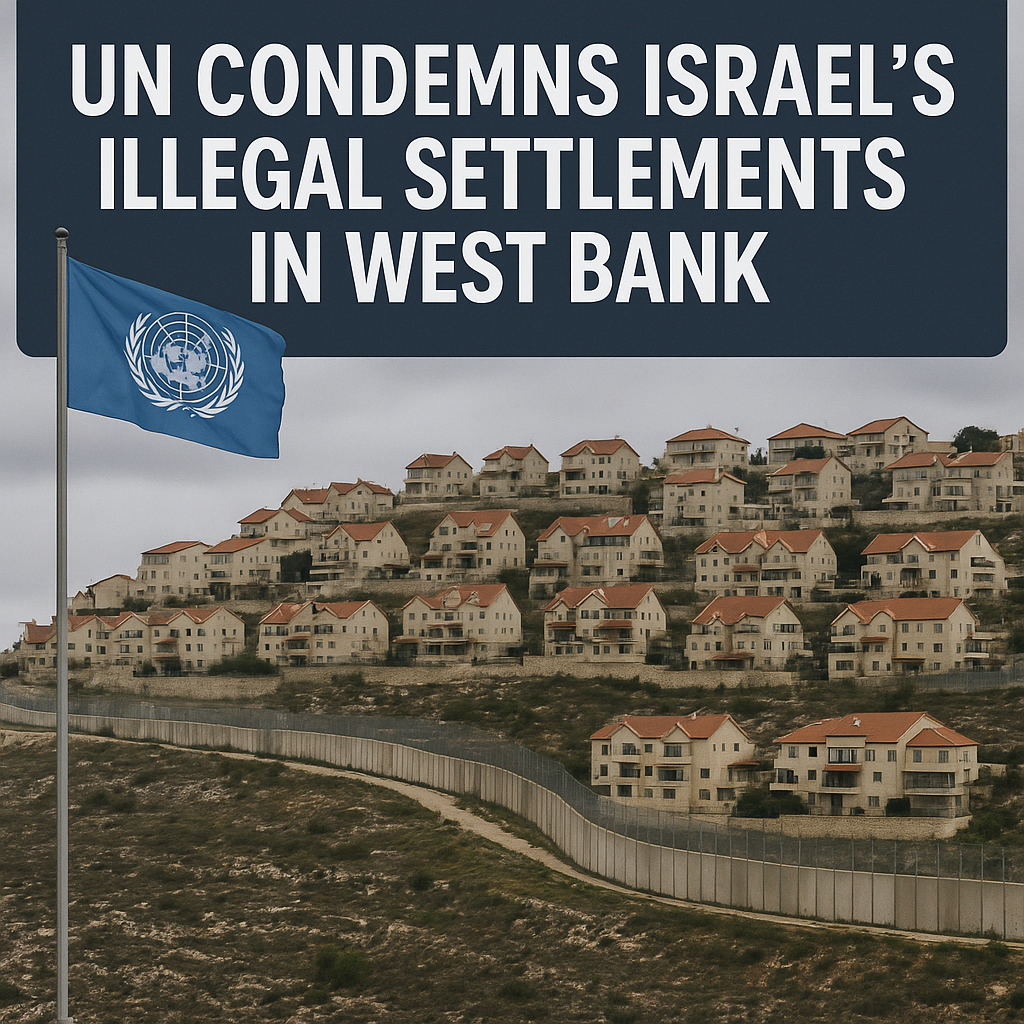
The United Nations has raised significant concerns over Israel’s continued expansion of illegal settlements in the West Bank, a contentious issue that has drawn global scrutiny and debate. According to various reports, these developments have not only eroded the prospects for peace but have also led to increased tensions in the region.

The Context of Condemnation
Israel’s settlement policy has been criticized for undermining international law, particularly the Fourth Geneva Convention, which prohibits the transfer of an occupying power’s civilian population into the territory it occupies. The UN has reiterated its stance, asserting that these settlements are illegal and constitute a major obstacle to the two-state solution desired by many observers of the Israeli-Palestinian conflict.


Recent reports highlight how Israel’s settlement expansion continues to encroach upon Palestinian lands, displacing communities and exacerbating tensions on the ground. A statement from the UN noted: “The construction of settlements leads to increased violence against Palestinian communities, and undermines any hope for a viable, independent state in the future.”

In echoing these sentiments, Al Jazeera reports that over 600,000 settlers now live in the West Bank and East Jerusalem. The surge in settlements often coincides with periods of heightened conflict, suggesting a pattern whereby expansion is correlated with worsening humanitarian conditions for Palestinians.
Diverging Perspectives
While the condemnation from the UN is clear, reactions to the implications of these settlements vary widely. On one side, advocates for Palestinian rights view the settlements as an outright violation of human rights, emphasizing the need for urgent international intervention. Reports from RT outline how this situation is exacerbating existing tensions and contributing to a cycle of violence that can lead to broader regional destabilization.
Conversely, Israeli officials often defend their settlement policies by arguing that it is essential for national security and claim historical and biblical connections to the land. They assert that the West Bank is a critical area for Israel’s defense strategy. Israeli Prime Minister Naftali Bennett has disputed the UN’s stance, implying that the international body fails to acknowledge Israel’s right to self-determination and security.
This stark contrast in perspectives showcases the complexity of the issue and highlights how deeply ingrained national and cultural narratives drive the debate.
The Human Impact
The ramifications of these settlements extend beyond political discourse; they have tangible effects on the lives of those living in the area. Reports from various media outlets indicate that the expansion often results in forced evictions and increased military presence in Palestinian neighborhoods. As a result, daily life for Palestinians is characterized by hardships, including restricted access to land, resources, and movement.
UN officials have stressed that the international community must step in to uphold the rights of Palestinians and curtail what is viewed as unlawful Israeli actions. However, there is also an acknowledgment of the challenges in achieving consensus on a course of action that both sides might accept. Despite widespread condemnation, tangible international action remains elusive.
The Path Forward
As tensions in the region continue to escalate, the UN’s condemnation of Israeli settlements may serve as a catalyst for more extensive discussions surrounding potential resolutions. However, the road to peace and stability is fraught with complexities. The varying interpretations of historical, political, and religious significance create barriers to achieving a diplomatic resolution.
Moreover, the prospects for a two-state solution appear to be diminishing with the ongoing expansion of settlements and a lack of consensus among international actors on how to address the situation. Observers argue that without a clear, unified approach that holds all parties accountable, the cycle of violence and conflict is likely to persist.
In conclusion, while the UN’s condemnation of Israel’s illegal settlements in the West Bank reflects a widespread concern for human rights and international law, the multifaceted nature of the Israeli-Palestinian conflict requires careful, nuanced consideration. Only through respectful dialogue and willingness to compromise can lasting solutions be envisioned amid deep-seated divisions and historical grievances. The future of peace in the region may depend on the collective effort to understand and respect the narratives of both Palestinians and Israelis.