Trump Asks Supreme Court to Limit Mail-in Voting Restrictions

Trump Asks Supreme Court to Limit Mail-in Voting Restrictions
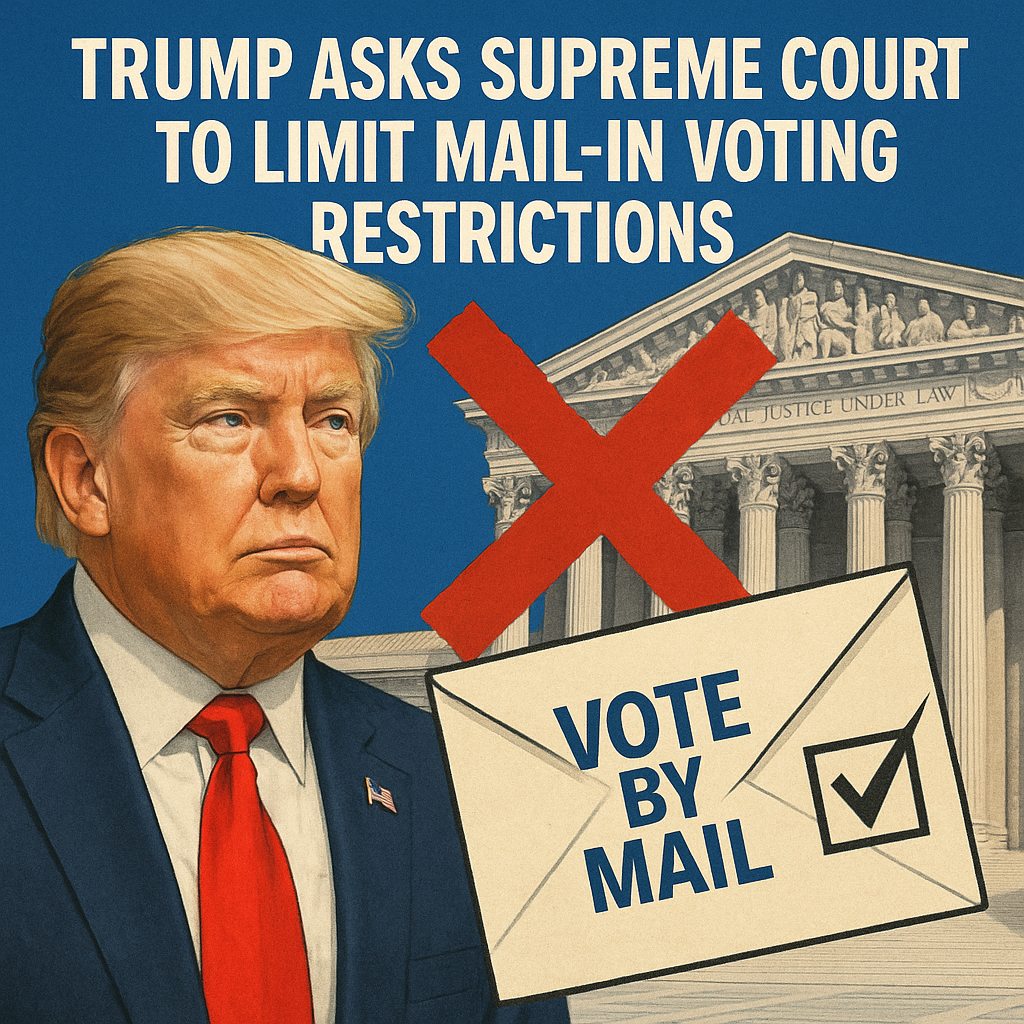
Former President Donald Trump’s recent appeal to the Supreme Court has ignited debates across the political spectrum regarding mail-in voting restrictions. This move is perceived by some as an attempt to secure electoral advantages, while others view it as a legitimate request for clarity on voting practices in light of rapid changes in legislation and technology.

Background and Context
Trump’s request comes in the wake of significant shifts in voting procedures prompted by the COVID-19 pandemic. Initially, many states expanded access to mail-in voting as a safe alternative for citizens exercising their democratic rights. However, as the pandemic waned, states began to revert to stricter voting measures, much to the chagrin of various advocacy groups and politicians who argue that these restrictions disproportionately affect marginalized communities.


In a report from Al Jazeera, Trump’s legal team argues that limitations on mail-in voting are essential for safeguarding the integrity of elections. They contend that unregulated mail-in voting can lead to electoral fraud, despite numerous studies indicating that such incidents are rare. This position resonates with a segment of the population that views voting security as paramount and perceives state legislatures’ moves towards tighter regulations as necessary.

Conversely, opponents of Trump’s stance, including several civil rights organizations and Democratic lawmakers, argue that restricting mail-in voting poses a direct threat to voter participation and could disenfranchise millions of Americans. For these critics, the ongoing political discourse around mail-in voting is not merely about procedures; it reflects a broader struggle for equitable access to democracy.
Diverging Perspectives
The Supreme Court’s history regarding voting rights and election laws illustrates the complexities surrounding this issue. Previous decisions have shown a varying commitment to protecting voting access. A notable example is the 2013 Shelby County v. Holder ruling, which weakened provisions of the Voting Rights Act and led to a surge in state-level restrictions on voting, especially targeting mail-in systems.
In recent years, high-profile cases have emerged that pit election integrity against voter accessibility. Some argue that the need for transparent, secure voting mechanisms justifies restrictions on mail-in ballots, while others contend that such measures are an overreach that serves partisan interests.
Supporters of Trump’s petition argue that establishing a clear legal framework for mail-in voting is essential to maintaining public trust in electoral processes. They emphasize that without adequate governance structures, the risk of confusion and mistrust among voters can undermine election outcomes.
On the other hand, a coalition of advocacy groups, as cited in multiple sources, insists that mail-in voting is a critical component of a modern democracy, enhancing participation for individuals who may face barriers to in-person voting, such as the elderly or disabled citizens. They argue that instead of restrictions, governments should focus on improving systems and infrastructure to support mail-in voting.
Current Implications
The upcoming Supreme Court decision could have significant implications for future elections and the broader discourse on voting rights in the U.S. If the Court rules in favor of limiting mail-in voting, it could reinforce trends toward stricter voting practices nationwide, potentially impacting voter turnout in crucial states.
Conversely, a decision upholding broader access to mail-in voting might embolden advocacy efforts aimed at expanding voting rights. Given the polarized nature of U.S. politics, such a development could stimulate further debate on electoral integrity, access to the ballot, and the role of the judiciary in determining how elections are conducted.
Conclusion: A Crucial Turning Point
As Trump’s appeal awaits a response from the Supreme Court, the conversation around mail-in voting restrictions remains fraught with layered complexities. On one hand, the pursuit of electoral integrity is a valid concern for many; on the other, the imperative to ensure equitable access to voting cannot be overlooked. The outcome will likely reflect the judiciary’s view on balancing these competing interests, an issue that will resonate well into the future of American democracy. With opinions deeply divided, this case could influence not just the legal landscape surrounding voting but also the cultural understanding of who has a right to be heard in the electoral process.