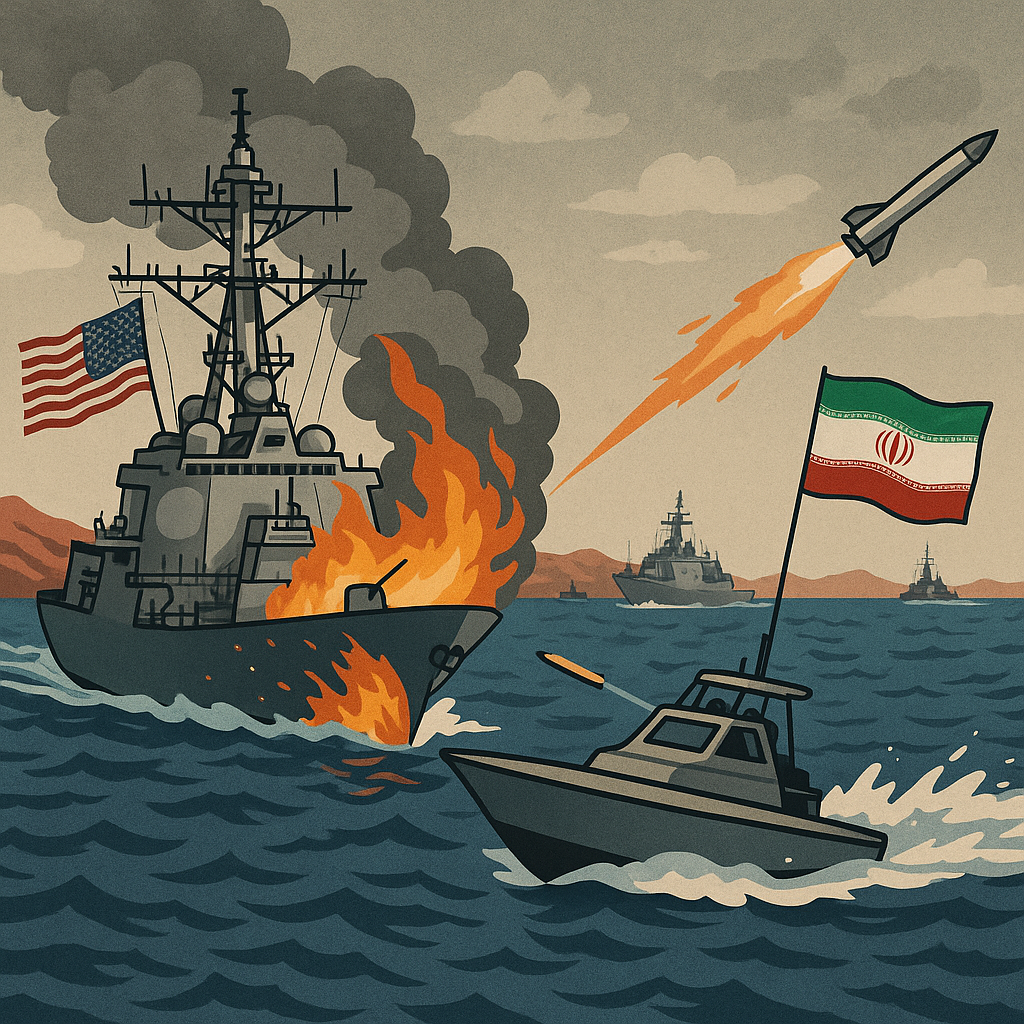
US-Iran Tensions Rise: Attacks Escalate at Strait of Hormuz
US-Iran Tensions Rise: Attacks Escalate at Strait of Hormuz
The escalating tensions between the US and Iran have made headlines recently, particularly with a concerning uptick in attacks occurring at the strategically vital Strait of Hormuz. This narrow waterway, responsible for approximately 20% of global oil transit, has become a flashpoint for military and geopolitical maneuvers that highlight the fragility of regional stability.

Understanding the Recent Escalations
Recent reports indicate a series of missile strikes targeting commercial vessels in and around the Strait of Hormuz, attributed to heightened military activities by both Iranian forces and US naval presence in the area. According to Al Jazeera, missile attacks have been aimed at vessels allegedly linked to US interests. This shift in the operational landscape has raised alarms about potential conflict escalation and the broader implications for energy security and international trade.

In contrast, reports from RT have drawn attention to Iran’s assertion of its right to protect its territorial waters. Iran maintains that its military presence is crucial for national security, particularly in response to what it views as aggressive maneuvers by the US and its allies. The Iranian government has claimed that these recent military activities are defensive in nature, positioning itself as a protector of regional integrity against perceived foreign intervention.

Diverging Perspectives on US Naval Deployments
The US has responded to these provocations by increasing its naval deployments in the region, arguing that this is essential for deterring Iranian aggression. A Sky News report cited US officials emphasizing the importance of maintaining freedom of navigation, given that the Strait of Hormuz serves as a critical artery for global shipping. The deployment aims to send a clear message against Iran’s threatening maneuvers and to reassure regional allies, particularly those in the Gulf Cooperation Council (GCC).
Dissenting opinions, however, suggest that increased military presence may provoke further hostility rather than deter it. Critics argue that the US strategy could backfire, amplifying tensions rather than fostering a dialogue for peace. The military focus can be seen as a continuation of decades of strained relations—a cycle of action and reaction that has often escalated into broader confrontations.
Consequences for Global Dynamics
The rising tensions have immediate implications not only for the US and Iran but also for global economic stability. With the Strait of Hormuz being a critical passage for oil shipments, any significant disruption could lead to skyrocketing oil prices and heightened anxiety in international markets. Furthermore, European and Asian economies, heavily reliant on oil exports from the region, are keeping a close watch on developments, wary of the potential for an all-out conflict that could have spillover effects far beyond the Persian Gulf.
Additionally, there is the risk that these events could encourage other geopolitical actors to assert their own interests in the region. Countries such as Russia and China, who have interests opposing those of the US, may seize upon this opportunity to expand their influence in the region, potentially leading to a more complex and multifaceted conflict scenario.
Navigating the Path Forward
As the situation continues to unfold, finding pathways to dialogue will be essential for de-escalation. Analysts suggest that both sides may need to reflect on their strategies—whether that entails rethinking military postures, engaging in back-channel communications, or seeking third-party mediation. The challenge will be in balancing the need for security with the avoidance of unnecessary confrontations that could spiral into larger conflicts.
While current narratives highlight a clear divide between US positioning and Iranian claims, neither side appears to be interested in outright war. However, the stakes are high, and the potential for miscalculation remains a consistent threat. Both nations face the pressing need for a diplomatic approach that recognizes historical grievances while addressing immediate security concerns.
Conclusion
As tensions rise in the Strait of Hormuz, the world watches closely, aware that the outcomes of these skirmishes can have far-reaching consequences. By understanding the complexity of the situation, including the diverse perspectives involved, there is hope for a resolution that prioritizes stability and fosters a more peaceful environment in a region long burdened by conflict.