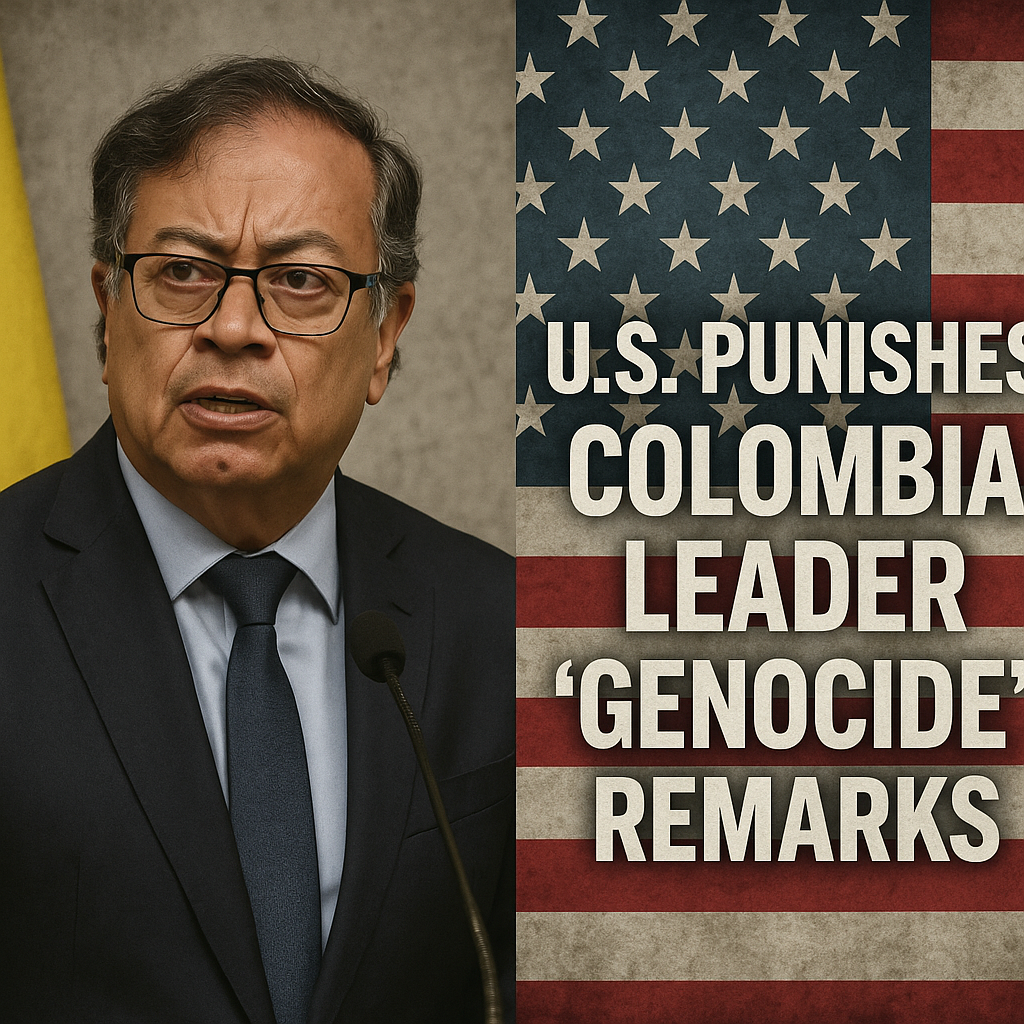
US Punishes Colombia Leader for Gaza War ‘Genocide’ Remarks
US Punishes Colombia Leader for Gaza War ‘Genocide’ Remarks
Recent comments made by Colombia’s President Gustavo Petro regarding the conflict in Gaza have brought about significant diplomatic backlash, highlighting the complexities of international relations amid ongoing global tensions. The U.S. government’s decision to sanction Petro underscores not only the sensitive nature of public statements but also the intricate web of political alliances and moral narratives surrounding the Israel-Palestine conflict.

The Comments and Immediate Reaction
Petro, who has been vocal about human rights issues throughout his political career, labeled the actions of Israeli forces in Gaza as acts of “genocide.” This remark, while resonating with a faction of global leaders and activists advocating for Palestinian rights, drew immediate ire from the U.S. government. The Biden administration swiftly moved to impose sanctions on Petro, prompting discussions about the implications of such diplomatic actions when leaders speak out on contentious global issues.

The contrasting viewpoints surrounding Petro’s comments reveal a divided international community. Supporters of Petro argue that his statements illuminate the humanitarian crisis faced by Palestinians, calling for accountability and highlighting a moral obligation to recognize state violence. Conversely, critics, including prominent figures within the U.S. political sphere, argue that characterizing the conflict in such extreme terms undermines the complexity of historical grievances and ongoing negotiations.

Analyzing the U.S. Response
The U.S. response to Petro’s remarks raises questions about the intersection of domestic politics, global diplomacy, and human rights advocacy. By sanctioning a foreign leader for comments that reflect a viewpoint shared by many across Latin America and beyond, the Biden administration appears to prioritize its longstanding alliance with Israel over other humanitarian perspectives. Such actions can lead to further estrangement between the U.S. and regional governments that feel compelled to voice their concerns over perceived injustices.
Analysts suggest that this criticism reflects a broader trend in U.S. foreign policy, where the alignment with allies often takes precedence over emerging political narratives that demand attention. The power dynamics are not merely transactional; they evoke a deeper discourse about moral responsibility in foreign relations.
The Broader Implications
The backlash against Petro’s remarks has significant implications for Colombia and its role within Latin America. Leaders in the region often face pressure to choose sides in international disputes; however, Colombia’s historical ties with both the U.S. and various Latin American nations add layers of complexity to its foreign relations. Sanctioning a leader for speaking on such critical international matters prompts discussions on free speech, the limits of diplomacy, and the legitimacy of various narratives surrounding geopolitical crises.
Furthermore, Colombia’s foreign policy approach may shift as a result of this sanctioning. Many regional leaders are now posed with the question: should they temper their expressions of solidarity with Palestine to avoid similar repercussions? Such considerations reveal the balance of power at play and the potential chilling effect on open discourse surrounding human rights.
Conclusion: Striking a Balance
The situation surrounding President Petro’s comments highlights a critical juncture in international relations where moral imperatives collide with geopolitical strategy. While the U.S. government’s sanctions may serve to reinforce its strong alliance with Israel, they also risk alienating progressive voices advocating for accountability and dialogue in global conflicts.
As countries navigate these complex waters, the challenge remains to balance national interests with genuine humanitarian concerns. Only time will reveal the long-term consequences of these diplomatic decisions—and whether they will foster a more nuanced understanding of conflict and human rights on the world stage.