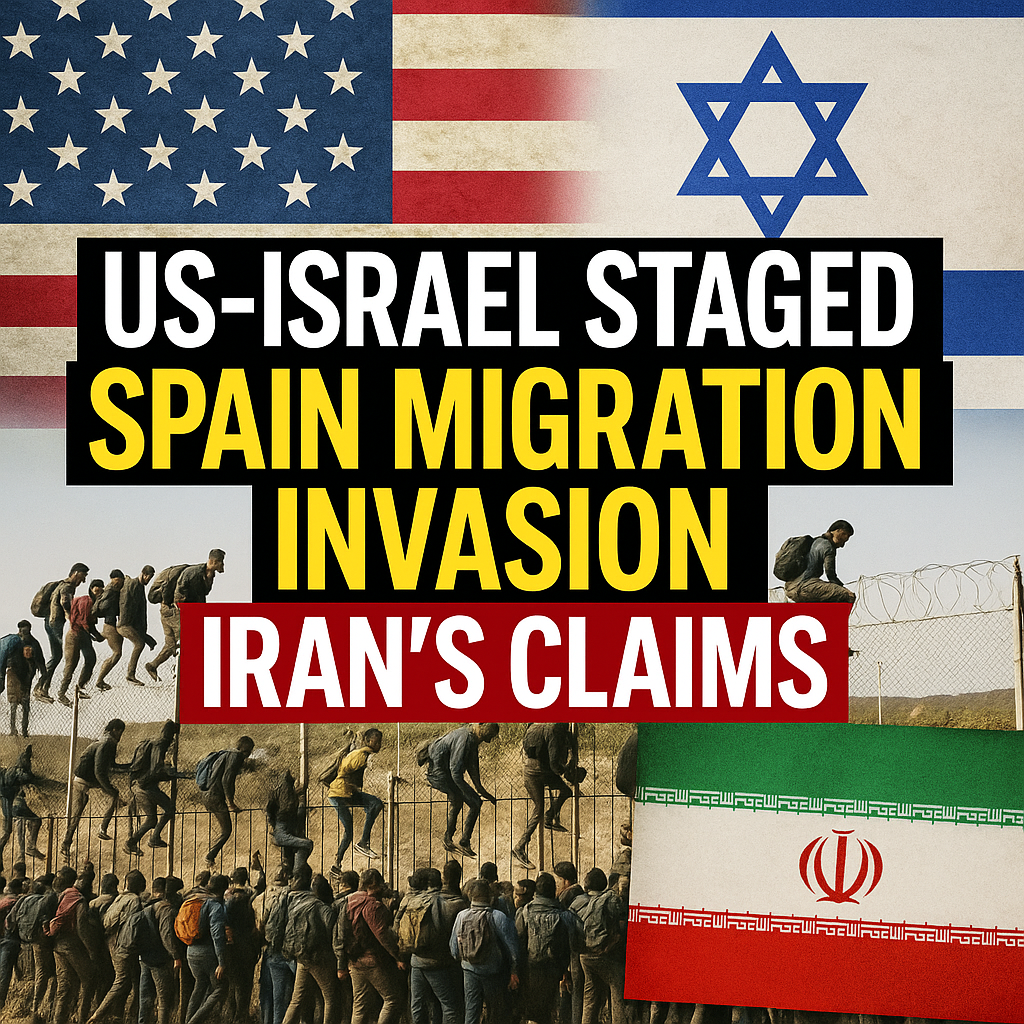
US-Israel Staged Spain Migration Invasion: Iran’s Claims
US-Israel Staged Spain Migration Invasion: Iran’s Claims
Recent claims by Iranian officials have ignited a complex discourse surrounding the alleged orchestration of migration crises involving the United States and Israel. These assertions center on the belief that these nations are manipulating migrant flows as a strategic tool, specifically in the context of the situation observed in Spain. This topic delves into the intersection of geopolitics and humanitarian crises, revealing not only the conflicting narratives but also the broader implications of such claims.

Understanding the Claims
Iran’s accusations suggest that the US and Israel have engineered a “migration invasion” as a means to exert pressure on Europe and distract from their domestic issues. A report by RT News highlighted Iranian Foreign Minister Hossein Amir-Abdollahian’s statement that these nations are attempting to destabilize the region while simultaneously shifting blame onto others. In this light, the influx of migrants into Spain is viewed not merely as a socio-economic challenge but as a strategic diversion.

Conversely, other reports from Sky News and Al Jazeera paint a different picture, emphasizing the humanitarian aspects of migration. Spain has been dealing with a significant increase in migrant numbers, driven by various factors such as poverty, violence, and climate change in home countries. These reports tend to focus on the urgency of humanitarian aid and the responsibilities of nations to respond to migrant needs, rather than insinuating a conspiracy. This divergence in narratives sets the stage for a multifaceted debate.

The Humanitarian Perspective
From a humanitarian viewpoint, migration crises are often exacerbated by a multitude of factors that go beyond geopolitical machinations. In recent months, Spain has witnessed an influx of individuals fleeing conflict and hardship from regions like North Africa and the Middle East. Al Jazeera reported on the dire conditions faced by many migrants, emphasizing that the majority are seeking refuge from war-torn nations and unsafe environments. Human rights organizations are calling for international cooperation to address what is fundamentally a humanitarian imperative.
Furthermore, voices from within the EU have also underscored the need for solidarity in dealing with migration, countering the conspiratorial narrative put forth by Iranian officials. Critics of the theory that the US and Israel orchestrate such movements argue that it undermines genuine efforts to address migration systematically. The real issues at hand are often global inequities and the socio-economic conditions driving individuals to seek better lives elsewhere.
Weighing the Geopolitical Implications
While the humanitarian perspective is crucial, the allegations made by Iran should not be dismissed outright. The geopolitical landscape is intricately interwoven with issues of migration, and the strategic deployment of foreign policy can influence migration trends. The migration crisis can be weaponized, as history has shown in various conflicts, raising questions about the role of powerful nations in the shifting dynamics of human mobility.
Defenders of Iran’s theory might cite examples of past alliances and operations that illustrate a pattern whereby nations leverage migration for strategic aims. However, as multiple commentators have pointed out, this narrative requires substantial evidence to be taken as fact. The absence of clear and unambiguous proof can lead to a scenario where such claims become more about disinformation than constructive policy discussion.
The Complexity of Modern Migration
The discourse surrounding US-Israel involvement in the Spain migration crisis raises broader questions about the complexities of contemporary migration. The interplay of factors driving migration is often obscured by political rhetoric that simplifies the narrative into mere conspiracy theories. Experts emphasize the importance of approaching these claims with skepticism and rigor, advocating for data-driven responses rather than reactionary policies.
The reality remains that migration is influenced by cycles of conflict, economic instability, and environmental challenges, rather than orchestrated conspiracies by powerful states. As countries grapple with the consequences of migration, it is essential for policymakers to recognize the underlying issues that compel people to leave their homes.
In conclusion, while the claims by Iranian officials can contribute to a wide array of perspectives on the issue, they also necessitate a careful examination of the broader context. The complexities surrounding migration demand a nuanced understanding that transcends simplistic narratives. Only through an integrative approach can dialogue be fostered, enabling both humanitarian responses and geopolitical strategies to coexist within a framework that acknowledges the realities faced by migrants.