
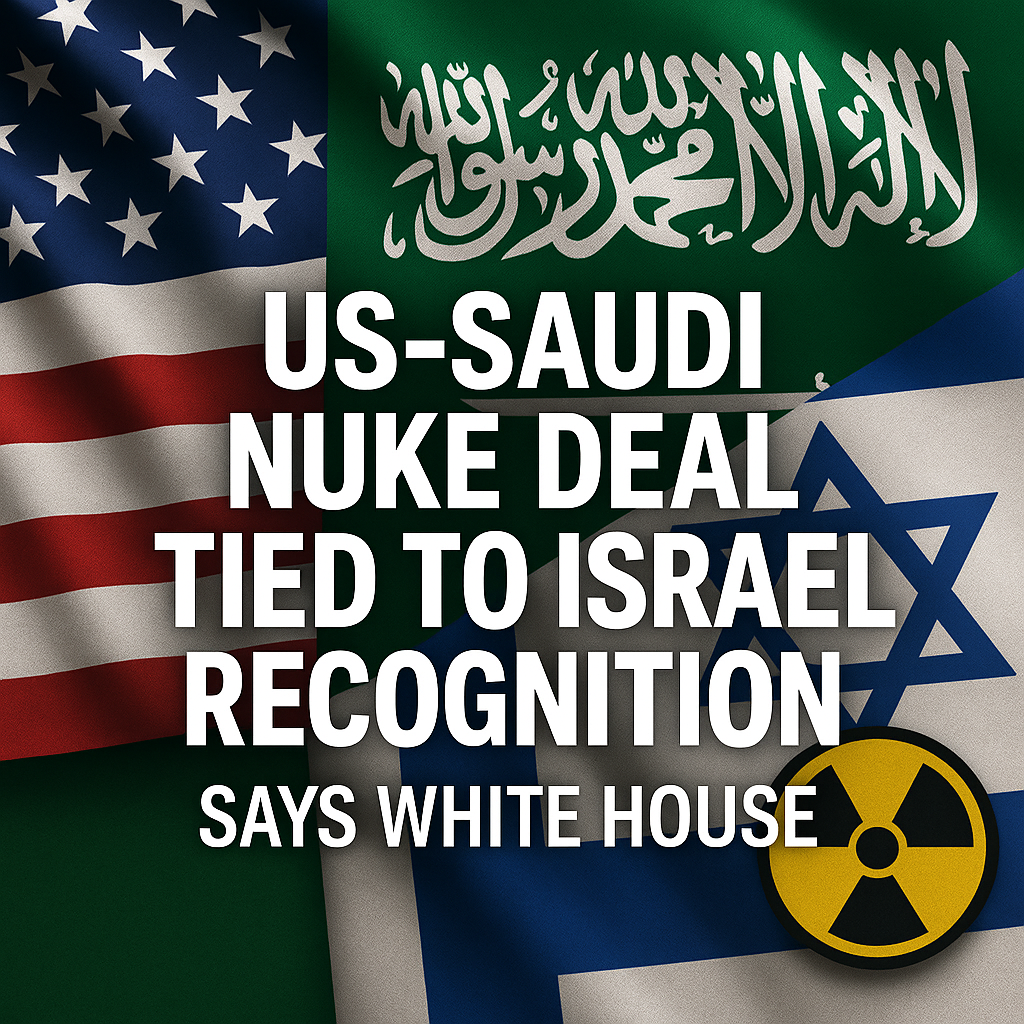
US-Saudi Nuke Deal Tied to Israel Recognition, Says White House
The US-Saudi Nuke Deal: A Pathway to Regional Stability or Domestic Controversy?

As discussions surrounding a potential US-Saudi nuclear deal gain momentum, the complexities of international diplomacy and regional stability come forth, particularly with the intertwined issue of Israel’s recognition. This potential agreement reflects a strategic partnership that could reshape the Middle East landscape, calling into question the roles of nuclear energy, security cooperation, and international relations.

The Gist of the Agreement
According to recent reports, the Biden administration has linked any potential nuclear deal with Saudi Arabia to the kingdom’s normalization of relations with Israel. This linkage is seen as a strategic move to create a more stable and united front in the Middle East, especially amidst growing Iranian influence. Proponents argue that a nuclear agreement would not only provide Saudi Arabia with crucial energy resources but also incentivize peace efforts with Israel, fostering a more collaborative regional approach.

The American Perspective
The US’s standpoint revolves around enhancing collective security in a region fraught with tensions. The White House’s approach suggests that establishing clearer ties between Saudi Arabia and Israel could lead to a more stable Middle East, ultimately benefiting US interests. National security experts contend that enhancing Israel’s security, combined with Saudi Arabia’s nuclear energy aspirations, presents a unique opportunity for diplomatic advancement.
However, critics of this linkage caution against compromising on non-proliferation principles. The concern is that allowing Saudi Arabia a path to nuclear capability—even for peaceful purposes—might spark a regional arms race, especially among neighbouring states wary of Iran’s nuclear ambitions. As highlighted in a report from RT News, “This deal could lead to a more equipped Saudi Arabia that may feel emboldened to take more aggressive stances.”
Diverging Opinions on the Nuke Deal
Opinions diverge significantly regarding the potential implications of a US-Saudi nuclear deal. Some analysts emphasize the need for a robust energy partnership. According to Al Jazeera, energy resource management could become a cornerstone of US-Saudi relations, suggesting that such arrangements could pave the way for long-lasting stability in a region frequently marred by conflict.
On the other hand, voices from civil society and international watchdog organizations are increasingly expressing their apprehensions regarding nuclear proliferation. Many warn that any deal entering talks should include stringent measures that ensure transparency and oversight—necessary safeguards to prevent diversion of nuclear materials for military purposes.
Critics further point to the historical context, suggesting that rewarding Saudi Arabia with nuclear energy access without significant progress on human rights and transparency issues would be a missed opportunity for the US to assert its values in the global arena. This concern underscores a deeper debate about balancing strategic alliances with ethical considerations.
The Israeli Context
Israel’s position is particularly complex in this looming deal. Recognized as the only nuclear power in the region, Israel maintains a keen interest in any developments that could alter the balance of power. While some Israeli officials may welcome normalization with Saudi Arabia, they remain wary of implications for security. Collaborative efforts may be promising, but they must be approached cautiously to ensure they do not escalate tensions with Iran or spur further militarization in the region.
The recent statements from US officials underscore this delicate dance—promoting peace with Israel while simultaneously addressing Saudi Arabia’s nuclear aspirations. How these elements reconcile will be pivotal in determining the viability of such a deal.
A Look Ahead
The future of the potential US-Saudi nuclear deal remains uncertain, intertwined with regional geopolitics and domestic considerations within the United States. As the Biden administration continues to navigate this complex web, it faces calls for transparency and accountability from various domestic quarters.
While optimists view this potential deal as a strategic advancement for peace, others are cautious, advocating for a framework that centers on global non-proliferation norms. The coming months will likely witness intense negotiations, and the outcomes of these discussions could significantly reshape not only US-Saudi relations but the entire Middle Eastern geopolitical landscape.
In sum, while the US-Saudi nuclear deal presents a unique opportunity for advancing regional cooperation, the intricate ties between energy, diplomacy, and security necessitate a nuanced approach, balancing ambition with ethical responsibility. As stakeholders engage in ongoing dialogue, it remains crucial to keep a close watch on the potential ramifications, ensuring that the broader context of peace and stability is preserved in this historically complex region.















