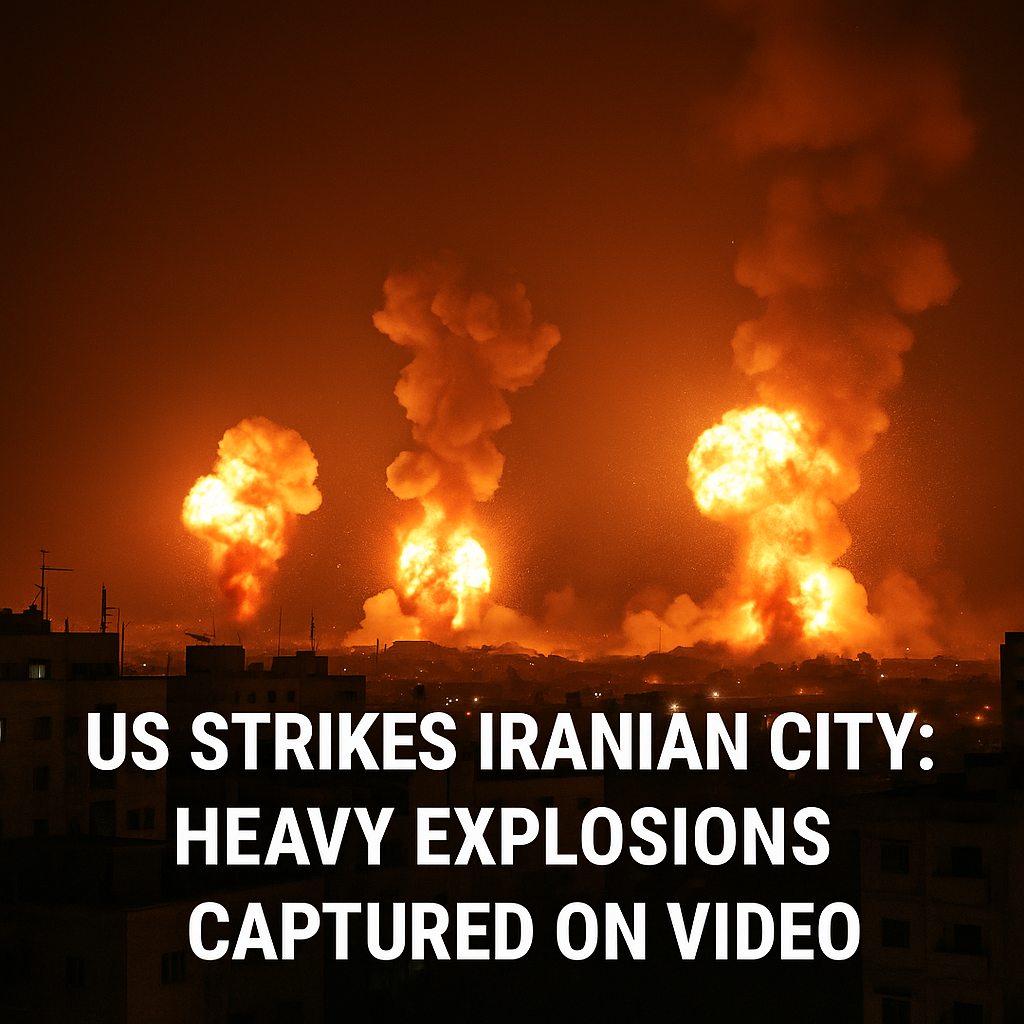
US Strikes Iranian City: Heavy Explosions Captured on Video
Tensions Escalate in the Middle East Following US Strikes on Iranian City
Recent events have escalated tensions in the Middle East as reports confirm a series of significant US strikes targeting the Iranian city of Ahvaz. These actions have ignited a complex dialogue surrounding international relations, sovereignty, and the ever-present threat of regional conflict. Footage circulating online captures the heavy explosions, further fueling discussions among analysts and policymakers alike.

Analyzing the US Strikes: Motives and Implications
The decision to conduct strikes in Ahvaz reflects broader strategic interests for the United States, particularly concerning its stance on Iran and regional security. According to various reports, the US government claims these actions were a response to ongoing threats posed by Iran-backed groups that allegedly engage in cross-border attacks. In a statement, an unnamed Pentagon official emphasized that “the strikes were necessary to protect American interests and personnel in the region.” This justification resonates within the context of a longstanding antagonism between the US and Iran, dating back to the 1979 Iranian Revolution.

Conversely, analysts from different perspectives argue that these strikes may exacerbate existing tensions rather than mitigate them. Experts warn of the backlash that could arise from such military interventions, highlighting the potential for escalated violence from Iranian militia in response. A commentator from Al Jazeera reiterated that military responses often lead to cycles of retaliation, which complicate efforts for diplomatic resolutions. “Instead of deterring aggression, these strikes might rally nationalistic sentiment within Iran, unifying factions that might otherwise remain divided,” they suggested.

Regional and Global Reactions
The immediate aftermath of the strikes has elicited varied responses from both regional powers and the international community. Observers report a swift condemnation from Iranian officials, who have labeled the US actions as “a violation of international law” and a demonstration of American imperialism. High-ranking Iranian leaders have promised a strong retaliatory response, warning that these strikes will not go unanswered.
On a broader scale, allied nations appear cautious. Some European countries maintain a neutral stance, recognizing the necessity for dialogue while also advocating for the sovereignty of nations. Meanwhile, various analysts emphasize that the current US strategy may isolate its allies in the region, as they too weigh the risks of escalating conflict.
U.S. allies in the Gulf, however, have expressed support for the strikes. They argue that a firm stance against Iran is crucial for maintaining stability in the affected regions, particularly given Iran’s influence over proxy groups in Iraq, Lebanon, and Yemen. But this support is not universal, and many Middle Eastern countries remain apprehensive about a heightened military presence that threatens to destabilize their own borders.
The Complexity of Response: An Uncertain Path Ahead
As the situation evolves, the discourse surrounding the US strikes reflects a broader array of concerns, from humanitarian implications to geopolitical strategy. Numerous think tanks and policymakers are now engaged in deliberations aimed at understanding the precise ramifications of these strikes. There is a palpable sense of urgency as leaders anticipate potential repercussions that could extend far beyond the borders of Iran.
Despite the immediate reactions, there remains a considerable uncertainty regarding the long-term implications of the US’s military actions. Notably, if US strikes continue, they may continuously reshape the strategic landscape in ways that neither the US nor Iran can predict. These military operations could either push Iran towards further isolation or provoke an aggressive response that complicates diplomatic efforts in essential areas like nuclear negotiations and regional security pantries.
In conclusion, the US strikes on Ahvaz have ignited a multifaceted debate about the nature of conflict, the ethics of military intervention, and the future of US-Iran relations. As the ramifications unfold, it becomes increasingly clear that the path forward is fraught with challenges that demand careful navigation. Without a clear vision for de-escalation, the risk of an expanded conflict remains a pressing concern for all parties involved.